Why pink football boots are taking over the World Cup
Pink boots have become the World Cup’s loudest visual code, turning a once-unlikely shade into a marker of confidence, visibility and fan-ready style.

Pink is no longer a soft accent on the World Cup stage. It has become the color of the tournament’s most visible footwear, a shade that reads as fast, modern and unmistakably commercial from the first whistle in Arlington, Texas, to the broadcast feed beamed across North America.
What makes this moment distinct is that the look feels organized, not accidental. Major sportswear labels including Nike, adidas, Puma and New Balance arrived with pink-heavy football boot collections planned months ahead of the tournament, and the result is a pitch where bright cleats have started to look like an unofficial uniform. In the opening match between Mexico and South Africa, all but three starters wore cleats with some shade of pink, which is exactly the kind of scene shift that turns a trend into visual culture.
From runway idea to match-day identity
Pink’s rise here makes sense only if you see it as a crossover between fashion and football, not a novelty color story. ELLE UK has traced the shade from runway-minded styling into the World Cup, where the same logic that drives a collection at fashion week now drives product strategy for a global tournament. The color works because it sits at the intersection of visibility, mood and identity: it is bold enough to stand out on grass and on television, but broad enough to read as unisex rather than precious.
That matters in a sport where visual sameness used to rule. Football boots were once overwhelmingly black, built to disappear into the kit rather than announce themselves. Against that history, the spread of neon pink feels like a decisive break, one that tells you immediately how much football has shifted from equipment culture to image culture. Today, a boot is not only a performance tool; it is a signal.
Nike’s current football range includes multiple pink models, including Mercurials, and adidas says its FIFA World Cup 26 shoes are available in colors inspired by national teams. That is a telling evolution: the footwear is no longer just engineered for traction or speed, but styled to carry the tournament’s larger visual language. The same palette spills into lifestyle shoes, which shows how quickly pitch product now migrates into everyday fashion.
Why pink reads so powerfully on the pitch
The reason pink works is not mysterious, and it is not merely aesthetic. Manufacturers have long studied how color behaves under pressure, especially in a televised sport where every detail is flattened onto a screen. Coverage around this World Cup has pointed to visibility against green grass and to the psychological charge of bright colors, which can project confidence before a player even touches the ball.
Felicia Pennant of SEASON zine puts that thinking into sharper focus. She says brands study psychological reactions to color and analyze player performance data when they develop products, which explains why pink has been adopted so aggressively instead of treated as a one-off stunt. Once a color starts to register as successful, athletes notice, teams notice and the market follows.
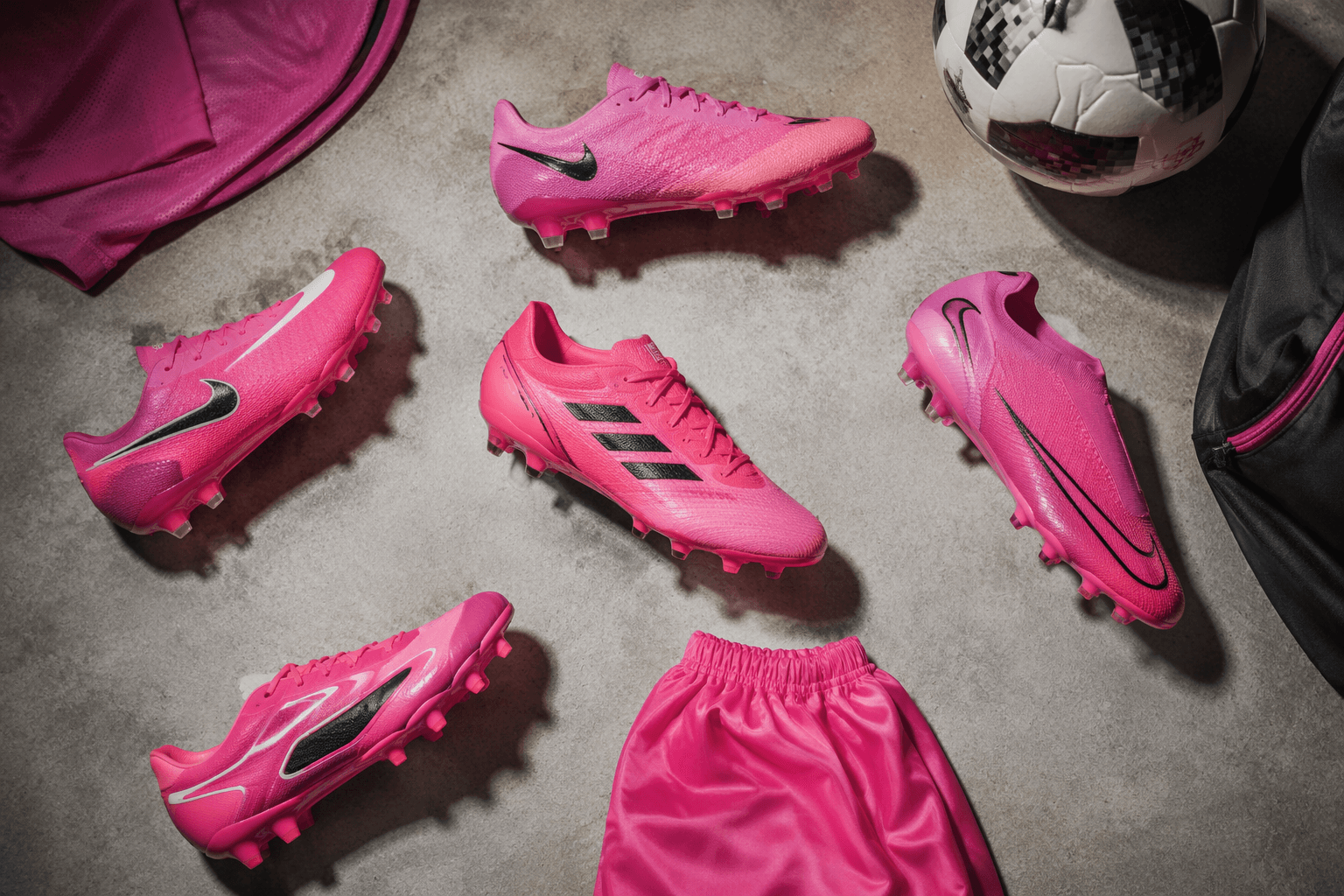
That is why the shade feels more durable than a passing fashion trend. It is bright enough to command attention in a crowded broadcast, but not so niche that it reads as costume. On a field where dozens of players must be distinguished instantly, pink does the work a boot color is supposed to do now: it makes the wearer visible, legible and, in an era of endless replay clips, memorable.
The commercial proof is already showing up
The strongest evidence that pink has moved beyond image is retail. Netshoes, the Brazilian sporting-goods platform, reported a 15% increase in pink football boot sales in the first four days of the World Cup. That is the kind of early-market response brands watch closely, because it shows the color is resonating not just with elite players but with consumers who want to mirror the look they see on television.
Brazil is a useful case study here because it sits inside the same football economy that turns tournament aesthetics into retail demand. The World Cup may be staged across host cities in North America, but its merchandizing logic is global, and pink is proving to be one of the clearest examples of a color that can travel. It is vivid enough for the pitch, fashionable enough for streetwear and commercially sticky enough to sell through in the first days of a tournament.
That commercial stickiness is also why the shade has spread so quickly across brands with different design identities. Nike’s pink Mercurials, adidas’s team-inspired color story, Puma’s tournament collections and New Balance’s pink-heavy offerings all point to the same calculation: if a color performs visually and psychologically, there is little reason to leave it to a single brand or a single region. The market rewards repeatability.
What pink boots say about football style now
The real story is not that pink is trendy. It is that football has become one of the clearest places where fashion color theory, broadcast visibility and athlete branding all meet at once. The cleats are doing more than decorating the kit. They are carrying identity, signaling confidence and helping brands turn a global tournament into a retail moment.
That is why the image of pink boots keeps repeating itself across the tournament. It is not a gimmick, and it is not a passing flourish. It is the clearest sign that elite sport now understands what fashion has known for years: when a color is distinct enough to be recognized instantly and versatile enough to be worn by anyone, it stops being a trend and starts becoming infrastructure.
This article was produced by Prism’s automated news system from verified source data, official records, and press releases, then run through automated quality and moderation checks before publishing. The system is built and supervised by the people who set the standards it runs under. Read our full AI policy.
Did this article answer your question?


