All that glisters: MAGA influencers promote gold but investors feel short‑changed
Ben Shapiro and Dan Bongino have pushed Birch Gold to millions of followers, but dealer spreads of up to 15% mean many retail buyers are losing ground before gold moves an inch.
The pitch lands somewhere between financial advice and political identity. Ben Shapiro, Candace Owens and Dan Bongino are among the many leading conservatives who have been hawking Birch Gold Group to their online followers, each hosting branded segments that frame physical gold as sound money, a hedge against federal overreach, and the kind of hard asset the Founding Fathers would have recognized. Steve Bannon is another key figure who endorses Birch Gold Group, promoting the company's services to his audience, as does Ron Paul. The roster reads like a conservative media directory. The returns, however, are a separate matter.
Gold has surged above $5,000 per ounce, having reached an intraday high of $5,595 on January 29, 2026, before pulling back. The gold price rally of nearly 50% in 2025 was the metal's strongest annual performance since 1979, and Morgan Stanley revised its 2026 gold forecast upward to $4,400 per ounce. On paper, those are extraordinary numbers. In practice, the retail buyer's experience of that rally depends entirely on what they paid to enter and what they will be offered to exit, neither of which gets much airtime on conservative podcasts.
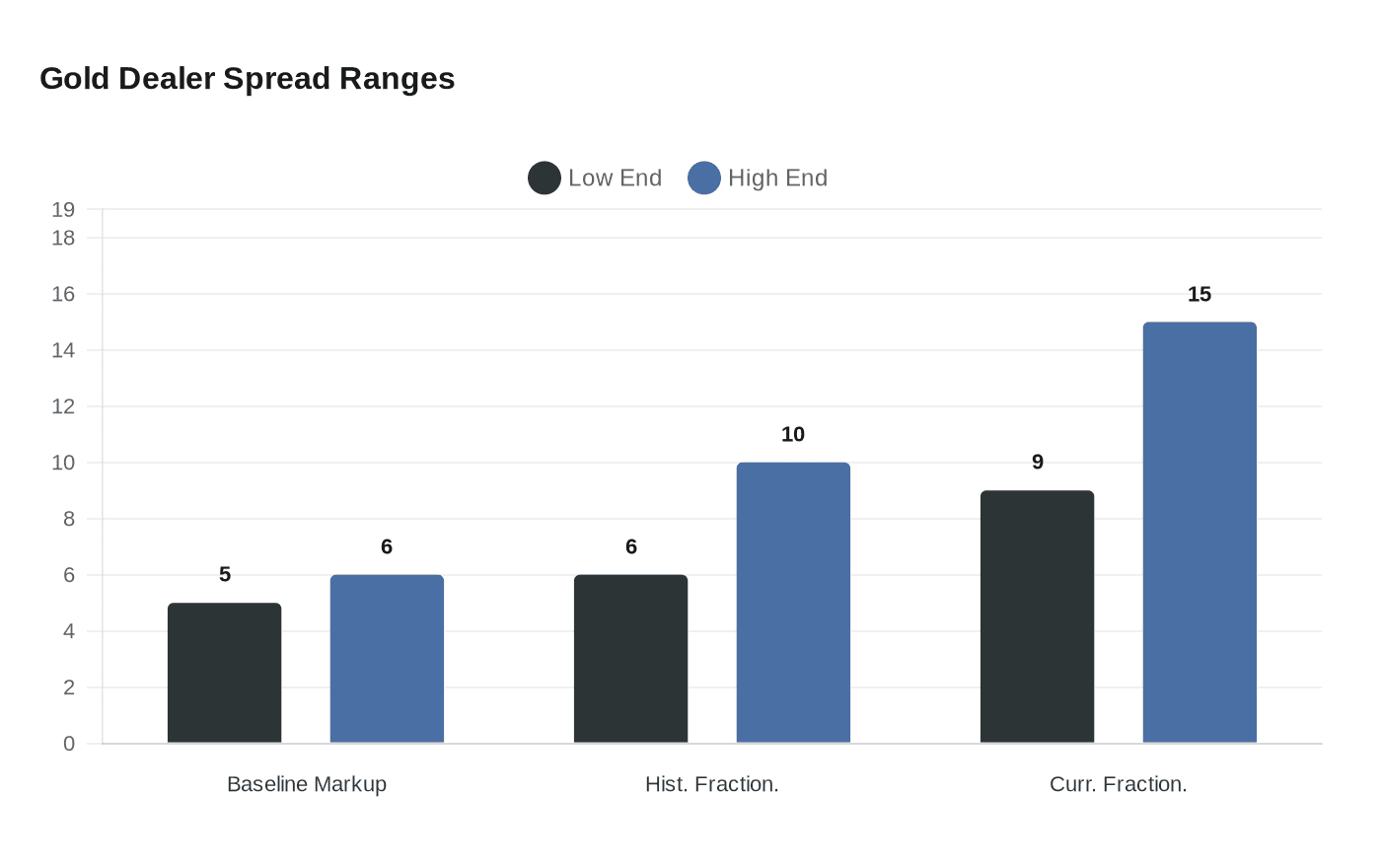
Dealers charge a premium above the spot price, and buyers should not pay more than a 5 to 6 percent markup above spot on average. That is the industry baseline. Scroll down to the fractional products, the smaller coins that feel accessible to first-time buyers and tend to feature prominently in direct-response gold marketing, and the math worsens considerably. Percentage spreads on tenth-ounce coins have expanded to 9 to 15 percent, compared to historical ranges of 6 to 10 percent. A buyer paying 12 percent over spot on a product they will eventually sell back at 3 to 5 percent under spot is working against a combined round-trip cost that can exceed 15 percent. Margins vary by dealer, with established firms typically offering tighter spreads than newer or more aggressively marketed operations — which is a polite way of saying that the heaviest marketing correlates with the thinnest value for the buyer.

The old-money approach to gold never had much in common with any of this. Heirloom jewelry has functioned as portable, wearable wealth for centuries, but its appeal rests on something bullion dealers cannot manufacture: provenance, craft, and the quiet authority of a hallmark. An 18-karat piece, marked 750 for its millesimal fineness, carries 75 percent fine gold alongside a design history that can add substantially to melt value at auction. A one-ounce coin endorsed by a podcast host carries no such premium on the sell side.
For buyers who want gold's properties without the dealer's toll, the calculus favors design over raw metal. Christie's and Bonhams regularly achieve prices well above melt value for signed or period pieces, a liquidity channel that exists precisely because the object is more than its weight. The hallmark, the maker's mark, and the period attribution are what create that distance from spot. Established firms offering tighter spreads on secondary jewelry also tend to be more transparent about what drives the price they quote.
Gold as a safe haven and gold as a status costume are not mutually exclusive. But they are not the same purchase, and conflating them, which is precisely what influencer-driven bullion marketing does, is what leaves retail investors feeling short-changed when the rally eventually stops.
Know something we missed? Have a correction or additional information?
Submit a Tip