Brioni doubles down on bespoke luxury with made-to-measure services
Brioni is making fit the new logo, expanding made-to-measure across the wardrobe as old-money luxury shifts from display to private craft.

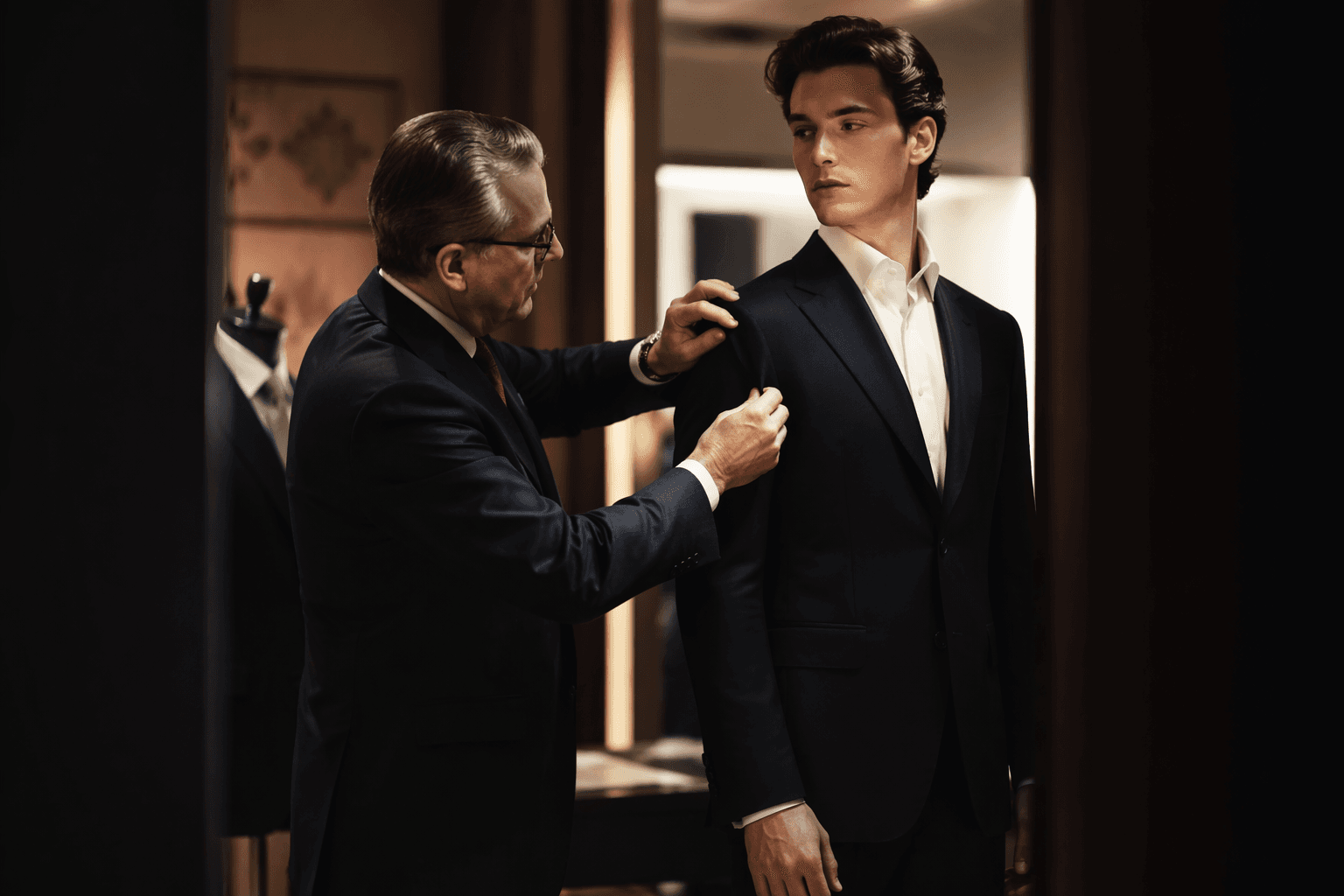
The sharpest luxury signal right now is not a monogram. It is a jacket that sits exactly where it should, a shirt cut for one body, and a service ritual that cannot be duplicated on a rack. Brioni is leaning hard into that shift with Maestria, widening made-to-measure and made-to-order beyond tailoring and turning personalization into the clearest old-money differentiator in a logo-fatigued market.
The new status code is service
Old-money style has always depended on recognition more than noise, but Brioni is taking that idea further: status is expressed through fit, service, and craft, not through visible branding. That is why made-to-measure and made-to-order matter now. They create a quieter hierarchy, one where the wearer is known by the way clothes move on the body and by the degree of access to the house itself.
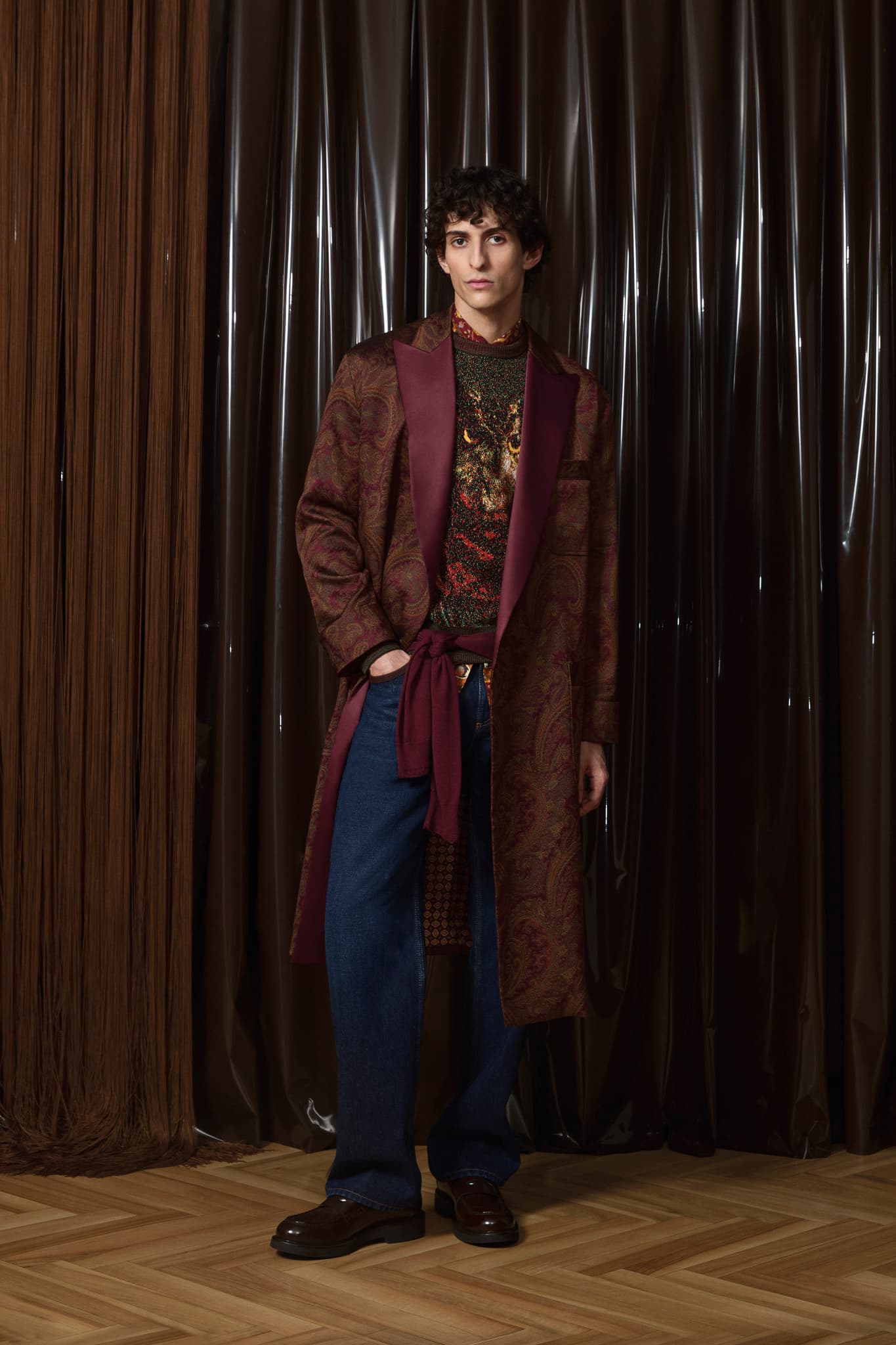
Brioni’s latest move stretches that logic across more of a man’s wardrobe. Maestria, the house’s Spring/Summer 2027 project, extends customization to shirts, knitwear, footwear, and small leather goods. Clients can choose fabrics, buttons, linings, combinations, and technical specifications, which turns luxury from a finished object into a private process.
Why Brioni has the authority to pull this off
Brioni’s pitch lands because the house has spent decades building the mythology behind it. It was founded in Rome in 1945 by Nazareno Fonticoli, a master tailor, and Gaetano Savini, and the brand still leans on its “tailoring legends since 1945” identity. Brioni also says its 1952 menswear runway show was the first in modern fashion history, a detail that still gives the house unusual weight in a category where heritage is often claimed and rarely proven.
The infrastructure matters just as much as the story. Brioni founded the Scuola di Alta Sartoria Nazareno Fonticoli in Penne, Abruzzo, in 1985 to train the next generation of tailors, and reopened it in 2024 under the Brioni Foundation and Fondazione Brioni ETS. That keeps the brand tied to labor-intensive production at a moment when luxury houses are being pushed to justify why craftsmanship should still command a premium.
From suitmaker to wardrobe architect
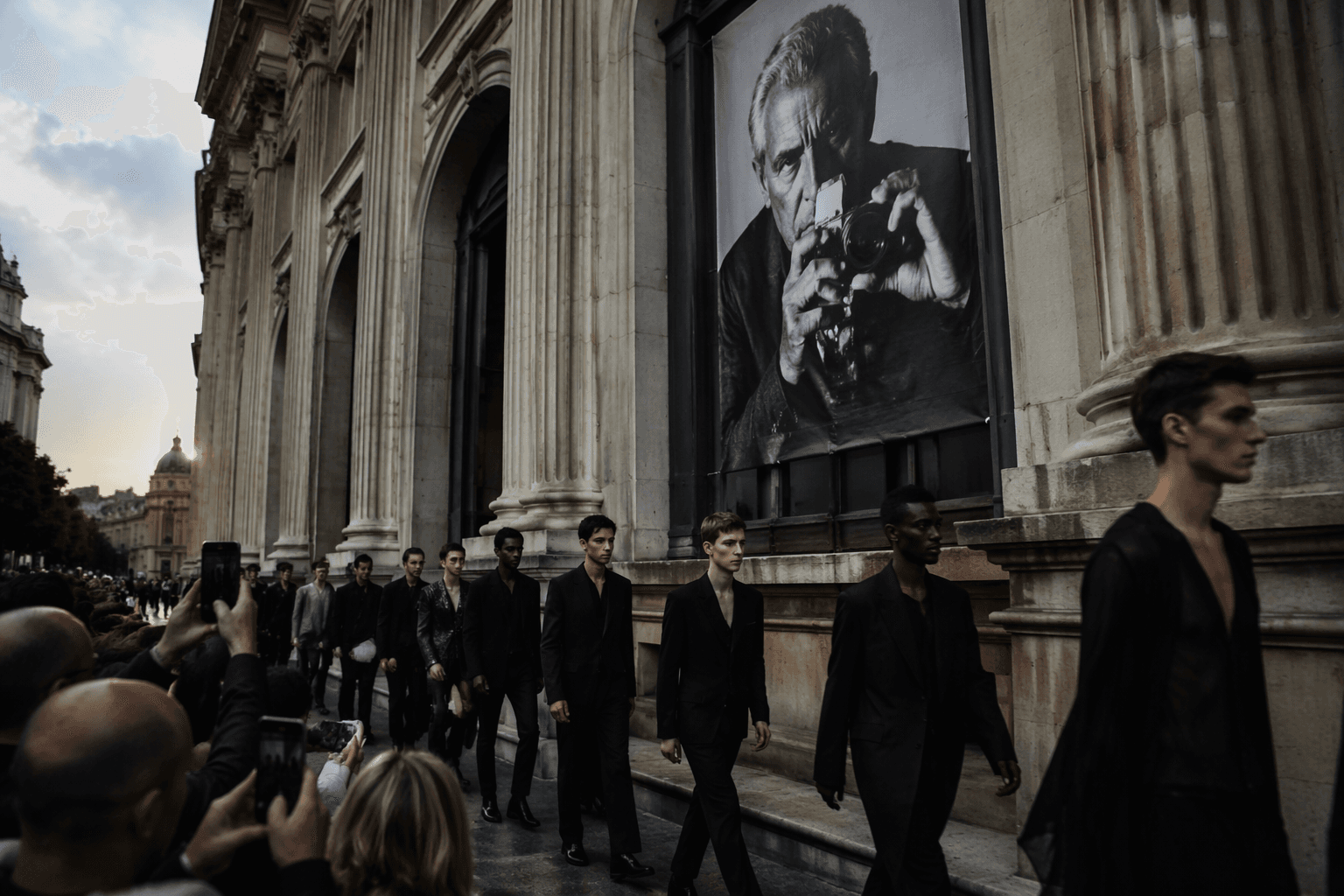
The most important part of Brioni’s current strategy is that it is not treating bespoke as a suit-only proposition. At the SS26 presentation staged at Palazzo Stampa di Soncino in Milan, the house emphasized the connection between maker, fabric, and wearer. That framing matters because it shifts the conversation from product drops to personal fit, which is exactly where old-money dressing lives now.
Maestria broadens that idea into a full wardrobe system. A shirt, a knit, a shoe, or a small leather accessory that can be adjusted in fabric, finish, and construction reads as luxury in a different register than an item that simply carries a logo. The product becomes less about being seen across a room and more about being understood up close.
What to look for in this new language of status:
- Made-to-measure and made-to-order routes, rather than standard sizing alone.
- Personal choices in fabrics, buttons, linings, combinations, and technical specifications.
- Categories beyond the suit, especially shirts, knitwear, footwear, and small leather goods.
- A presentation or service experience that emphasizes the maker’s hand, not just the finished look.
What to skip is equally clear: anything that tries to substitute branding for craftsmanship. In the Brioni version of old money, the loudest thing in the room is the fit.
The business case is just as telling
This is not only a taste shift, it is a balance-sheet strategy. Kering’s latest annual results showed group revenue of €14.7 billion, down 13 percent as reported and 10 percent on a comparable basis. In 2024, Kering also said wholesale revenue at the Houses was down 22 percent on a comparable basis as it continued to heighten the exclusivity of its distribution.
That context explains why Brioni’s move toward exclusivity and personalization is so pointed. Made-to-measure and made-to-order do not chase volume; they deepen relationship, raise the value of each transaction, and help a house protect prestige when the broader luxury market is under pressure. In a lower-volume, higher-end model, the client is buying access, time, and precision, not just cloth.
Leadership changes underline the reset
Brioni’s management changes fit the same pattern. Kering appointed Federico Arrigoni, formerly deputy CEO of Saint Laurent, as Brioni chief executive effective May 6, 2025. He replaced Mehdi Benabadji, who moved to lead Ginori 1735 after overseeing Brioni’s operational reorganization and growth momentum since 2020. That sequence suggests continuity rather than disruption: the house is not changing direction so much as sharpening it.
The departure of design director Norbert Stumpfl in December 2025 after seven years at the house adds another layer to that reset. When a brand moves through leadership and design transitions while keeping its focus on craft, the message is clear: the product can evolve, but the codes stay strict. For Brioni, those codes now sit in the space between heritage and service, where the true marker of wealth is not what everyone can identify, but what only a few can commission.
In the old-money wardrobe, that is the most persuasive status symbol left.
This article was produced by Prism’s automated news system from verified source data, official records, and press releases, then run through automated quality and moderation checks before publishing. The system is built and supervised by the people who set the standards it runs under. Read our full AI policy.
Know something we missed? Have a correction or additional information?
Submit a Tip