Brits Bring Color to Trousers, Cordings Promotion and Heritage Picks
British trousers in proper color, Massachusetts canvas with real workwear bones, and a quiet wardrobe lesson: heritage reads richest when it does not announce itself.
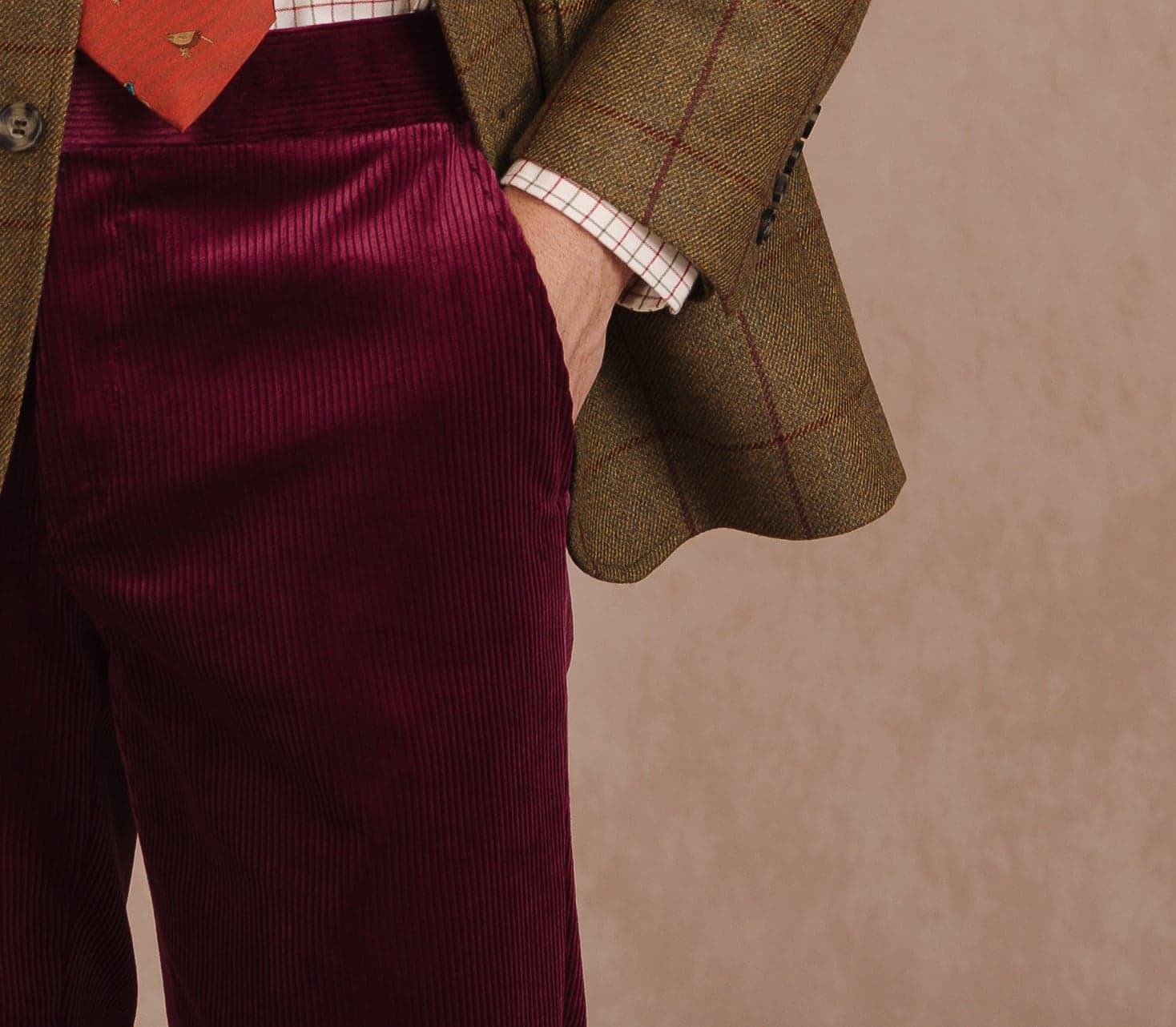
The restraint behind the color
The smartest thing about this moment in preppy dressing is how little it tries to look new. Muffy Aldrich’s latest notes on The Thing Before Preppy lean into that instinct with unusual clarity: British trousers are not just a category here, they are a reminder that color, when handled well, can look inherited rather than attention-seeking. Cordings of Piccadilly sits at the center of that argument, with a promotion that makes the case in the most practical way possible, buy one pair and get the other at half price, for ladies and gents alike.
That matters because Cordings is not a novelty brand dressing up in tweed vocabulary. Founded in 1839 by John Charles Cording and still based at 19 Piccadilly in London, it has lived for generations inside Britain’s country-clothing lineage. Its own heritage timeline frames the house as a waterproofer first, which is exactly why the trousers feel credible: they come out of utility, not costume. In a market full of “old money” mimicry, that practical origin is the difference between style and theater.
Why Cordings reads old money without trying too hard
The appeal of Cordings trousers lies in their Anglo-American continuity. British country outfitting, with its weatherproof roots and outdoor pragmatism, translates neatly into the New England idea of dress that is polished but never precious. The color is the point. Rather than retreating into a safe uniform, Cordings leans into trousers that can carry the weight of a blazer, a field jacket, or a sweater tied with studied care.
- Cordings trousers in a proper color
- a crisp shirt in white or pale blue
- a worn-in navy blazer or soft country jacket
- loafers or polished lace-ups, never anything too glossy
For a restrained wardrobe, the formula is simple:
That combination works because the trousers do not need to be the loudest thing in the room. Their authority comes from provenance, from a Piccadilly address, and from a history that began in practical dress for the elements. That is the quiet luxury of the original sort, the one that predates hashtags and survives them.
Steele Canvas and the beauty of workwear becoming polish
If Cordings brings in British country codes, Steele Canvas provides the New England answer. The April 1 note on the same blog turns a small tote into a lesson in proportion, and it does so with the kind of specificity that makes a piece feel owned before it is even carried. Steele Canvas is Massachusetts-based, its mini tote is made from heavyweight cotton canvas, and the bag is made in Massachusetts in four colors: Natural Canvas, Sky Blue Canvas, Juniper Green Canvas, and Blush Pink Canvas.
The best part is that Steele’s history gives the tote a real backstory. Steele Canvas Basket Corp was founded in 1921 on Hamilton Street in Cambridge, Massachusetts, making rugged canvas products for New England coal and textile trades. That industrial beginning is what makes the mini tote feel inherited rather than trend-driven. It has the plain confidence of a piece built for labor, then refined just enough to cross into daily dress.

- striped Breton top or an oxford cloth button-down
- straight-leg chino or faded indigo denim
- penny loafers or deck shoes
- the Steele mini tote in Natural Canvas or Juniper Green for the most understated read
A strong styling formula for the mini tote:
The internal pocket is the sort of detail that keeps a simple bag useful, not precious. The silhouette is compact enough to feel neat, but not so small that it becomes decorative. Compared with L.L.Bean’s Bean Small, it reads like a cousin with a slightly more tailored posture. The canvas does the heavy lifting: unlined in spirit, sturdy in hand, and better for age than for novelty.
The old-money code is in the provenance
What makes both pieces work is not just that they are heritage-minded. It is that their stories are legible in the construction. Cordings carries the polish of Piccadilly and the weatherproof practicality of a British outfitter that began in 1839. Steele carries Cambridge’s industrial past, with canvas that was originally meant for coal and textile trades. Both feel correct because they grew from use, then survived long enough to become style.
That distinction is worth holding onto in a year when “old money” often gets flattened into beige filters and inherited-looking props. The real version is quieter and more specific. It prefers a trouser with a proper fall over a trend silhouette, a tote with an inside pocket over a logo bag, and materials that look better with wear. Heavy cotton canvas, weathered wool, and trousers with enough body to hold a line all belong to that language.
Where the modern preppy story actually begins
The April 9 Cordings note also sits inside a longer lineage of preppy commentary that has been shaped by both satire and scholarship. The Official Preppy Handbook, first published in 1980 by Workman Publishing, helped codify the public image of prepdom, but it did not invent the style. That earlier vocabulary belongs to makers like Brooks Brothers, founded in 1818, and J. Press, founded at Yale in 1902 by Jacobi Press. Those are the houses that give the modern “old money” aesthetic its backbone: Ivy, campus, country, and just enough polish to look unforced.
Seen that way, the Cordings promotion and the Steele mini tote are not random shopping notes. They are two clean examples of how heritage still works when it is allowed to remain functional. One brings color to trousers without losing its footing in London country dress. The other turns New England work canvas into a bag that feels like it could have lived in a family for years. Together they argue for a wardrobe that favors lineage over noise, and that is still the most convincing kind of luxury.
This article was produced by Prism’s automated news system from verified source data, official records, and press releases, then run through automated quality and moderation checks before publishing. The system is built and supervised by the people who set the standards it runs under. Read our full AI policy.
Did this article answer your question?