French-Inspired Staples Give Old Money Style a Parisian Edge
The quietest French clothes are the richest ones: trench, ballet flats, straight-leg denim and a sharp white shirt, all cut to whisper not shout.

The cheapest way to look old money is not a monogram. It is restraint. French-inspired dressing gets that right when the clothes feel like they have lived a little, moved easily, and never tried too hard, which is exactly why the best pieces in this lane read as héritage instead of costume.
Start with the trench
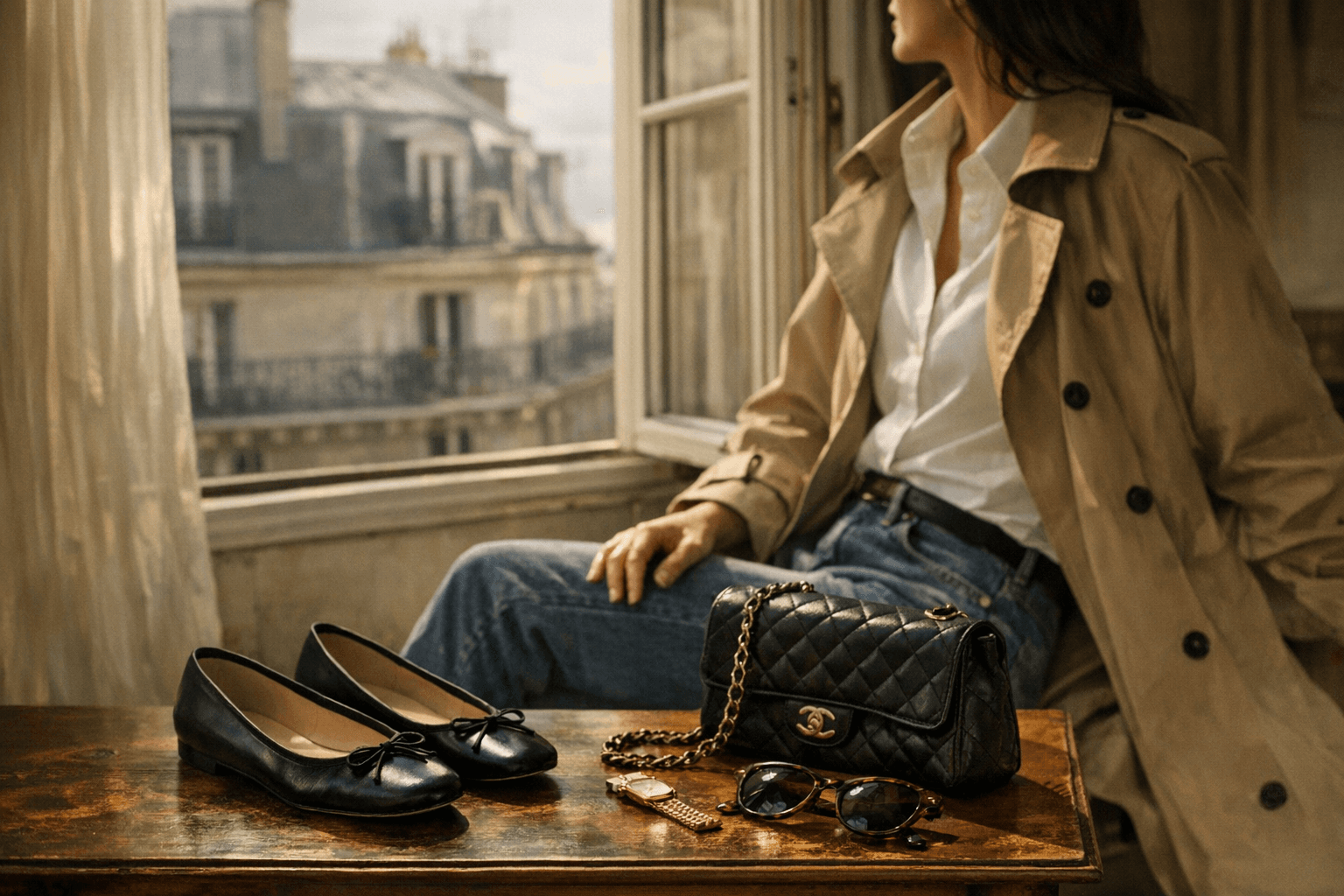
The trench coat is the spine of the whole capsule. Its roots go back to World War I officers’ coats, which is why it still carries that efficient, disciplined shape even when it is thrown over a dress or denim. Skip anything stiff, shiny, or overworked. The right one should move with you in a cotton gabardine or matte twill, with clean shoulders, a belt that actually cinches, and a length that lands somewhere around the knee or mid-calf.
Color matters here. Sand, stone, khaki, and deep navy all feel expensive because they disappear into the outfit instead of dominating it. The goal is not to look like you are dressed for a costume department version of Paris. The goal is to look like you own one great coat and know exactly how to wear it.
The white shirt has to be immaculate
French capsule wardrobes keep coming back to the white shirt because it does the most with the least. Coco Chanel made simplicity and comfort feel modern, and that logic still powers the best versions of this look. A white shirt in crisp poplin, fine cotton, or a slightly softer weave should skim the body, not cling to it, with a collar that holds its shape and cuffs that feel intentional.
This is where old money style shows its hand. A white shirt with clean lines, a button placement that does not gape, and a body that is not boxy or oversized reads as considered. Pair it with straight-leg trousers, tuck it into jeans, or slip it under a cardigan. If it looks like you borrowed it from a theme board, it is too much. If it looks like it has been worn for years and still presses beautifully, you are there.
Fine knits should look soft, not precious
A fine-knit cardigan belongs in this capsule because it carries the same quiet confidence as Chanel’s jersey revolution, where comfort became elegance instead of looking lazy. Think cashmere, merino, or a high-quality cotton blend in cream, navy, black, or oatmeal. The best fit sits close to the body without hugging it, with sleeves that can be pushed up and buttons that do not scream for attention.
This is one of the easiest places to go wrong. Too cropped, too embellished, too fuzzy, and the whole thing starts to feel twee. The old-money version is calm and slightly nonchalant, the kind of knit you would drape over your shoulders in a breeze and still look completely finished.
Straight-leg denim and tailored trousers do the heavy lifting
Who What Wear’s French-inspired edit leans on straight-leg jeans for a reason. They are the most useful denim shape in the room because they do not try to be cool in a loud way. Choose a medium indigo, a clean dark wash, or even a faded ecru if the rest of the outfit stays disciplined. The fit should run straight from hip to hem, with enough structure to hold its line and enough ease to sit with a ballet flat or loafer.
Straight-leg trousers deserve the same treatment. In wool, cotton twill, or a polished blend, they should skim the body and break neatly over the shoe. Black can look too severe if the rest of the look is light, so navy, taupe, dove gray, and cream often read richer in spring. This is where the Parisian edge shows up: the clothes are relaxed, but the silhouette is still exact.
Ballet flats are only elegant when they are minimal
Ballet flats are a direct reference to movement and lightness, which is why they have lasted so long in the fashion conversation. They also echo the old French style instinct that says the foot should look graceful, not showy. The best pair is leather, not plasticky, with a low vamp, a slim sole, and an almond or gently rounded toe.
Avoid anything over-decorated. Big bows, rhinestones, or loud logos make the shoe look like a prop. A clean black flat, a soft nude, or a muted tan pair can carry everything from jeans to a summer dress. Loafers play the same role in a slightly firmer register: polished leather, a refined toe, and enough structure to sharpen the whole outfit.
The Breton stripe should be used like a wink, not a theme
The Breton stripe has real history, starting as a naval garment before it became a civilian staple. Many fashion histories trace its rise in dress to Chanel in 1917, which is part of why it still feels so distinctly French without needing any explanation. That said, it is easy to overdo. One stripe is elegant. Head-to-toe stripe starts to feel like a sailor costume.
The trick is to keep the rest of the outfit strict. A Breton top with straight-leg jeans and leather flats feels clean and sharp. A striped knit under a trench has that Riviera ease that old money styling loves. Keep the palette tight, the stripes crisp, and the rest of the look almost spare.
Embroidery, jackets, summer dresses, and bags need editing
The April 23 shopping list from Who What Wear is built around embroidered blouses, chic jackets, easy summer dresses, and handbags that could pass for designer. Those pieces work only when the detailing is subtle. An embroidered blouse should feel like craft, not clutter, which means tone-on-tone stitching, airy cotton or voile, and a shape that stays loose through the torso. If the embroidery is too dense or too bright, it starts to read decorative instead of refined.
Jackets should be sharp enough to smarten the outfit without looking corporate. A cropped bouclé, a boxy tweed, or a smooth cotton jacket can all work if the shoulders are clean and the finish is polished. Summer dresses should stay easy and unforced, ideally in linen, cotton, or a fluid blend, with hemlines that feel grown-up rather than beachy. The bags in this story matter because they prove the point: expensive-looking does not mean obviously branded. A structured top-handle, a simple shoulder bag, or a woven style with no noisy hardware will go much farther than anything screaming for attention.
The capsule formula that actually reads expensive
If you want the whole thing to work, keep the palette restrained and the fabrics honest. Build around a trench, a white shirt, a fine-knit cardigan, straight-leg jeans, straight-leg trousers, ballet flats or loafers, a silk scarf, and one easy dress. Add the Breton stripe sparingly and let the rest of the outfit stay quiet.
That is the secret the French have been selling back to the rest of us for decades: quality, restraint, and lines that do not need to announce themselves. Old money style has never been about looking rich in a loud room. It has always been about looking right in a quiet one.
This article was produced by Prism’s automated news system from verified source data, official records, and press releases, then run through automated quality and moderation checks before publishing. The system is built and supervised by the people who set the standards it runs under. Read our full AI policy.
Did this article answer your question?