How Dôen and La Ligne outlasted the DTC boom, with wholesale again rising
The old-money answer to the DTC boom was restraint: Dôen, La Ligne and Cinq à Sept scaled through wholesale, not hype, while Everlane became the warning sign.
The sharpest lesson in contemporary old-money style is not about a hemline or a logo. It is about discipline: Dôen, La Ligne and Cinq à Sept were built in 2016 without leaning on the venture-fueled, performance-marketing frenzy that defined much of the direct-to-consumer boom, and that choice has made them look smarter, not smaller. In a market now suspicious of overexposure, their slower, more selective rise feels closer to the way inheritance dressing actually works: quietly, with distribution that is chosen rather than shouted.
The new status signal is restraint
Business of Fashion framed the shift clearly: a crop of brands founded in 2016 sidestepped the once-dominant DTC growth model that helped many early challengers overextend. That model depended on rapid online growth, aggressive digital advertising and venture capital, which looked efficient until customer-acquisition costs climbed and social-platform economics turned hostile. What survived was not the loudest label, but the one that could widen without looking manic.
That is why wholesale has returned with so much force. For old-money consumers, selective retail is not a compromise; it is part of the code. A label that appears in the right stores, at the right pace, reads as edited. Scarcity becomes part of the brand value, and the absence of constant performance marketing makes the clothes feel more like wardrobe investments than conversion funnels.
Dôen’s appeal comes from growth without the usual startup theater
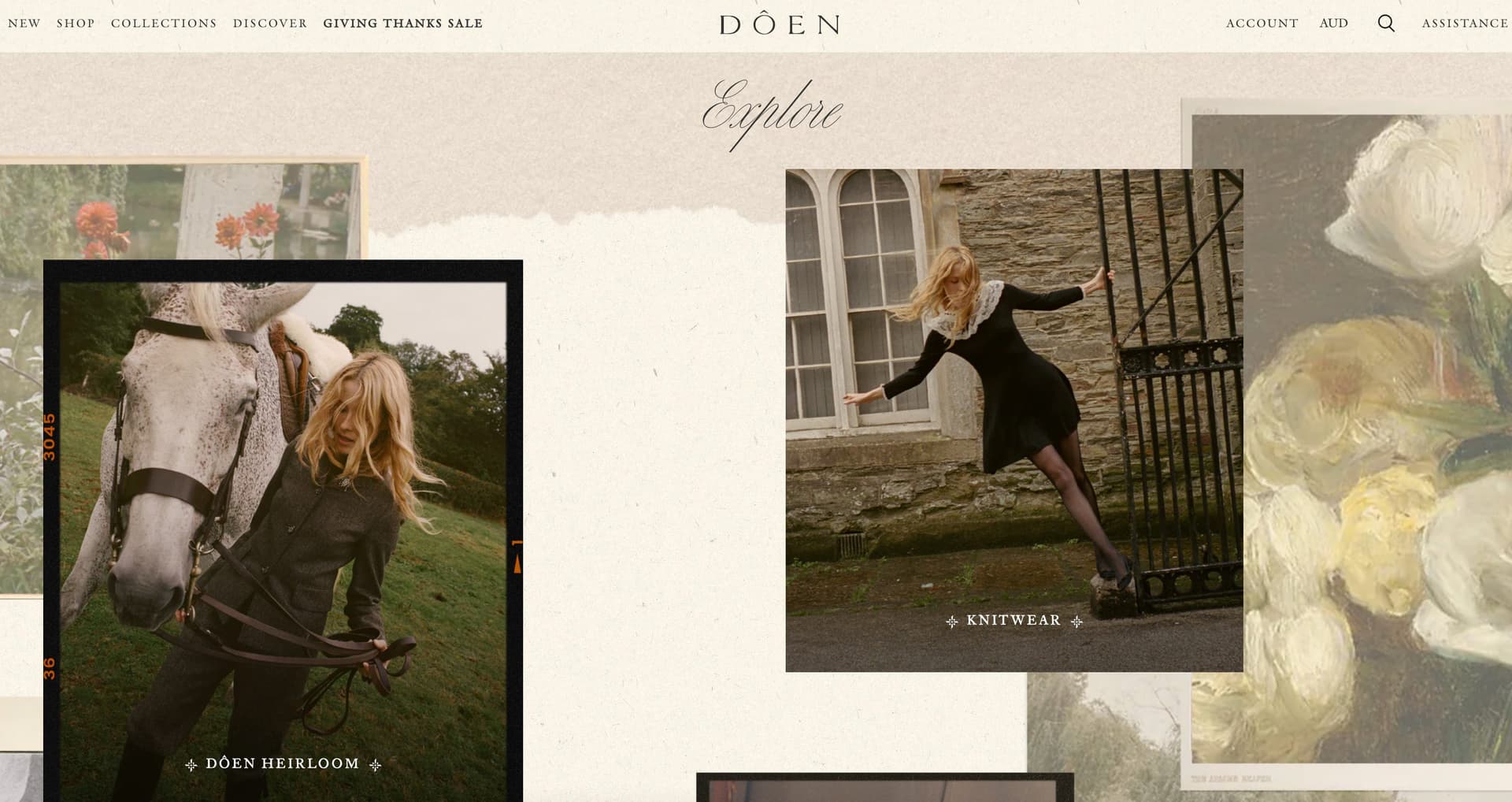
Dôen was founded in 2016 by sisters Margaret and Katherine Kleveland, and it has grown into a digitally-led, multi-channel fashion and lifestyle brand without turning itself into a perpetual launch machine. A 2025 report said the company closed a growth-equity funding round led by Silas Capital to accelerate retail expansion, a move that signals ambition but also discipline: the business is still betting on physical presence, not just paid traffic.
That matters in the language of old money fashion. The look is never only about the garment; it is about how the garment arrives in the world. A label that can extend from digital awareness into retail without looking ubiquitous keeps its allure intact. Dôen’s evolution suggests a brand can scale and still preserve the sense that the customer found it, rather than being chased by it.
La Ligne understood that stripes are a business, not just a motif
La Ligne, founded in 2016 by former Vogue editors Meredith Melling and Valerie Macaulay, along with Molly Howard, has built its positioning around stripes and women’s ready-to-wear. That may sound simple, but simplicity is often the point when a wardrobe is meant to suggest confidence rather than novelty. Stripes, when handled properly, become a uniform of discernment: crisp, directional, and easier to wear than to over-style.
The founders brought fashion credibility from the start, and that pedigree mattered because it gave the brand permission to move at a measured pace. Instead of chasing the breathless cadence of the startup playbook, La Ligne cultivated recognition through editing and consistency. In old-money terms, that is the difference between dressing to be noticed and dressing to be known.
Cinq à Sept shows what a multi-channel brand can look like when it is built to last
Cinq à Sept launched in 2016 under Jaya Apparel Group, and WWD reported in 2023 that the brand was generating about $100 million through wholesale, a freestanding store and e-commerce. That mix is precisely the point. It is not purely digital, not over-reliant on any single channel, and not trapped in the logic that every customer must be acquired through paid social.
Later strategic investment from Brand Velocity Group reinforced that the business was being treated as a scaled fashion company, not a growth hack. For old-money consumers, that matters because the brand’s value is reinforced by range and access that still feels considered. A freestanding store and a healthy wholesale footprint create the sort of controlled visibility that tends to outlast trend-chasing labels.
Everlane became the cautionary tale for the entire era
If Dôen, La Ligne and Cinq à Sept represent the alternate path, Everlane is the warning label. One of the defining DTC brands of the 2010s, it laid off 17% of its corporate workforce in January 2023, equal to 8.6% of total staff, as it tried to improve profitability. By May 2026, reporting said Shein was acquiring Everlane from majority owner L Catterton in a deal valuing the company at about $100 million.
That valuation is a brutal footnote for a brand that once helped define the aspiration of digitally native retail. It shows how quickly a label can move from category leader to case study when growth outruns its economics. In the old-money reading of fashion, that decline was not just financial; it was aesthetic. A brand that constantly performs for attention can start to feel disposable.
Why wholesale now looks more civilized than hype
The return of wholesale and multi-channel retail is not nostalgia for a pre-digital past. It is a response to the weaknesses exposed by the DTC boom: high customer-acquisition costs, fragile social reach and the burden of funding endless online awareness. Wholesale distributes risk, and for fashion it also distributes meaning, because placement in the right stores acts as a filter.
That filter is exactly what old-money style has always prized. It prefers curation over saturation, loyalty over blitzes, and clothes that feel integrated into life rather than pushed into it. The brands that understood this from the beginning did not need to declare themselves scarce. They simply behaved that way.
Dôen, La Ligne and Cinq à Sept outlasted the boom because they treated growth as something to be managed, not dramatized. In a market that has rediscovered the value of restraint, that may be the most contemporary luxury of all.
This article was produced by Prism’s automated news system from verified source data, official records, and press releases, then run through automated quality and moderation checks before publishing. The system is built and supervised by the people who set the standards it runs under. Read our full AI policy.
Know something we missed? Have a correction or additional information?
Submit a Tip