Kate Middleton leads royal wedding style in monochrome and cream
Kate Middleton’s cream Roland Mouret and Queen Camilla’s soft yellow set the dress code: old money now means restraint, not flash.

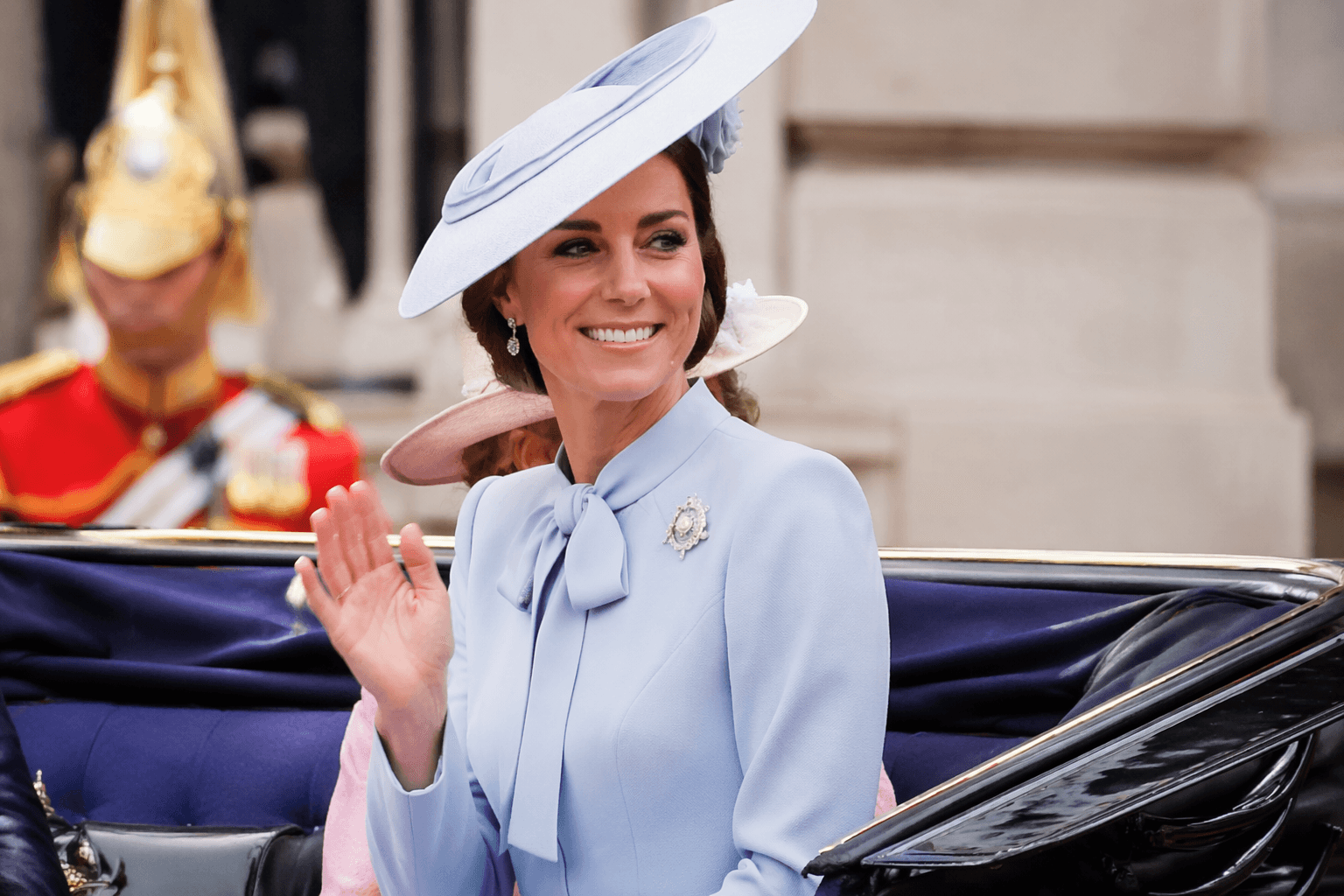
Peter Phillips and Harriet Sperling’s wedding was a live demonstration of how royal polish works when the family wants to look impeccable without looking eager. Kate Middleton arrived in a dark-cream Roland Mouret tweed midi dress with a boater-style hat, while Queen Camilla leaned into a cream-to-yellow palette with matching accessories, and together they made the hierarchy feel visible in the smartest possible way. This is what modern old money looks like now: controlled, pale, expensive-looking, and completely uninterested in shouting.
The new royal dress code
The wedding of Peter Phillips and Harriet Sperling on June 6, 2026, at All Saints Church in Kemble, Gloucestershire, was intimate, private, and tightly calibrated. The church sits about four miles south of Cirencester, and the setting mattered: this was not a glossy spectacle, but a family event where every hemline, hat brim, and shade of cream did a job. Peter Phillips is Princess Anne’s son and the eldest grandchild of Queen Elizabeth II and Prince Philip, and this was his second marriage, making him the first of Queen Elizabeth II’s eight grandchildren to remarry.
That is the backdrop for the style story. When the royal women dress for a society wedding, they are not just getting dressed. They are signaling rank, taste, and restraint in a language built from fabric weight, tone, and proportion. Kate’s Roland Mouret and Camilla’s softer cream-to-yellow look did not compete with the bride. They framed the room.
Why Kate’s cream worked
Kate Middleton’s Roland Mouret dress hit the exact note old-money dressing is chasing right now: monochrome, tailored, and low-gloss. The tweed midi shape gave structure without stiffness, and the cream, nude, or latte-toned palette kept it quiet enough to feel expensive rather than performative. The boater-style hat sharpened the look, adding just enough ceremony to make the outfit feel finished without tipping into costume.
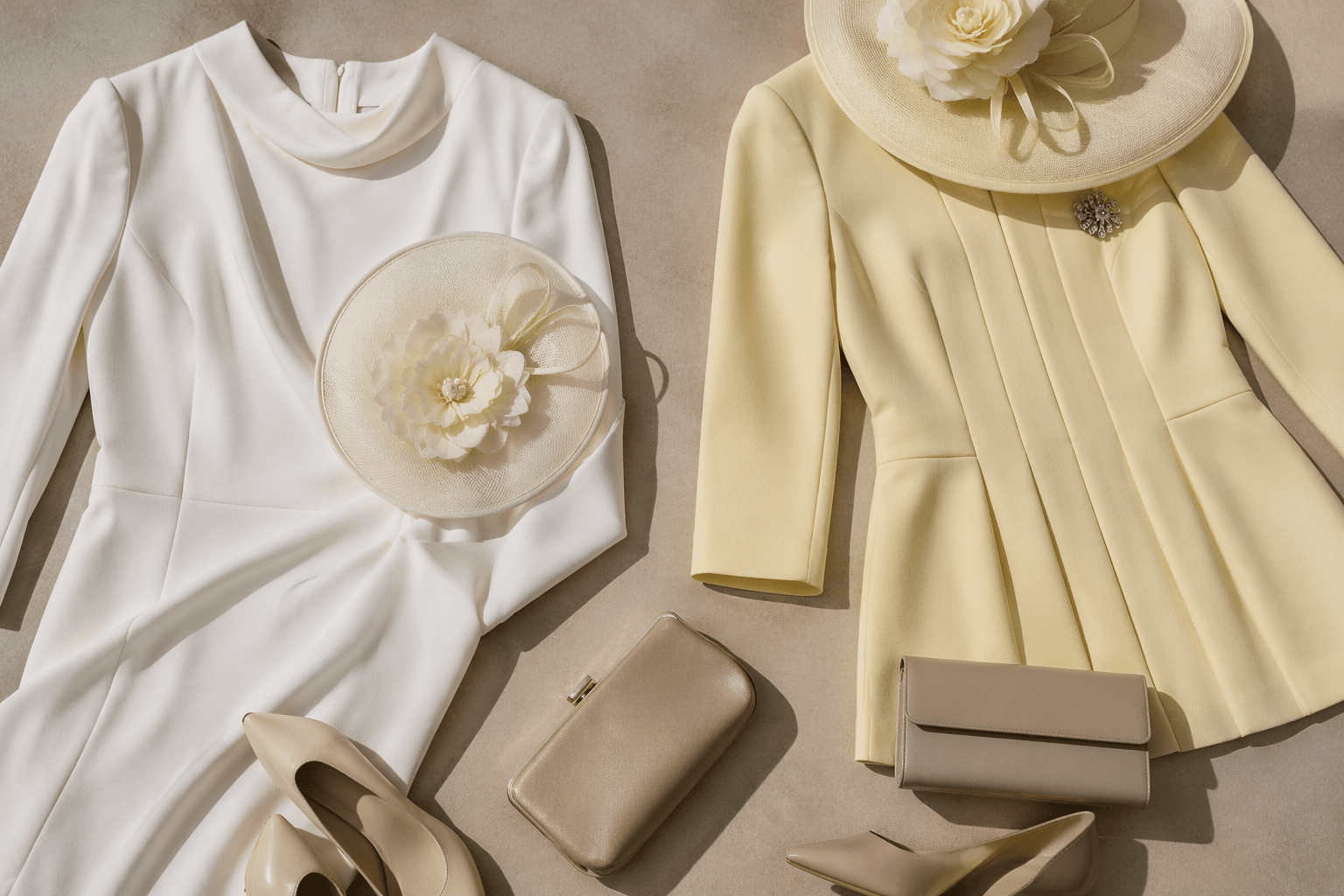
This is the difference between aristocratic elegance and trend-driven occasionwear. Trend dressing wants a moment. This wanted a standard. The dress did not rely on embellishment, bright color, or dramatic volume to register in photographs. It relied on cut, texture, and the confidence of looking composed in a room full of people who understand exactly what a polished outfit is supposed to do.
Queen Camilla’s softer authority
Queen Camilla’s look was the perfect counterpoint: a light cream or yellow-toned dress with matching accessories that kept her presence elegant and deliberately unflashy. Where Kate’s outfit had the crispness of a tailored style decision, Camilla’s read as softer and warmer, but the message was the same. The family was dressed in shades that stay close to bone, ivory, and cream because those colors read as controlled, composed, and socially fluent.
That tonal discipline is the whole game. Monochrome dressing removes noise, and noise is exactly what old money avoids. When the palette stays close to neutral, the eye goes to silhouette, fabric, and posture instead of ornament. It is a wardrobe language built on self-restraint, and at this wedding, it was the dress code.
Who showed up, and what that says
The guest list itself reinforced the hierarchy on display. King Charles III and Queen Camilla attended, as did the Prince and Princess of Wales, Princess Anne, the Duke and Duchess of Edinburgh, Zara Tindall and Mike Tindall with their daughters Mia and Lena, and Princesses Beatrice and Eugenie with their husbands. The Duke and Duchess of Sussex did not attend, which made the family’s public alignment even more legible.
This was a private and intimate wedding, with no public guest list released, which only sharpened the sense that what mattered was who appeared and how they appeared. Royal weddings are always about more than the couple. They are visual audits of family standing, and this one was especially clear: the most senior figures read as polished, disciplined, and united around a strict, conservative silhouette code. Nothing about the styling suggested social climbing. Everything suggested order.
Harriet Sperling’s bridal look set the tone, too
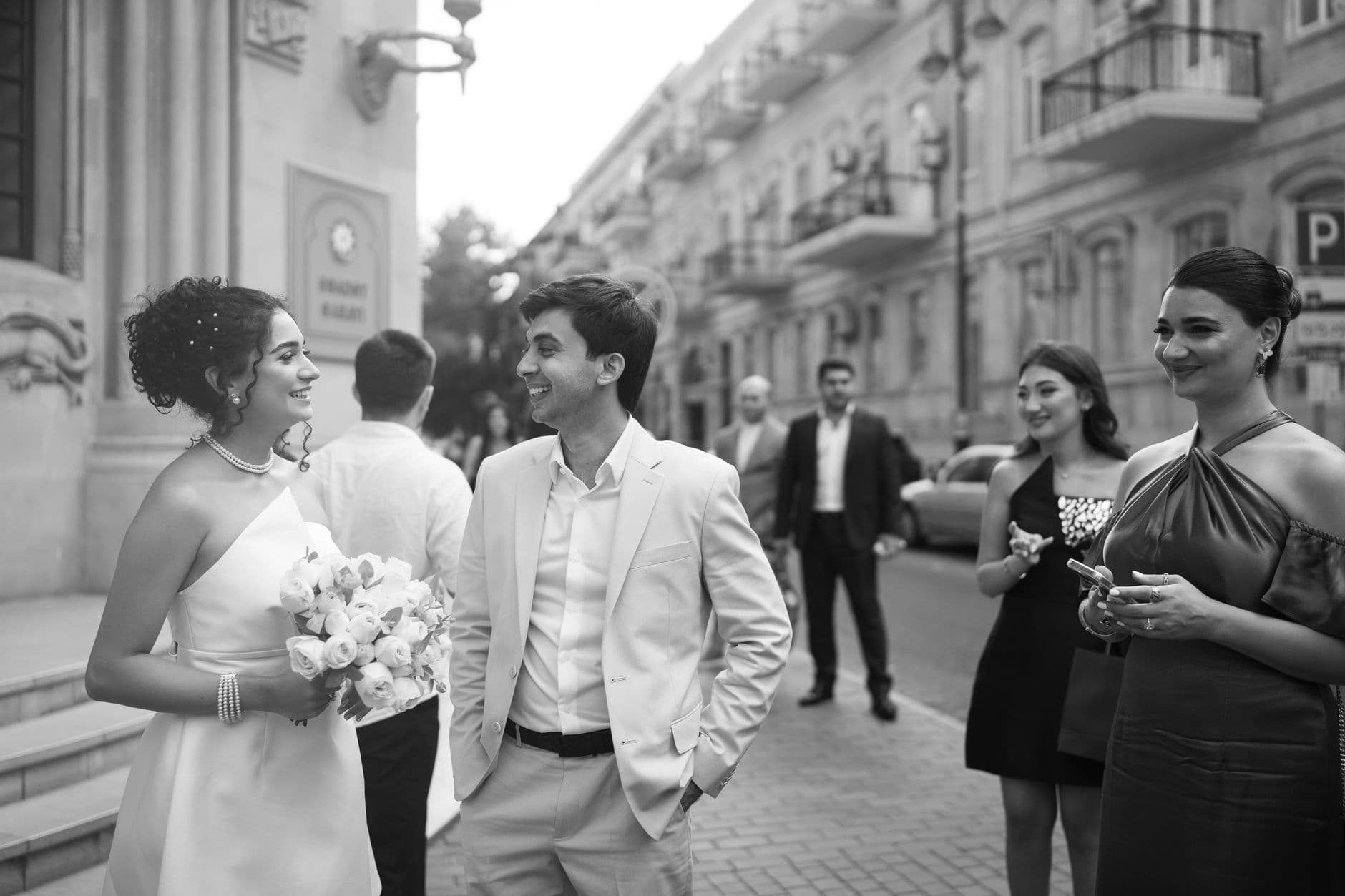
Harriet Sperling’s gown gave the ceremony its own elegant balance. Designed by Emilia Wickstead, it paired a square-neck column underdress with a lace overjacket and a three-meter train, which gave the look both modern restraint and proper bridal lift. She wore the Pragnell family tiara, Pragnell earrings, and Jimmy Choo shoes, a mix that kept the romance formal and the sparkle controlled.
Her bridesmaids, Savannah Phillips, Isla Phillips, and Georgina Sperling, tied the family angle back into the styling. That matters because the best royal weddings do not rely on one heroine shot. They create a whole visual system, with the bride, her attendants, and the guests all playing their part. Wickstead’s work here hit the sweet spot: traditional enough to satisfy the institution, modern enough to feel current, and detailed enough to hold up next to a room full of royals.
How to decode modern old money
If you want the practical takeaway, it is not complicated. The new old-money code is built on subtraction, not accumulation. Cream tailoring, soft structure, and discreet accessories do more status work than anything overloaded with shine or novelty. The best pieces look like they could be worn again in six months, which is exactly the point: repeat-wear logic is the clearest sign that a wardrobe has confidence.
- Choose color families that stay close to cream, ivory, latte, and soft beige.
- Favor structure that shapes the body without squeezing it.
- Keep accessories quiet, but make them exact.
- Let hats, if you wear them, sharpen the silhouette instead of stealing the show.
- Treat texture, like tweed, lace, and polished suiting, as the real decoration.
The final read
The whole event was a reminder that old money is not dead trend or timeless style wallpaper. It is a live status system, and at this wedding, the family used clothing to calibrate rank, polish, and restraint with almost surgical precision. Kate Middleton’s cream Roland Mouret and Queen Camilla’s softer monochrome were not just good outfits. They were the clearest argument yet that in 2026, the sharpest royal style is still the quietest one.
This article was produced by Prism’s automated news system from verified source data, official records, and press releases, then run through automated quality and moderation checks before publishing. The system is built and supervised by the people who set the standards it runs under. Read our full AI policy.
Know something we missed? Have a correction or additional information?
Submit a Tip