Kering Unifies Four Jewelry Houses Into New Billion-Dollar Division
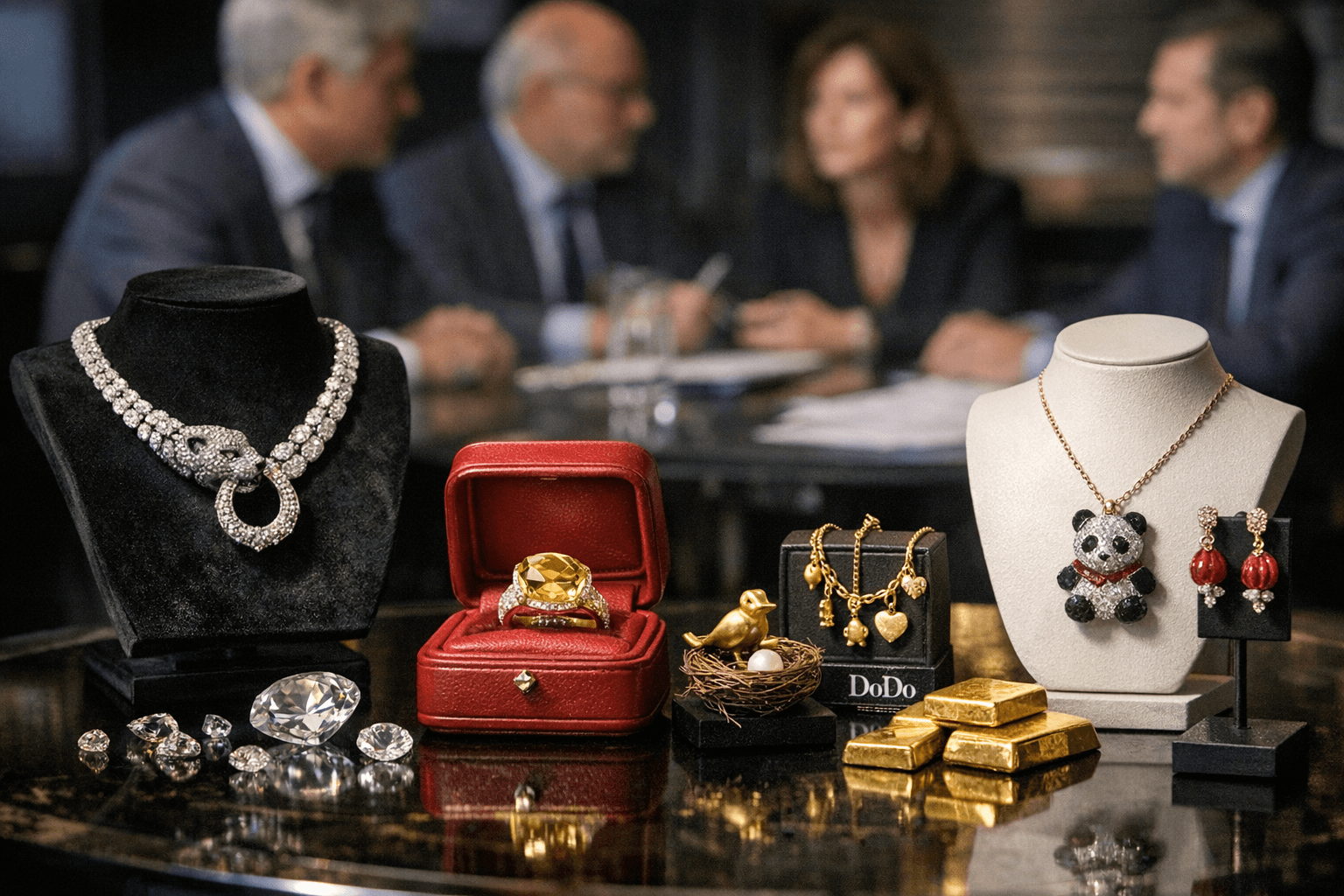
Kering bet on gold and diamonds, grouping Boucheron, Pomellato, DoDo and Qeelin into a single division generating almost €1 billion a year.

Kering has placed its biggest strategic bet in years on jewelry, formally launching Kering Jewelry on March 16 to consolidate Boucheron, Pomellato, DoDo, and Qeelin under a single operating structure that collectively pulls in almost €1 billion a year in revenues. The move came as the Paris-based luxury group reported its third consecutive year of falling sales, and CEO Luca de Meo has now made his answer to that slide explicit: gold, diamonds, and a vertically integrated production machine to compete at the highest level of the category.
Jean-Marc Duplaix was appointed Chief Executive Officer of Kering Jewelry effective immediately, while simultaneously retaining his role as Group Chief Operating Officer, a dual mandate that covers finance, M&A, investor relations, real estate, digital, and the general secretariat. The CEOs of all four jewelry houses will report directly to Duplaix, a reporting structure Kering described as designed to strengthen "strategic alignment and operational coordination."
"With Kering Jewelry, we are giving the Group a powerful and cohesive platform capable of supporting our Houses' ambitions in an area of expertise where creativity and excellence are inseparable," de Meo said. "I am delighted with the appointment of Jean-Marc: his experience will be instrumental in unlocking the Group's full potential in Jewelry."
The new division also absorbs the Raselli Franco Group, a family-owned Italian manufacturer that Kering has been staging into acquisition and is currently integrating. Kering positioned Raselli as central to the new structure, crediting the firm with "exceptional savoir-faire and cutting-edge technologies" that are expected to anchor Kering Jewelry's in-house High Jewelry production capacity. The acquisition gives the group something its competitors in fine jewelry built over decades: vertical control over craft and manufacturing, not just brand and retail.
Kering Jewelry is designed to operate, in the company's own framing, as "an integrated platform designed to support the growth of the Houses, building on their creative identities and the development of their iconic and High Jewelry collections." Crucially, the structure is also meant to open new jewelry opportunities for Kering's fashion and leather goods houses, a cross-category play that could bring fine jewelry into closer alignment with houses like Gucci and Saint Laurent.
The announcement triggered a new segmentation of Kering's businesses overall. Shares in KER.PA fell 4.55% on the day, a market reaction that suggests investors are still processing whether consolidation alone constitutes a turnaround strategy.
The larger context around the announcement is hard to separate from Kering's recent asset restructuring. Last October, the group sold its beauty division to L'Oréal for €4 billion, a transaction that included Creed and long-term licenses for its top brands. The sale was widely read as a move to reduce debt and redirect capital toward higher-margin, more resilient categories. Jewelry fits that description: unlike fragrance or fashion, the segment has historically demonstrated stronger pricing power and lower volatility through economic cycles.
Kering is entering territory where Cartier, Van Cleef & Arpels, and Bulgari have operated for generations, with heritage and retail infrastructure that Kering's four houses are still scaling toward. Boucheron, founded in 1858, carries the group's deepest fine jewelry pedigree. Pomellato has been quietly developing high jewelry credentials of its own. Qeelin and DoDo represent different ends of the market, from culturally specific luxury to more accessible charm-based formats. Whether a unified platform amplifies all four without flattening their distinct identities is the central question the structure will have to answer as it matures.
Know something we missed? Have a correction or additional information?
Submit a Tip