Lace-trim takes over spring wardrobes, from London to L.A.
Lace-trim is back, but the polished version is all restraint: a whisper at the hem, a clean neckline, and just enough romance to read expensive.

The new polish is a sliver of lace
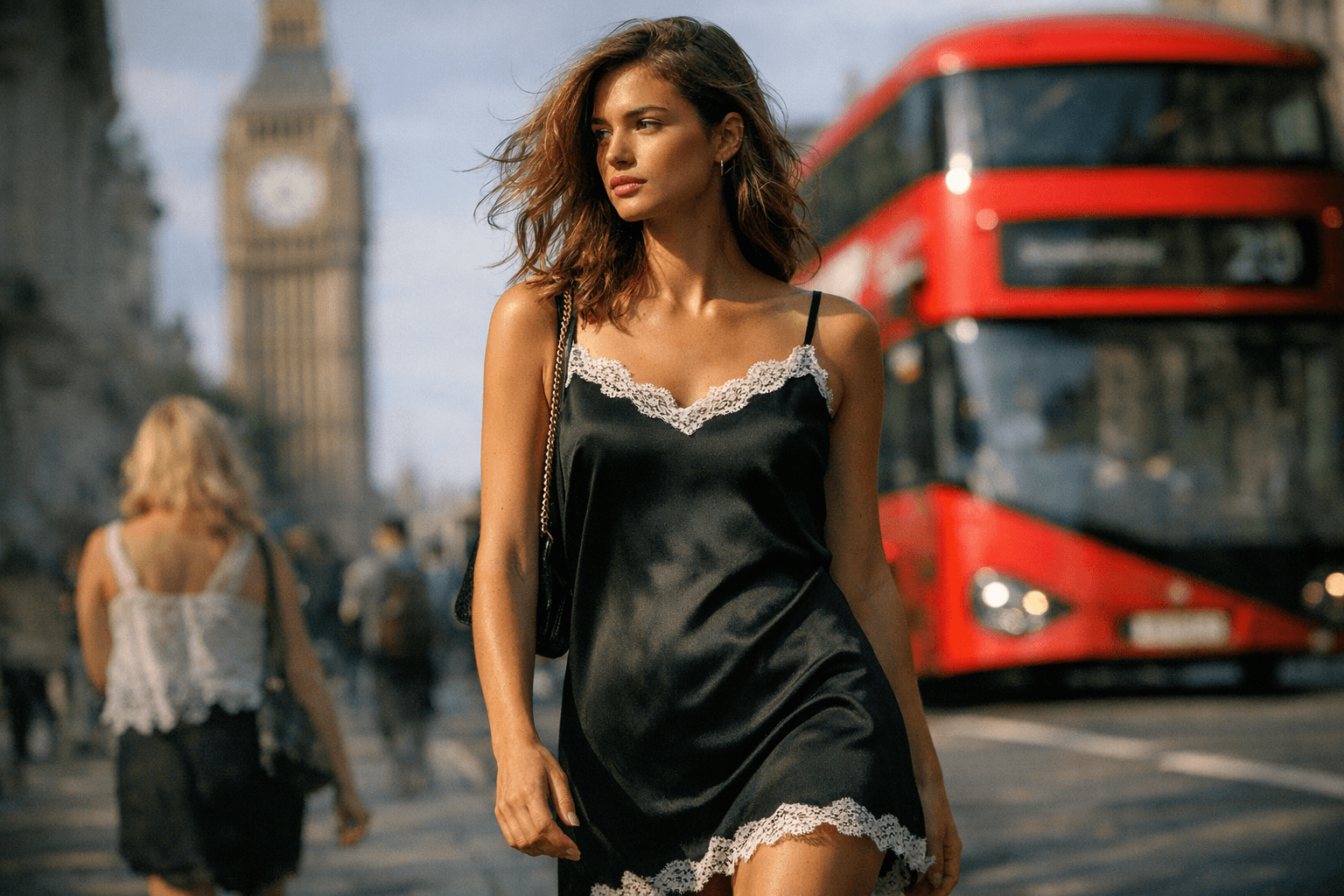
At Celine, Chloé, and Stella McCartney, lace was not treated like decoration so much as punctuation: a narrow edge at a slip dress, a softened camisole strap, a skirt finished with just enough frill to catch the light. That is why this revival feels different from the sugar-sweet lace people may remember. It has the discipline of old money dressing, where restraint does the heavy lifting and the prettiness arrives second.
The trick is proportion. A fine lace-trim neckline against a sharp blazer reads as deliberate; an overworked flounce, especially in a shiny fabric, tips into boudoir. The collection of looks that matters now is the one that stays close to the body, lets tailoring do half the talking, and uses lace the way a good jeweler uses a setting, to frame, not overwhelm.
Why lace suddenly looks expensive again
Lace has always carried status because it has always signaled labor, technique, and time. Britannica defines it as an ornamental, openwork fabric formed by looping, interlacing, braiding, or twisting threads, which is part of its appeal: it looks airy, but it is built with precision. The Metropolitan Museum of Art traces true lace as a fabric in its own right back to the sixteenth century, and The Lace Guild notes that it likely emerged in the early sixteenth century as techniques moved beyond ornament on a backing.
That history matters now because the current lace-trim moment does not read like costume. It reads like continuity. When a detail has four centuries of association with refinement, the modern challenge is not to make it louder. It is to keep it controlled enough to feel inherited rather than theatrical.
From London to L.A., the trend moved fast
Who What Wear’s April 22 shopping edit captures the scale of the shift: lace-trim is showing up from London to Los Angeles, and not only in fashion circles. Madrid and Copenhagen are part of the same conversation, which tells you this is not a local microtrend but a broad wardrobe adjustment, one that travels well because it works on pieces people already wear.
The momentum began building last summer, helped along by viral DÔEN lace-trim shorts, the sort of item that spreads because it solves a styling problem and photographs well. From there, the look moved upward into celebrity wardrobes, with Hailey Bieber and Zendaya both wearing it in ways that make the trend feel current rather than precious. Bieber’s appeal is her ability to make feminine details feel pared back; Zendaya gives the same idea a sharper, more fashion-forward edge.
The bigger engine is the spring/summer 2026 runway season, where Celine, Chloé, and Stella McCartney gave lace trim a consistent shape across slip dresses, camisoles, and skirts. That matters because once a detail appears across several major houses, it stops looking like a novelty and starts looking like a silhouette language.
How to keep lace-trim on the right side of the line
Stylist Samantha Dawn described lace trim as a way to express softness and femininity without turning the whole look sentimental, especially when it is layered under a blazer or worked into textured pieces. That is the styling rule to remember: lace needs contrast. The cleanest version is not lace on lace, but lace against structure, or lace against something matte and unsentimental.
- A lace-trim camisole under a blazer, especially in silk, satin, or a matte viscose that does not glare under daylight. Pair it with tailored trousers or a straight skirt so the trim feels intentional rather than lingerie-adjacent.
The most wearable approaches are the ones with the least fuss:
- A slip skirt with a cashmere knit or fine merino sweater. The knit dulls the sweetness, while the skirt’s movement keeps it feminine. This is the easiest route to that polished, lived-in look old-money dressing has always prized.
- A day dress with lace only at the neckline, sleeve edge, or hem. In cotton poplin, linen blends, or crisp crepe, the trim reads as a finishing detail, not the whole story.
Color does just as much work as cut. The most elegant versions stay in the quiet register: ivory, cream, black, soft dove gray, and muted navy all let the texture speak without turning the outfit precious. Bright colors can work, but they need cleaner construction and less trim. If the fabric is already glossy, the lace should be restrained; if the lace is heavier or more decorative, the base should stay matte.
The shopping edit is broad, but the principle is narrow
Who What Wear’s edit brings together DÔEN, Reformation, H&M, Tularosa, By Malene Birger, Zara, and Open Edit, and that range is telling. This is not a trend reserved for one price bracket. It moves from high-visibility labels to accessible fast-fashion versions because the code is simple enough to copy: one soft edge, one polished layer, one clean silhouette.
That accessibility is part of why the trend has a shareable quality. People can read it immediately on the street, whether it appears in a blazer-and-cami combination in London or a slip skirt styled with a sweater in Los Angeles. It is visually legible, but it still feels elevated, which is exactly what makes old-money dressing so enduring. The clothes do not beg for attention; they reward a closer look.
What makes it feel aristocratic, not boudoir
The difference comes down to restraint, polish, and placement. Lace-trim looks aristocratic when it appears as a border, a frame, or a whisper. It looks boudoir when it dominates the garment, competes with sheen, or loses the structure around it. The safest rule is simple: let lace decorate the outline of the outfit, not swallow it.
That is why this trend has moved so easily into the old-money conversation. It carries history, but it also carries discipline. In a spring wardrobe crowded with softness, lace-trim works best when it behaves like a finishing touch, the kind that makes a simple outfit look considered long before it looks decorative.
This article was produced by Prism’s automated news system from verified source data, official records, and press releases, then run through automated quality and moderation checks before publishing. The system is built and supervised by the people who set the standards it runs under. Read our full AI policy.
Did this article answer your question?