Parisians Flock to Chanel, Polène, Longchamp for Quietly Luxe Bags
Parisian bag taste is all about restraint: Chanel, Polène and Longchamp lead a lineup of useful shapes, real leather and repeat-wear appeal.
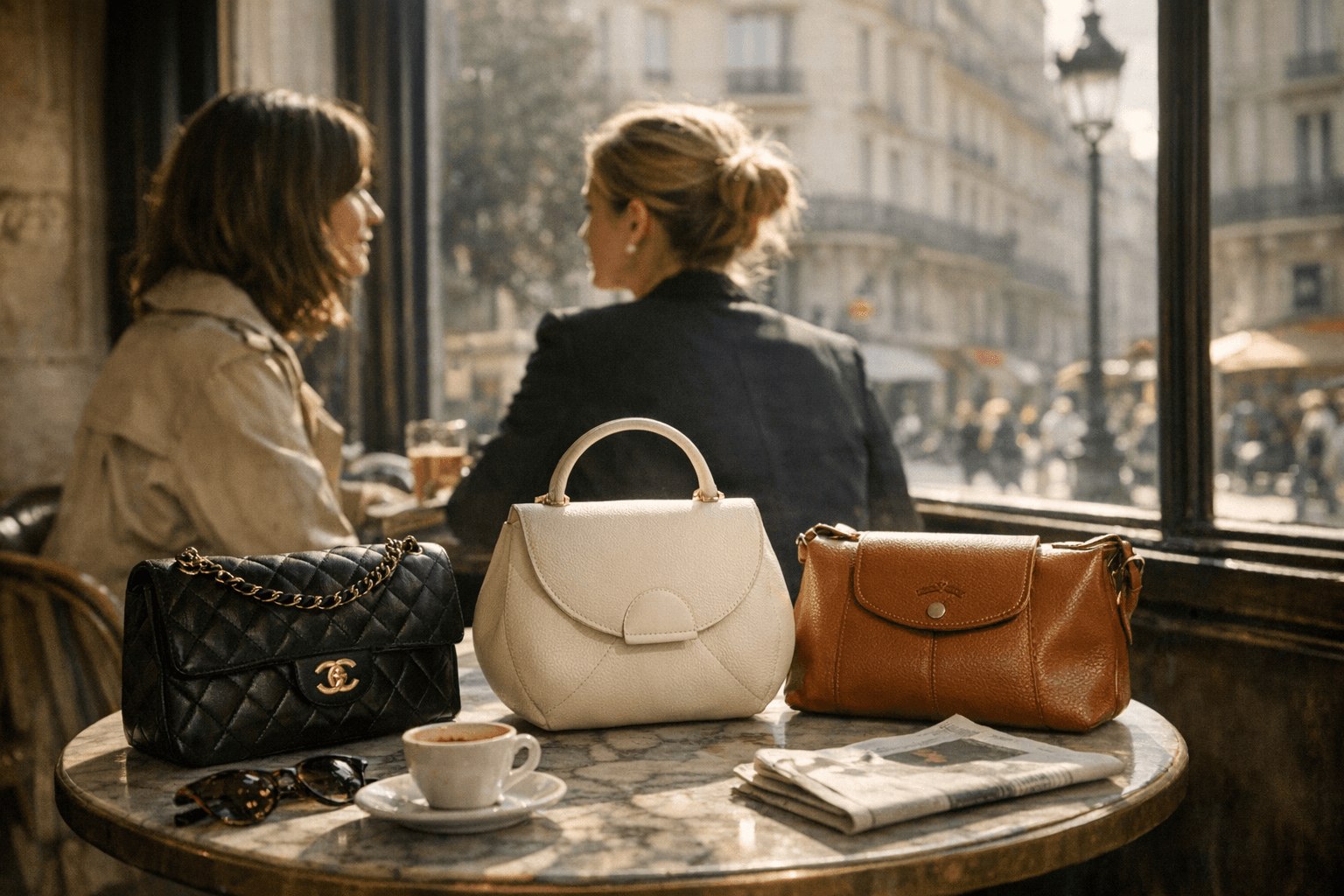
Parisian handbag taste is leaning harder than ever toward restraint. The bags getting the most traction are the ones that look useful first and status-signaling second: Chanel for the heritage whisper, Polène for cult minimalism, Longchamp for the everyday tote that earns its keep, and Rouje for the feminine line that still feels unstudied.
That shift matters because French handbag culture has always understood a simple truth: the most enviable bag is rarely the loudest one. From Jane Birkin’s basket-bag era to the noughties Baguette, Paris has long favored pieces that read as lived-in, not performed. The current street-style mix, which also brings in Elleme, Celine, Saint Laurent and Jacquemus, shows the same instinct in a newer key: recognizable names, real leather, and shapes built for repeat wear.
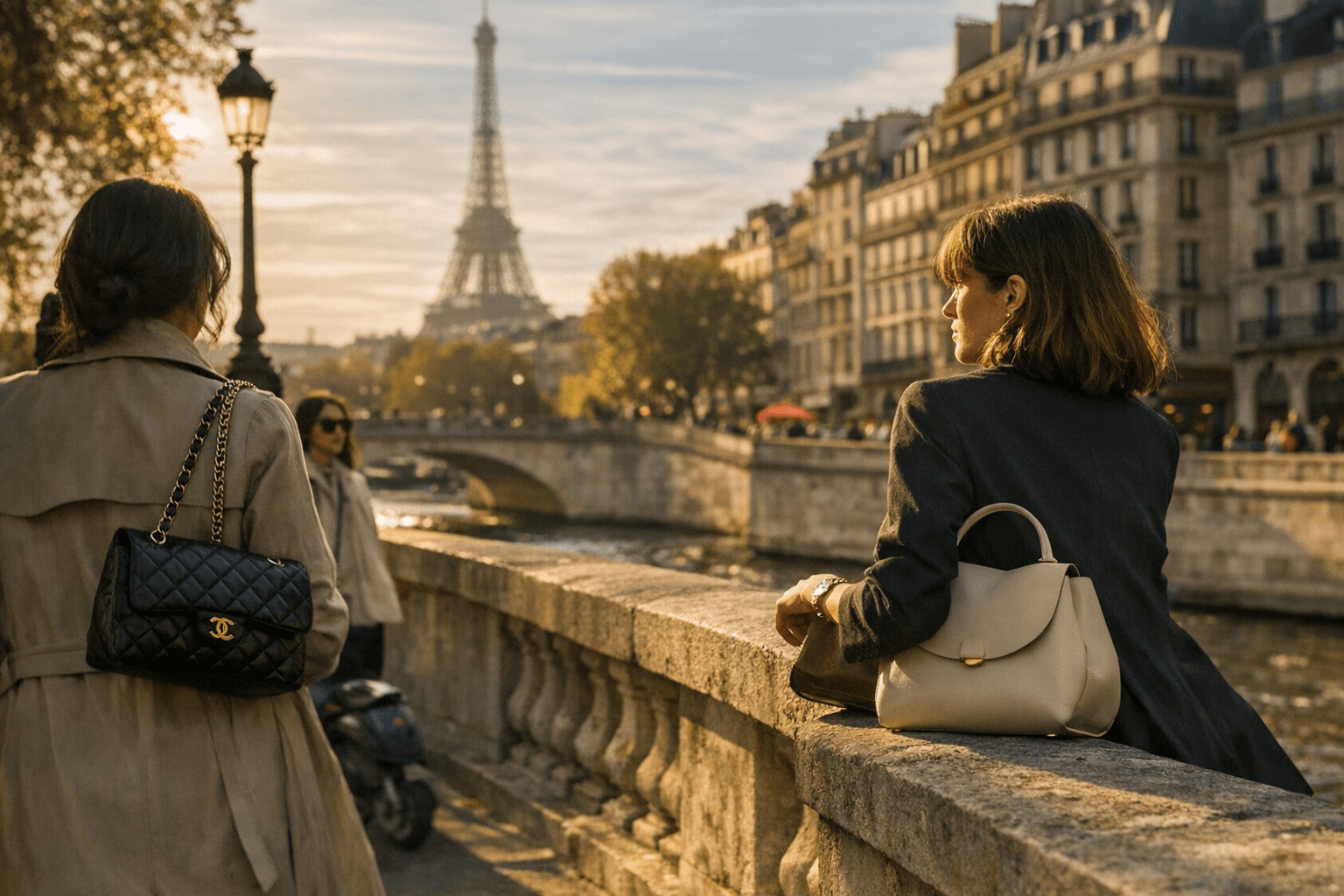
The Paris code: restraint first
Real Parisian taste is easy to spot once you stop looking for flash. The logo is often small, the silhouette is purposeful, and the leather has enough structure to hold its line without looking stiff. These bags are meant to move through a day, not only through a photograph, which is why the most persuasive labels in this conversation are the ones that balance polish with use.
- Understated branding
- Useful proportions
- Leather that feels supple, not overworked
- A shape you can wear more than once a season
That is also why this moment feels bigger than a simple luxury roundup. French women’s handbag choices are being framed as a dialogue between heritage houses and newer, more accessible cult labels, and that is exactly where old-money-adjacent style lives now: in the overlap between pedigree and practicality.
For the everyday tote: Longchamp
Longchamp is the clearest answer when the brief is a bag that can actually do the work. The house says its story began in 1948, when Jean Cassegrain started crafting luxury leather smoking pipes, and it has since expanded into handbags, luggage, ready-to-wear, shoes, and men’s leather collections. The family-business aspect matters too: Longchamp says it has remained in family hands for four generations, which gives the brand the kind of continuity that quietly reads as legitimacy.
That pedigree explains why Longchamp sits so comfortably in a Paris street-style story about restraint. It is the brand you reach for when you want something polished enough for the city, but practical enough to carry through the rest of your life. The appeal is not novelty. It is reliability, and in French style, reliability is its own form of luxury.
For the cult leather buy: Polène
Polène has become the most visible proof that the Paris handbag conversation is no longer controlled by only the oldest names. The brand says it was founded in 2016 by three siblings, and it describes itself as a Parisian leather-goods house built around minimalism, creative expression, and craftsmanship. That combination is precisely what makes it feel current: it looks modern without feeling cold, and it offers the clean visual language shoppers want when they are tired of obvious status dressing.
Who What Wear has described Polène as a cult label popular with influencers and editors, and that makes sense when you see how the brand sits between aspiration and accessibility. Its bags are assembled in Ubrique, Spain, which only sharpens the contrast between Paris image and broader European leather-working expertise. The result is a bag that reads as informed, not overexposed, which is exactly the kind of signal old-money-adjacent style prefers.
For the polished shoulder bag: Rouje
Rouje brings a different kind of Parisian polish, one that is softer, more feminine, and a little more lived-in. Jeanne Damas says she created the brand after being inspired by the women she observed growing up around her parents’ restaurant near Bastille, and Rouje says it was born in 2016. That origin story matters because it explains why the brand feels so rooted in a real neighborhood eye rather than a fantasy of Paris.
Rouje describes its look as feminine, sensual, and distinctly Parisian, and that is the point: the brand gives you the suggestion of ease without sliding into sloppiness. For readers who want a shoulder bag that looks elegant at lunch and effortless at dusk, Rouje offers the kind of French-girl polish that is less about display than confidence. It is the bag equivalent of a perfectly broken-in trench, worn, but never careless.
For the investment buy: Chanel and the heritage end of the spectrum
Chanel remains the shorthand for the most established end of the Paris handbag conversation, and its presence anchors the whole story. Around it, Celine, Saint Laurent, Jacquemus and Elleme fill out the spectrum, proving that the modern Paris bag wardrobe is not one-note. It runs from heritage houses with instant recognition to newer labels that trade in subtlety, shaping a market where the real status signal is discernment.
That is what makes this moment feel so different from logo-led luxury. The bags that matter most are not trying to dazzle from across the street. They reward a closer look: the grain of the leather, the way the strap sits on the shoulder, the ease with which they move from weekday to weekend.
Paris, in other words, is not chasing spectacle. It is refining it, one quietly luxe bag at a time.
This article was produced by Prism’s automated news system from verified source data, official records, and press releases, then run through automated quality and moderation checks before publishing. The system is built and supervised by the people who set the standards it runs under. Read our full AI policy.
Did this article answer your question?