Old Money Jewelry Staples, the Forever Pieces to Wear Daily
Start with studs, a slim chain, and one strong bracelet. The best old-money jewelry looks quiet, but it works hard every single day.
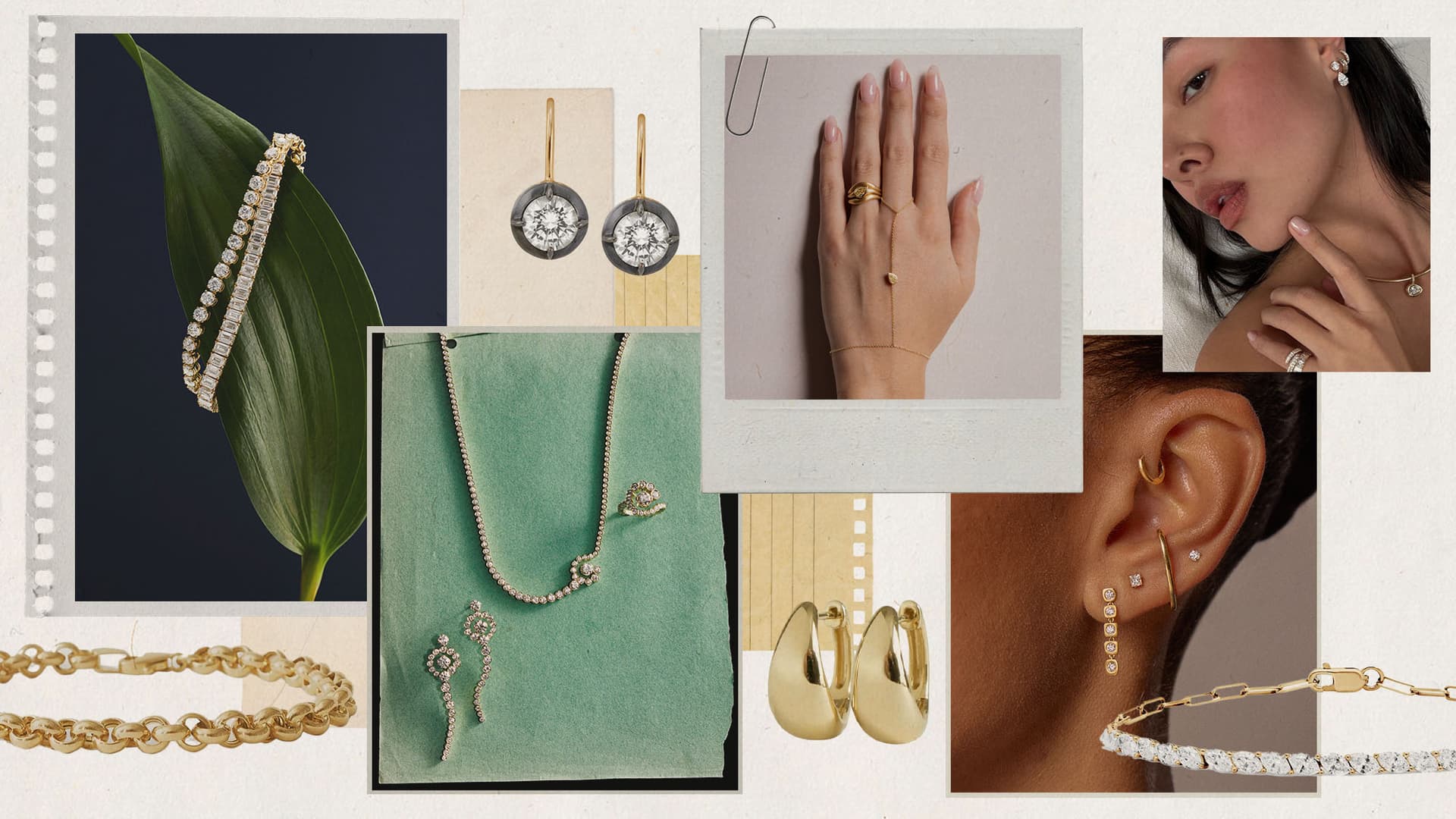
The cleanest old-money jewelry wardrobe starts small
The smartest fine jewelry looks like part of the uniform, not the occasion. Start with diamond studs, then add a slim everyday chain, then classic gold hoops, and you already have the backbone of a polished rotation that works with cashmere, shirting, and sharp tailoring. These are the pieces that never need explaining because they do the same job every morning: they add finish without noise.
That logic is why the best jewelry wardrobes are built around wearability, not display. Tiffany describes stud earrings as simple, elegant, foundational pieces, and that is exactly the point. A pair of studs sits close to the face, sharpens the whole look, and disappears when you want it to, which is why they feel more essential than flashy. If you buy only one category first, make it studs. They are the quietest return on investment in the whole jewelry box.
Build the base, then let the shine move lower
After studs, the next smartest move is a chain that can live on your skin every day. An everyday chain gives the whole look structure at the collarbone, especially when it is fine enough to layer but solid enough to stand alone. Add a pendant if you want a little motion, but keep the line clean. The old-money effect comes from restraint, not clutter, so the chain should sit like punctuation, not decoration overload.
Classic gold hoops come right behind that. They soften the face and make even a plain white T-shirt look considered, which is why they are such an easy daily piece. Keep the scale moderate and the finish polished. Oversized hoops push the mood into statement territory, but a restrained pair reads more expensive because it feels intentional and lived-in, the way good tailoring does.
The wrist is where the look gets its authority
A diamond tennis bracelet is the bracelet category with the widest range. Sotheby’s calls it classic and versatile, and that is the whole appeal: it can look casual in daylight and still hold its own at night. That dual-use quality matters more than flash. A tennis bracelet glints in motion, catches the light at the cuff of a blazer, and still feels right with a knit sleeve or rolled shirt cuff.
If you want one signature wrist piece with actual design pedigree, Cartier’s LOVE bracelet is the heavyweight. Cartier says Aldo Cipullo created it in New York in 1969, and the details are what made it stick: an oval form, visible screws, and a screwdriver fastening system. It is not delicate, and that is the genius. The LOVE bracelet looks like an idea made into metal, which is why it still reads as modern instead of costume. You do not wear it for softness; you wear it for clarity.
The house icons still matter because they know how to layer
Van Cleef & Arpels takes a different route, and that difference is exactly why the Alhambra remains so useful in a polished wardrobe. The collection debuted in 1968, and its four-leaf clover motif was inspired by luck. Van Cleef’s archive traces clover motifs back to 1906, when Jacques Arpels is said to have offered them to employees as good luck charms. That origin story gives the piece something rare in luxury: sentiment without sentimentality.
In practice, Alhambra works because it is gentler than a hard-edged bracelet and more decorative than a plain chain, but still controlled. It layers naturally with a crisp shirt, a ribbed knit, or a tailored jacket because the motif does the work without taking over the outfit. If Cartier is architectural, Van Cleef is fluid. Both are icons, but they earn their place differently. Cartier brings structure; Van Cleef brings softness and a little superstition, which is catnip for anyone who likes their polish with a touch of romance.
Rings should look like they were chosen, not accumulated
Stackable bands are the unsung pieces in a fine-jewelry wardrobe. They let you build texture without starting a conversation, and that matters in an old-money context where excess usually looks cheaper than discipline. A few slim bands, mixed in the same metal family, create a quiet rhythm on the hand. The look is restrained, but not empty.
Vintage pinky rings bring a little more attitude, which is why they work best when everything else is kept clean. A pinky ring should feel deliberate, maybe even inherited, with enough weight to hold its shape and enough simplicity to avoid reading like costume. It is the one ring that can make a hand look dressed on its own. Keep the rest of the stack low and the effect stays polished instead of theatrical.
The real test is not trend, it is wear rate
The broader luxury market still says the classic categories matter. Bain and Altagamma projected global luxury spending would reach nearly 1.5 trillion euros in 2024, even as growth slowed. Richemont’s jewelry division rose 14 percent to 7.75 billion euros at constant exchange in the first half of its fiscal year. That is not a fluke, and it is not just branding. It is proof that established houses and familiar silhouettes still pull serious demand when the piece itself feels lasting.
That is the standard to use when you are comparing brands and categories: metal quality, repairability, timelessness, and whether the piece actually layers with your everyday uniform. Heavy, well-made gold hoops and chains will outlast an impulsive novelty buy. A tennis bracelet with a secure clasp will earn more wear than a dramatic cuff that scratches everything in sight. A house icon like the LOVE bracelet or Alhambra can justify its place when the design is so recognizable and so well-proportioned that it becomes part of your signature instead of a seasonal mood.
The old-money jewelry wardrobe is not about owning the most. It is about owning the pieces that keep showing up because they make everything else look better. Start with the small daily essentials, add one strong bracelet, then let a single house icon do the talking. The right jewelry does not announce itself first. It just never looks out of place.
This article was produced by Prism’s automated news system from verified source data, official records, and press releases, then run through automated quality and moderation checks before publishing. The system is built and supervised by the people who set the standards it runs under. Read our full AI policy.
Did this article answer your question?