Old money summer style favors polished closed-toe shoes
Closed-toe summer shoes give old-money polish without the fuss of sandals. Ballet flats, loafers, Mary Janes, and espadrilles each solve warm-weather dressing with a more finished line.
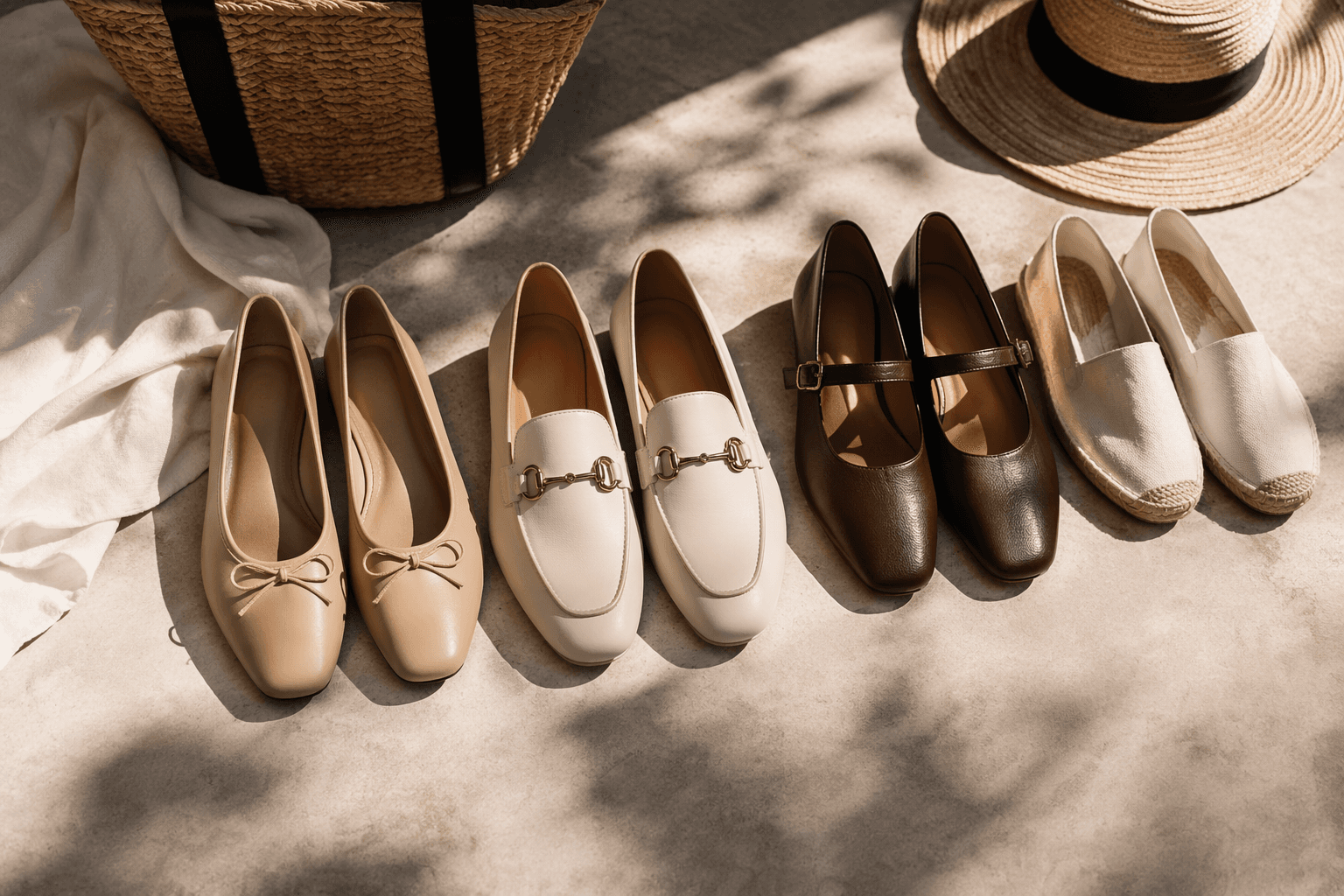
Polished flats finish a summer outfit without stealing the frame. Closed-toe styles deliver the discretion, breathability, and easy refinement old-money dressing depends on, especially when the rest of the look is built from linen trousers, cotton dresses, and tailored shorts. This summer, the most current warm-weather shoes are also the most restrained.
The closed-toe logic of old-money summer style
A closed toe changes the whole read of a summer look, softening the exposure of sandals and giving even the lightest outfit a more deliberate line. With linen, cotton, and crisp tailoring, that small shift keeps the outfit in the realm of quiet ease rather than beachwear.
Flat-footed shapes lead the category in 2026. Ballet flats, loafers, and Mary Janes anchor it, while espadrilles hold their place as the woven, vacation-ready option. Old-money summer style is moving toward covered, comfortable footwear that still looks considered at lunch, at the office, or on a coastal weekend.
Ballet flats bring the softest finish
Ballet flats are the most minimal version of this idea, and that is exactly why they work. Their history stretches back more than three centuries, to late-17th-century dancers who chose flat shoes for flexibility and comfort during performance. That lineage still shows in the way they sit on the foot today: light, neat, and almost weightless in a way that flatters longer skirts, ankle-length trousers, and cropped tailoring.
In the current flat-shoe cycle, ballet flats remain one of the defining silhouettes of 2026. They are the pair that makes a cotton dress look studied rather than sweet, and the shoe that can keep tailored shorts from tipping into casual territory.
Loafers carry the sharpest inheritance
Loafers bring more structure to the same warm-weather wardrobe. A key moment came in 1926, when the London shoemaker Wildsmith made a bespoke slip-on for King George VI’s country estate, a lineage that helps explain why loafers move so easily between casual and formal dress codes. They began as a practical slip-on and evolved into one of the most reliable dress-casual shoes in fashion.
That heritage makes loafers especially useful for the situations old-money dressing is built around: office days, city errands, travel, and seaside dinners where a sandal would feel too exposed. A smooth leather loafer under linen trousers or with tailored shorts immediately sharpens the outfit, and in 2026 loafers remain firmly in the flat-shoe mix.
Mary Janes add polish with a little more intention
Mary Janes sit between the sweetness of a flat and the discipline of a dress shoe. They became more popular among women in the 1920s, often seen on flappers, after earlier lives in children’s and men’s footwear. They later found a second cultural life on women such as Shirley Temple, Twiggy, and Jane Birkin.
The strap across the instep gives Mary Janes a tidier, more exacting silhouette than a simple ballet flat. That makes them especially effective with cotton dresses, boxy skirts, and cropped trousers, where the shoe needs to add definition without drawing too much attention. They also fit the current preference for flat, comfort-first footwear in 2026.
Espadrilles keep the texture warm and grounded
Espadrilles bring the most texture to the group, and their long history gives them an ease that feels earned rather than decorative. Their documented roots in Spain reach at least as far back as the 1300s, when they were associated with peasant footwear before becoming a fashion staple. That background still lives in the shoe’s woven feel and relaxed profile.
For old-money summer style, espadrilles are the pair that makes linen look richer and cotton look less precious. They belong with coastal weekends, warm evenings, and travel wardrobes, especially when the rest of the look is crisp and spare. Because they are rooted in a practical workwear past, they read as relaxed without looking flimsy.
This article was produced by Prism’s automated news system from verified source data, official records, and press releases, then run through automated quality and moderation checks before publishing. The system is built and supervised by the people who set the standards it runs under. Read our full AI policy.
Know something we missed? Have a correction or additional information?
Submit a Tip