Rosalía’s Lux Tour Trades Reggaeton Era for a German‑opera, Minimalist Aesthetic
Rosalía's LUX Tour opened in Lyon with Ann Demeulemeester's 15-metre train and a Goya-inspired horned costume, swapping reggaeton maximalism for cathedral-quiet luxury.

The "Hot for God" merch T-shirt said it all. At Rosalía's Zurich stop this March, fans arrived in habits and rosaries; the officially sanctioned accessories included angel wings. But where Taylor Swift's Eras Tour trades in friendship bracelets and Beyoncé's Cowboy Carter rodeo runs on sequined maximalism, the LUX Tour opened at Lyon's LDLC Arena on March 16 with something closer to high mass: a white canvas parting to reveal Rosalía stepping out of a large box in a Degas-inspired ballerina costume, The Heritage Orchestra swelling behind her on a stage arranged in the shape of a Latin cross.
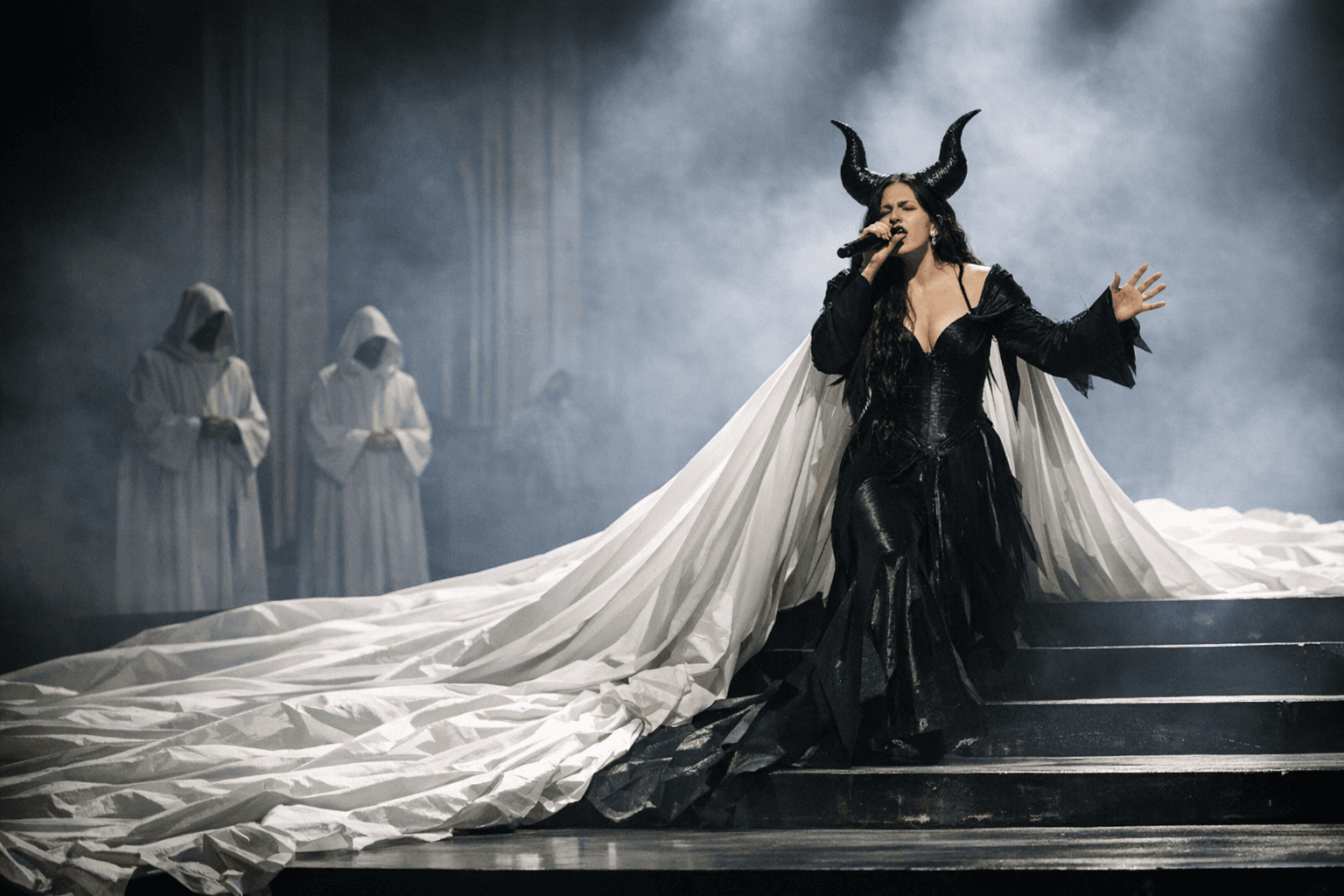
The wardrobe is where Rosalía's aesthetic pivot becomes impossible to ignore. Stylist Jose Carayol assembled a lineup that reads less like a pop costume breakdown and more like a curated group exhibition. Ann Demeulemeester's creative director Stefano Gallici developed three silhouettes in close collaboration with Rosalía and her team, each engineered to shed layers mid-performance. The most arresting is the third look: a chiffon dress built on a crinoline structure referencing 18th-century tailoring, its ruched neckline cinched with drawstrings, finished with a 15-metre train, a feather-winged harness in chiffon and tulle, and an aged-wing headdress. Gallici noted each piece was designed to "support intense movement and choreography, allowing for gradual removal throughout the performance so that each transformation" serves the show's arc. This is three years into his tenure at Demeulemeester, a house founded in 1985 that had a rough stretch before Gallici steadied it; Rosalía wearing it on her biggest headlining tour yet is the kind of cultural moment the brand needed.
Act I leans into the devotional: the "Porcelana" look is a white bodysuit from Ann Demeulemeester paired with a tiered tutu and pink satin pointe shoes, directly citing Degas's opera-dancer paintings. Act II breaks the spell. For "Berghain," a track that dominated streaming and made Rosalía a fixture at European nightclubs before the album even dropped, she switches into a horned costume referencing El Aquelarre, Francisco de Goya's 1798 painting, while her ten dancers from French collective (La) Horde wear ruffs pulled from Renaissance and Elizabethan fashion plates. It is the single most striking wardrobe left-turn in recent pop: from Flemish ballet to Goya's witches' sabbath in the span of one act break, conducted by Yudania Gómez Heredia.
The supporting designers are equally deliberate. For "Magnolias," Paris atelier Les Fleurs used frilly white 1940s European lace; the headpiece worn during "La Rumba del Perdón" was custom-built by Seville milliners Felipe Vivas and Manuel Carrión of Vivascarrion, its billowing proportions drawn from 15th-century court hairstyles. The lingerie base layers came from Moscow-based Daniil Antsiferova. A black-knit dress by Fernanda Castro, a Polimoda graduate from Peru whose work has also landed on Charli XCX, grounds a mid-show sequence in downtown severity before the tulle returns.
The LUX album, Rosalía's fourth, was released last November to near-universal acclaim and was built around a full classical orchestra, female saints, and what she described as a search for divine light. The tour translates that source material literally: 42 shows across 17 countries through September 3, structured in four acts plus an intermezzo, each with its own distinct costume logic. Bloomberg's framing of the tour as a pop reflection of "quiet luxury" gets the cultural temperature right, but the wardrobe itself is more specific than that catch-all phrase suggests. A 15-metre train and a Goya reference are not quiet. They are rigorous, art-historical, and made to move.
Know something we missed? Have a correction or additional information?
Submit a Tip