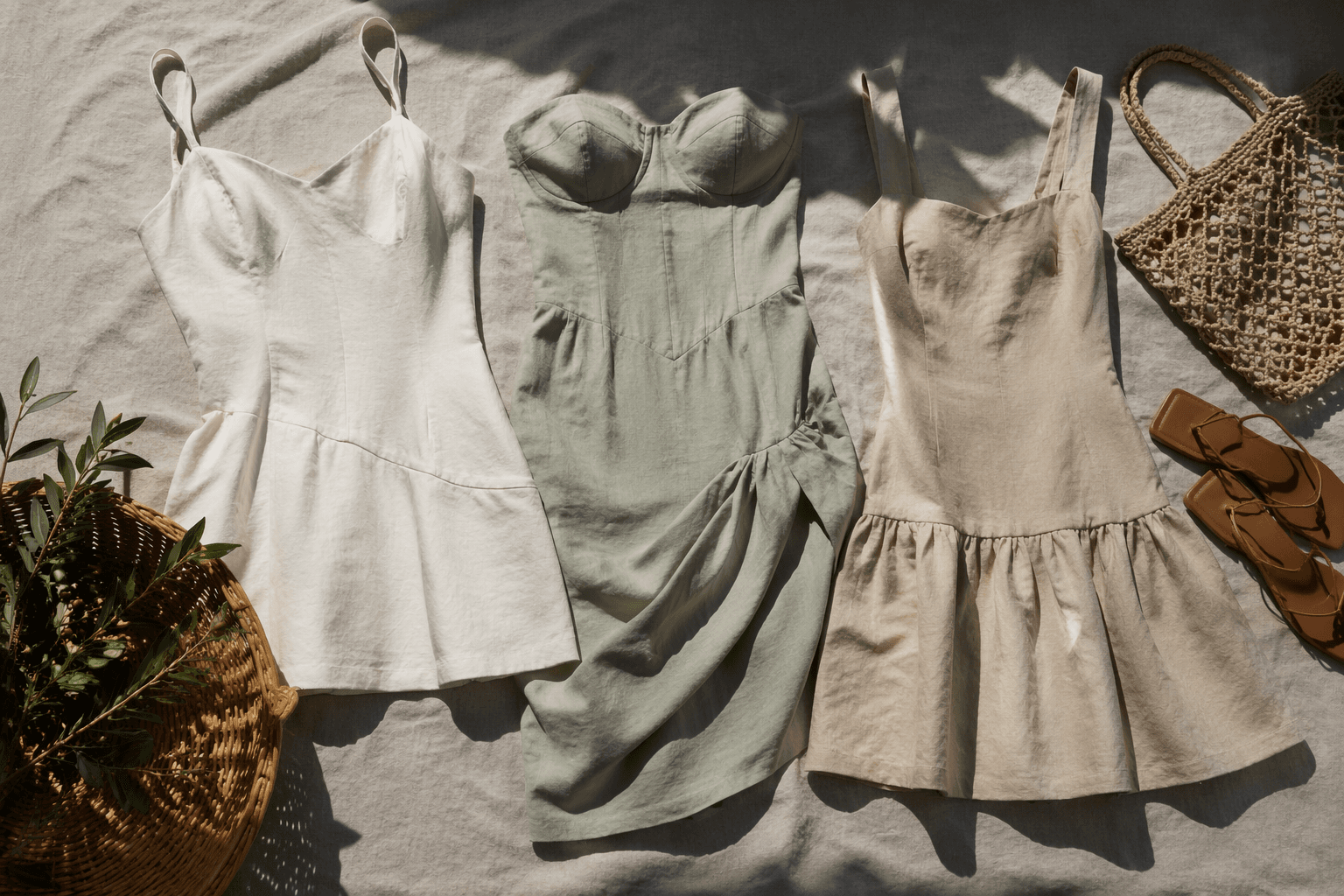
Above‑the‑Knee Dresses for Petites (No Alterations Needed)
Finding an above-the-knee dress that fits a petite frame straight off the rack, no tailor required, is a real skill, and Brooke Anderson has made it her mission.
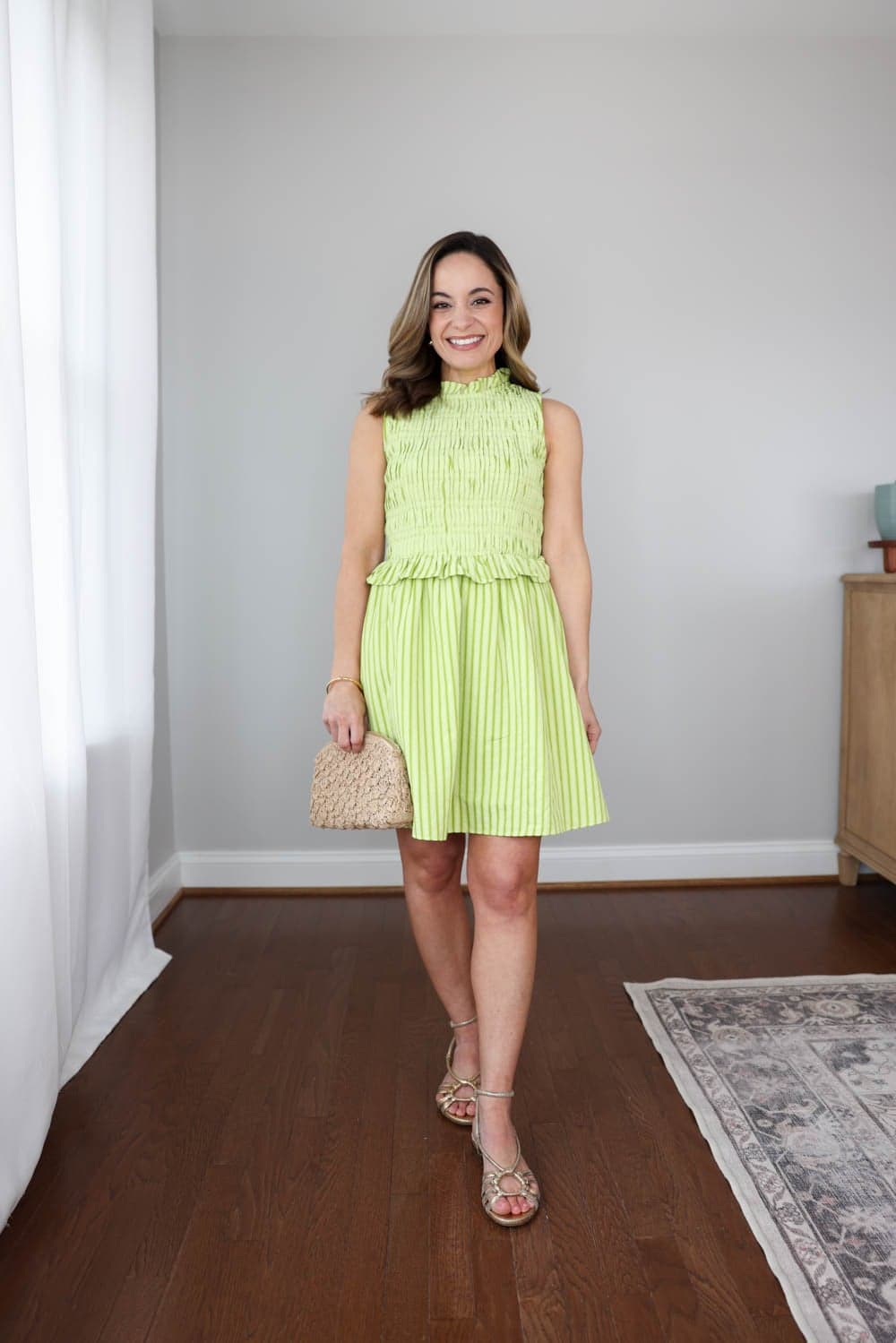
Finding an above-the-knee dress that actually hits where it should on a petite frame, without a trip to the tailor, requires more than luck. It requires knowing exactly what to measure, what to look for on a size chart, and which brands cut their proportions small enough that a 4'10" woman does not have to do the work of a seamstress just to wear a mini. Brooke Anderson, the petite style editor behind Pumps & Push Ups, has built her entire platform around this principle: everything she wears is unaltered, right from the store.
The Measurement That Changes Everything
Before any brand name matters, the number matters. Brooke measures 36 inches from her shoulder to her knee. That single measurement is her shopping filter. A dress that runs 32 to 34 inches from shoulder to hem will land above her knee, right in the 1-to-2-inch sweet spot she considers ideal. Go longer than 34 inches and the hemline starts creeping toward the knee or below; go shorter than 32 and the dress tips into territory that reads more costume than wardrobe.
This technique works whether or not a dress comes in a petite size. When shopping a standard-size brand, she looks at how the dress falls on the model: does the model look short in it? If so, that is a green flag. Then she cross-references the listed length measurement. If it lands in her range, she orders. It turns a guessing game into a repeatable system.
The Three Fit Priorities
Hemline length is only one part of the equation. Brooke's framework rests on three checkpoints, and all three need to clear before a dress earns a spot in her roundup.
The first is the armhole and shoulder fit. A mini dress with gaping arm openings looks sloppy on a petite frame regardless of how well the hem lands. Some minis, especially relaxed or shift-style cuts, run large at the arm openings, and that is worth flagging before you buy. The shoulder seam should sit at the actual shoulder, not drooping toward the upper arm.
The second is waist definition. When volume is involved, whether from a full skirt, smocked bodice, or A-line cut, the waist becomes the anchor. Without it, the dress reads shapeless on a smaller frame. A defined waist, whether built into the construction or created with a belt, keeps proportion in check and prevents the fabric from swallowing the body.
The third is the overall silhouette in motion. Some skirts photograph flat but are significantly fuller in person. Brooke flags this in her reviews because a skirt that looks streamlined in a product shot can balloon out in a way that changes the entire feel of the dress when worn.
Fabric: What Actually Hangs Well
Fabric choice is not just about texture or warmth. On a petite frame, how a fabric moves and holds its shape determines whether the dress looks intentional or accidental.
Linen blends, particularly viscose-linen combinations, are a strong choice. They drape better than pure linen, resist wrinkling more readily, and feel structured enough to hold a clean silhouette without being stiff. The Anthropologie Mona Dress is a good example: its viscose-linen blend sits fully lined, hits well above the knee on Brooke's frame, and maintains its shape through a full day of wear. Stretch knit performs similarly well, moving with the body without losing its cut and offering the comfort advantage of not requiring a perfectly precise size.
Cotton poplin is another reliable option, particularly when it is lined. J.Crew has offered petite-cut dresses in sustainably sourced stretch cotton with cotton poplin skirts, fully lined, that hold their shape without feeling heavy. For evenings, satin delivers an elevated drape and a luxe visual effect at a fraction of the cost of silk. The caveat: unlined satin creates static, particularly against tights, so layering a slip underneath is the practical fix.

Reading Sizing Notes Like a Pro
One of the most practical things Brooke does in her roundups is list the exact size she wore for each piece. At 4'10" with a 32-inch bust, 24-inch waist, and 36-inch hip measurement, she typically reaches for the smallest available option at a brand, often petite XXS, petite 00, or a standard XXS. But her size notation is more than just a reference point: it tells you whether a brand runs generous, tight, or true.
Some brands run small and require sizing up. Avara is one example: the Estella Dress, a fit-and-flare silhouette in burgundy with a smocked bodice and fully lined skirt, is otherwise a near-perfect petite dress, but it runs snug at the waist. If you are between sizes, the recommendation is to go up. Other brands run large through the body and may warrant sizing down, particularly in relaxed or oversized styles. And some standard non-petite brands simply cut their smallest sizes short enough that no petite adjustment is needed at all. The key is treating each brand as its own variable, not assuming your usual size translates everywhere.
Styling: Work Days vs. Weekends
An above-the-knee dress is not a single-occasion piece, and how it is styled shifts the register entirely.
For a work context, the polish lives in the fabrication and the layering. A linen blend or satin dress paired with a cropped cardigan or blazer that ends above the hip line keeps the proportions in check. (A layer that hits at or below the hip adds visual weight and shortens the leg line, which is the opposite of what the above-knee hemline accomplishes.) Pointed-toe heels reinforce the elongated leg effect. Knee-high boots are another strong work option, particularly when the boots are slim and sleek: adding tights between boot and hem ties the look together and prevents the bare-leg gap that can feel awkward in formal settings.
For weekends, the approach loosens up. A stretch knit mini or a cotton shirt dress worn with flat sandals or clean white sneakers reads effortless without losing proportion. The waist-definition rule still applies on weekends: a belt or a dress with a built-in waist seam keeps even the most relaxed fabric from looking shapeless. Accessories scale up to compensate for the simpler styling: a larger bag, statement earrings, or a bright scarf do the work that footwear and layering do in a work context.
Where to Find Petite-Friendly Minis
The starting point is always brands that offer a dedicated petite line, because the proportions are engineered for a shorter torso and narrower shoulder span from the outset. LOFT runs a strong petite selection with consistent above-knee lengths in its mini and shift styles. J.Crew's petite line covers the shoulder-to-hem measurement reliably. Anthropologie's petite sizing covers a narrower range but tends to be well-constructed when it hits.
Outside dedicated petite departments, the trick is the model audit combined with the measurement check. If a dress on a standard-height model appears to hit mid-thigh, it will likely land above the knee on a 4'10" frame. Brands like Z Supply and Avara are worth monitoring for this reason. For budget-conscious picks, Old Navy's satin and cotton dresses in standard sizes frequently clear the above-knee threshold at petite heights, with price points that make the occasional miss less costly.
The no-alteration standard is a real bar. It rules out a lot. But the dresses that clear it make the entire exercise worthwhile: a piece that fits right from the store, hit at the right point on your leg, and works for both Tuesday morning and Saturday night.
This article was produced by Prism’s automated news system from verified source data, official records, and press releases, then run through automated quality and moderation checks before publishing. The system is built and supervised by the people who set the standards it runs under. Read our full AI policy.
Did this article answer your question?