Three Petite-Friendly Black and White Outfit Formulas for Spring
Black and white never looked so intentional: three off-the-rack outfit formulas sized for petite frames, built on proportion, not guesswork.
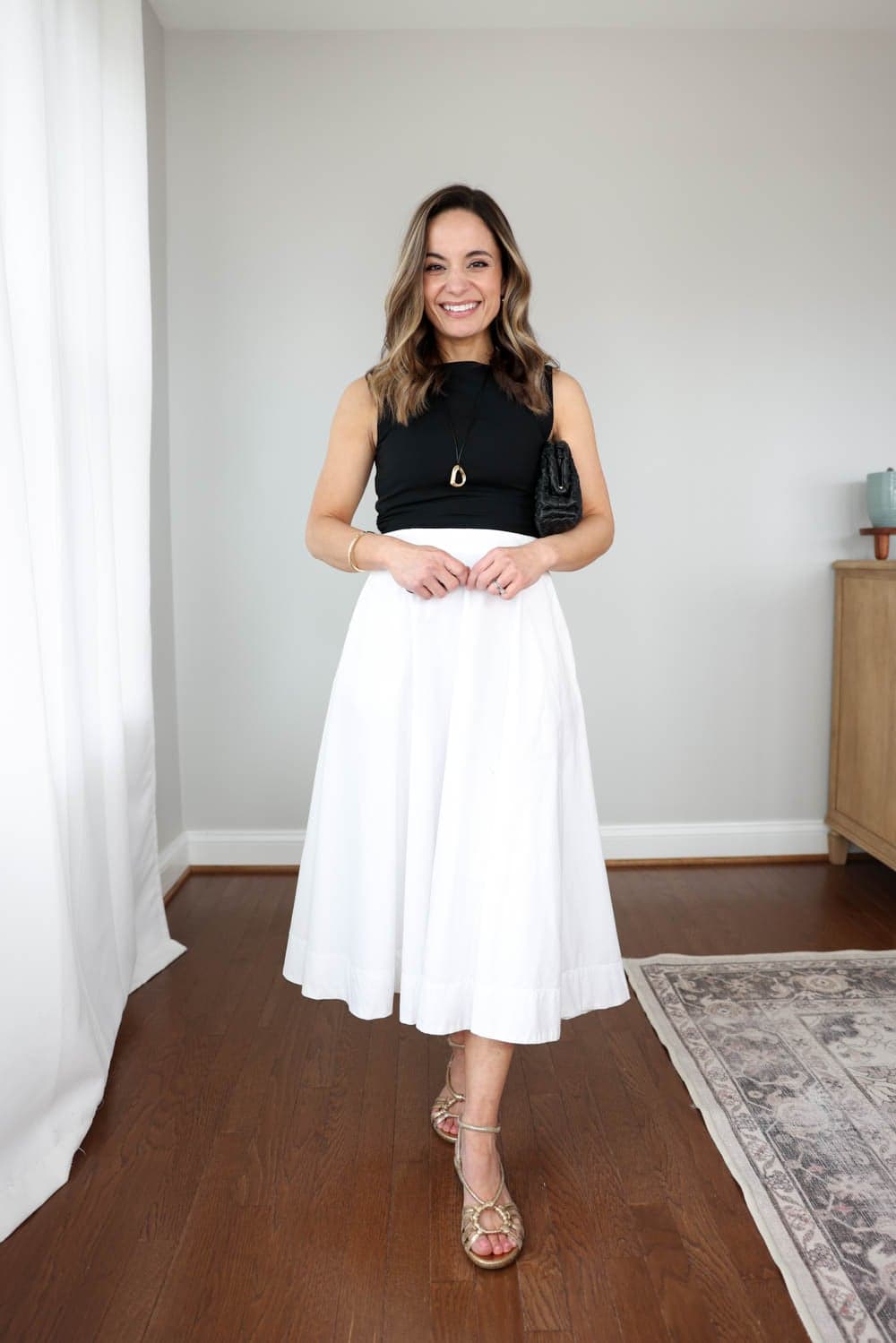
Black and white in spring sounds almost contrarian, a palette more associated with minimalist offices than warm-weather dressing. But when the proportions are right and the fabrics land correctly, there is nothing sharper. Brooke Anderson of Pumps & Push Ups, a 4'10" petite style blogger who wears a size 00/XS with a 24-to-25-inch inseam, built her spring formula around three specific combinations, each rooted in the same core logic: choose neutrals that work together, get the fit right off the rack, and let proportion do the heavy lifting. None of these looks require a tailor. That's the point.
The Poplin Skirt and Boatneck Top
Crisp cotton poplin has earned its reputation as the fabric of effortless spring dressing, and a black poplin skirt paired with a white boatneck top is perhaps the cleanest expression of that. What makes this pairing petite-friendly isn't just the palette but the geometry. The boatneck neckline runs horizontally across the collarbone, creating the illusion of width through the shoulders without adding visual bulk, and it keeps the neckline clean and open. The critical fit note for petites here is shoulder seam placement: the seam must land exactly at the shoulder point, not drooping toward the upper arm, which visually shortens the torso and collapses the silhouette. If the piece runs large, sizing down rather than adjusting with a belt preserves that shoulder line.
The skirt length is equally deliberate. Brooke's formula calls for a hem that hits at mid-knee or higher, which reads as leggy rather than cropped, especially in a dark bottom. Fuller skirt silhouettes, which poplin naturally lends itself to, work in a petite frame's favor when the waist is defined: a structured waistband sitting at the natural waist creates the hourglass proportion that elongates the leg line beneath it. If the skirt runs large through the waist (a common issue with off-the-rack poplin styles), the swap is to size to the waist rather than the hip and work with any extra volume in the skirt itself.
The Crepe Shorts and Simple Top
Crepe is one of spring's most underrated short-cut fabrics. Unlike linen, which can crease dramatically and add visual thickness at the hem, or cotton twill, which can feel stiff, crepe drapes with enough weight to stay put without bulk. In black, a pair of well-cut crepe shorts carries a certain polish that makes a simple white top feel considered rather than casual.
For petites, the rise is everything. A shorter or mid-rise cut can drop the waistband below the natural waist, visually truncating the torso and cutting the leg line in the wrong place. Brooke's guidance here is specific: look for a rise that sits at or very close to the natural waist, and note whether the piece runs large, since excess fabric through the seat and thigh will make even a well-proportioned short look sloppy. The "simple top" part of this formula earns more credit than it gets. A white top tucked cleanly into the waistband, whether a fitted tank, a ribbed shell, or a lightweight knit, keeps the eye moving upward and ensures the shorts read as the intentional bottom they are. Avoid anything that hits at the hip when untucked, since it disrupts the long-torso effect.

This pairing is also where the mix-and-match logic clicks into focus. The white top that works here is the same white top that works with the poplin skirt in formula one, making this less a capsule and more a genuine working wardrobe built around two neutrals that never argue with each other.
The Linen-Blend White Dress
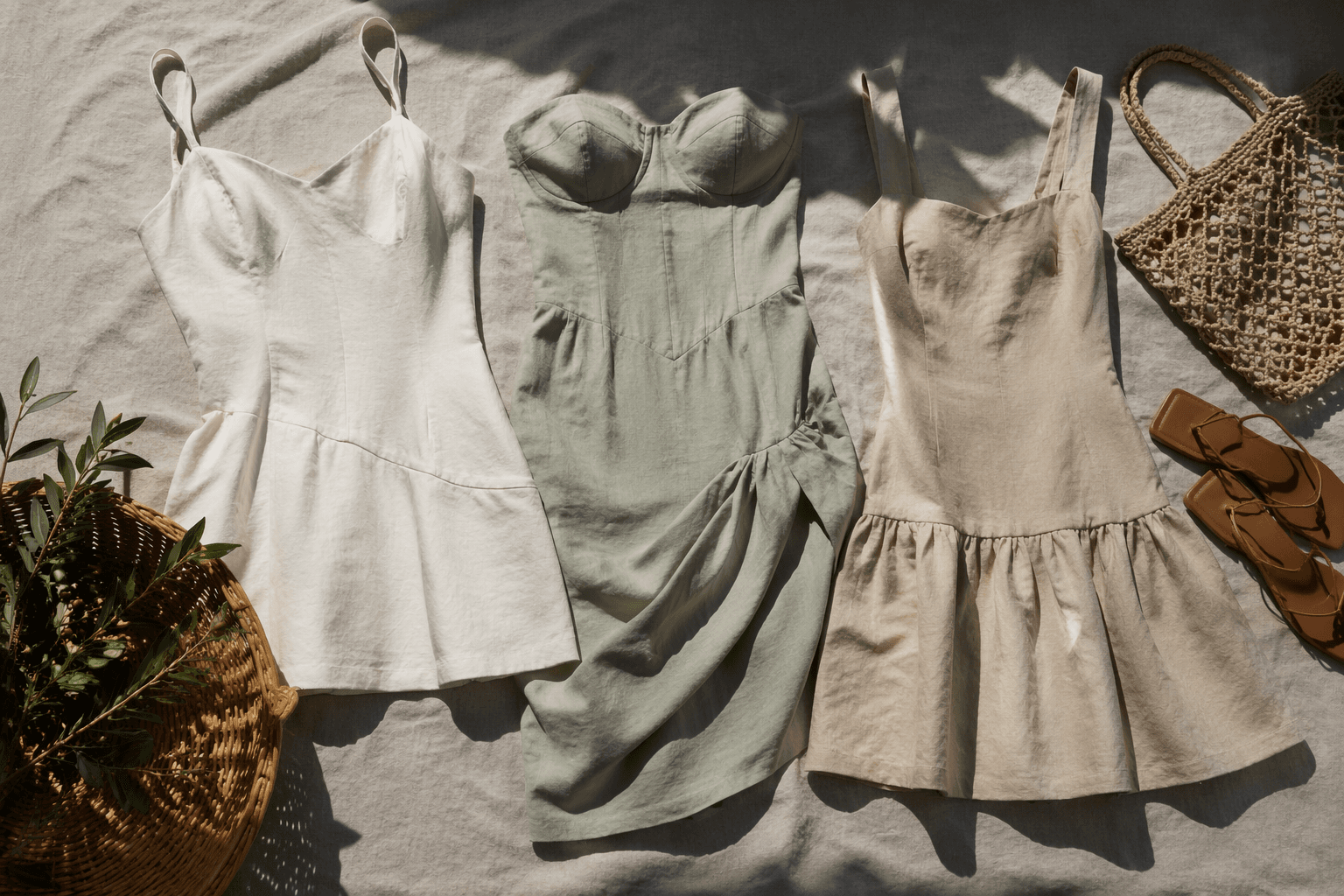
A white dress is the boldest of the three formulas and, in many ways, the most rewarding when sized correctly. Linen-blend fabrics breathe well into spring and summer, and the texture they carry, slightly rumpled, with a dry hand that reads as intentional rather than wrinkled, adds visual interest to an otherwise monochrome look. In white, that texture does significant work.
The fit notes for a linen-blend dress on a petite frame concentrate on two points: waist placement and strap or shoulder adjustability. If the garment's waist seam or tie drops below the natural waist, the entire silhouette lengthens in the wrong direction, making the torso look long and the legs short. Adjustable straps or ties at the side seam allow petites to recalibrate where the dress sits on the body, bringing the waist back to where it belongs without sending the piece to a tailor. Brooke also flags that dress length increases with size, so sizing to the smallest fit possible and working outward from there generally yields a better result than sizing up and hemming down.
Styled alone, this dress functions as a full outfit. Styled with any of the black pieces from the other two formulas, it opens into something layerable: a black boatneck over the dress for an evening transition, or the dress as a cover over the crepe shorts for a beach-to-lunch moment. The formula is intentionally flexible.
The throughline across all three combinations is what petite dressing at its best actually looks like: not an apology for a smaller frame, but a considered approach to proportion that makes off-the-rack pieces look like they were cut to measure. Black and white simply makes that logic visible.
This article was produced by Prism’s automated news system from verified source data, official records, and press releases, then run through automated quality and moderation checks before publishing. The system is built and supervised by the people who set the standards it runs under. Read our full AI policy.
Did this article answer your question?