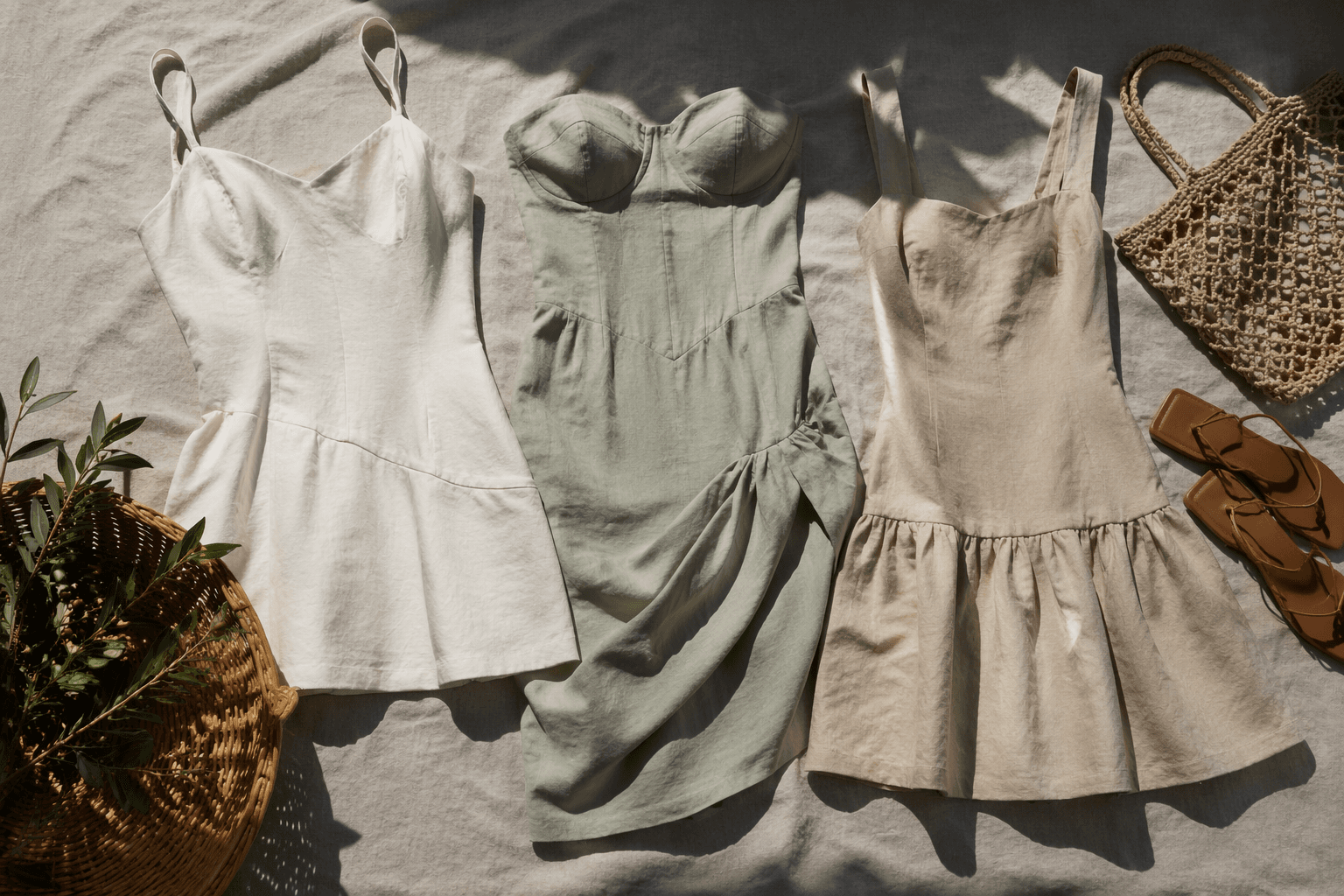
Petite-curvy style rules: high waists, vertical lines, waist definition
High waists and clean verticals do the heavy lifting on a petite-curvy frame. The right proportion rules can make a closet feel edited in one pass.
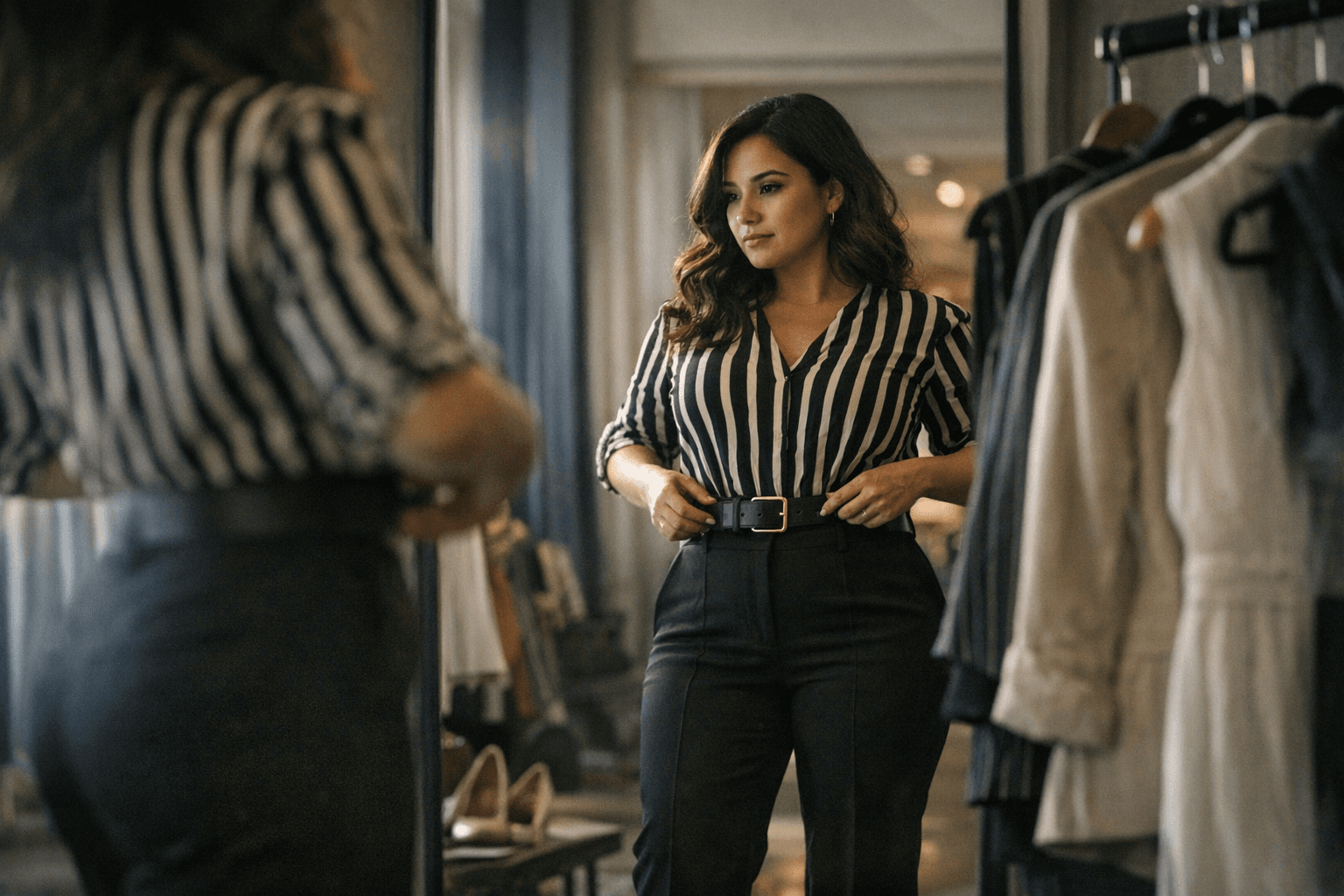
Petite-curvy dressing is less about chasing trends than about redrawing the body in the mirror. In looqs.me’s analysis of more than 20,000 outfit photos, the looks that kept winning shared three things: a defined waist, vertical visual lines, and color that ran continuously from top to bottom. That is the whole trick in one sentence, and it explains why some outfits sharpen a frame while others only cover it.
What petite actually means
Petite usually means 5'4" and under, but the label is really about proportion. As Gaâla and Parallel both point out, petite garments are cut for shorter torsos, inseams, armholes, and shoulder widths, which is why standard clothes so often miss on sleeves, waist placement, and hem length. As Gaâla puts it, “petite” doesn’t just mean small; it’s about proportions.
The category has a long history. Hannah Troy is widely credited with helping establish petite sizing in the 1940s after studying World War II military measurements and finding that only about 8 percent of women fit standard proportions. That mattered because it turned petite into a real ready-to-wear category, not just a smaller version of regular sizing.
The distinction from junior sizing matters just as much now. Petite is built for adult women with shorter proportions, while junior sizing is typically cut for younger, straighter shapes, which is why petite-curvy readers need both shorter lengths and room for bust and hips. That is also why a petite collection can feel like a revelation when it finally fixes the fit problems that standard racks create.
Where the waist should sit
On a petite-curvy frame, the waist has to do two jobs at once: define shape and lengthen the leg. High-waisted jeans, trousers, and skirts push the visual starting point upward, while wrap dresses and belted waists pull attention to the narrowest part of the torso instead of letting the outfit drop into the hips. Petite Dressing’s styling advice says the goal is to elongate a short frame and make it look taller and leaner, and high-rise cuts are the cleanest route there.
What to skip is just as important: low-rise anything. A waistband that sits too low chops the body into shorter pieces and makes the legs work harder than they should. If you want the frame to look long, let the rise do the work and keep the waistline firmly in the picture.
Use verticals, but keep them soft
Vertical lines are the petite-curvy secret weapon because they keep the eye moving. V-necks, scoop necks, open jackets, long plackets, and column dressing all create that uninterrupted path, and tonal outfits do the same when the color stays in one family from shoulder to hem. Looqs.me found that the strongest petite-curvy outfits shared exactly that continuity, and it is why camel-on-camel or navy-on-navy feels so much more refined than a hard break at the waist.
Monochrome does not have to mean flat. The best version has texture, not contrast: ribbed knits with fluid trousers, matte crepe with polished denim, or a soft knit set broken by a sharp shoe. The point is to keep one visual column intact so the body looks longer without losing depth or interest.
Shape by shape, the smartest neckline and hem
For pear shapes, the goal is balance. Ashley Stewart’s guidance for curvier, shorter women points to V-necks, scoop necks, and off-the-shoulder tops to draw attention upward, while flared, bootcut, or petite wide-leg bottoms keep the hips from feeling heavy. A-line skirts work for the same reason: they skim instead of cling.
For hourglass shapes, the waist is the star, so do not bury it. Wrap dresses, high-rise slim or straight-leg pants, and fitted tops that stop cleanly at the waist preserve the curve that is already there without adding bulk above or below it. The best hourglass pieces feel tailored, not tight.
For apple shapes, the smartest move is to streamline the center and lengthen the leg. V-necks and scoop necks open the upper body, while high-waisted pants help define the midsection and show more of the leg, which is exactly where petite proportions need the help.
For rectangle shapes, create the waist first, then build curves around it. Belted dresses, wrap fronts, peplums, and high-rise bottoms help manufacture definition where the frame is straighter, and a little movement in the lower half keeps the silhouette from looking boxy. This is one of those cases where structure matters more than decoration.
For inverted triangle shapes, soften the shoulders and add presence below. Ashley Stewart recommends V-necks and scoop necklines to minimize breadth up top, then fuller or wider bottoms to bring balance back to the lower body. On a petite frame, that means keeping the top half clean and letting the hem carry a little more weight.
What to skip and why it overwhelms
The fastest way to lose the petite line is too much volume in the wrong place. Oversized silhouettes, long tunics, bulky layers, loud horizontal breaks, and low-rise pants can swallow height and make curves disappear into the garment instead of reading as shape. If the outfit starts wearing you, it is the wrong proportion, no matter how current it looks.
That is why the petite market keeps expanding. Business Insider’s 2026 petite-shopping guide says mainstream clothing can still overwhelm shorter frames, even as petite collections now cover pants, dresses, coats, jumpsuits, and blazers. Petite Studio, founded in 2016, is built around women under 5'4", which shows how many shoppers still need clothes that solve proportion first and trend second.
The strongest petite-curvy wardrobe is not the fullest one. It is the one that puts the waist in the right place, keeps the eye moving vertically, and chooses silhouettes that hold curves without flooding the body in fabric. When those three things line up, the frame looks intentional, and the clothes finally start doing the flattering for you.
This article was produced by Prism’s automated news system from verified source data, official records, and press releases, then run through automated quality and moderation checks before publishing. The system is built and supervised by the people who set the standards it runs under. Read our full AI policy.
Did this article answer your question?