Petite summer dresses that fit perfectly without tailoring
Petite summer dresses are finally skipping the tailor, with hems, waists, and straps built to land right on shorter frames, from an $18 Amazon find upward.
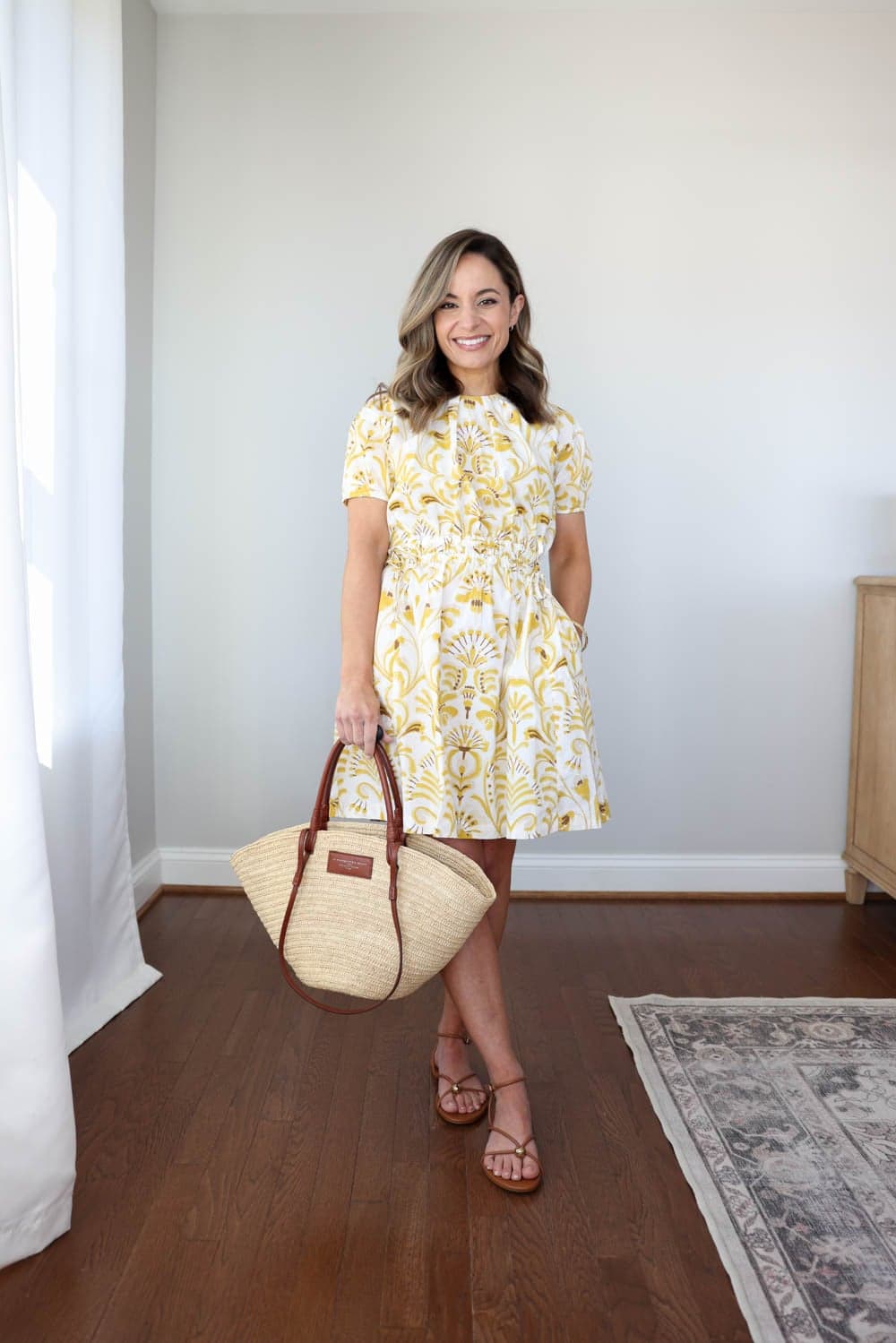
The smartest petite summer dress is the one that saves you from a second errand. If you are 5-foot-3, you already know the ritual: buy the dress, pay for the hem, shorten the straps, hope the waist does not sit somewhere near your ribs. The real win now is a dress that lands correctly straight off the rack, with prices running from an $18 Amazon find into fuller-price territory without asking you to budget for alterations.
The fit problem petite dressing is actually built to solve
Petite sizing is not a niche code word. Macy’s defines it as clothing designed for women 5'4" and under, and Anthropologie’s fit guidance pushes the idea further, saying petite pieces can work for some women as tall as 5'9" when their proportions run shorter through the arms, legs, or torso. That is the whole point: height matters, but proportion matters more.
That distinction is why petite shopping keeps coming back as a fit problem instead of a style one. The expensive part is rarely the dress itself. It is the hidden tax of tailoring, the extra stop for a hem or a strap adjustment that turns an easy buy into a project. When a dress already knows where to sit on the body, the purchase stops feeling like a compromise.
What makes a petite dress work without tailoring
The dresses that matter here are not just smaller versions of the same shape. They are cut with hem length, waist placement, and strap fit in mind, so the silhouette stays clean instead of collapsing on a shorter frame. A petite summer dress works when the waist hits at the natural waist, the skirt falls before it starts to crowd the ankle, and the straps do not slide because the bodice has been scaled properly.
- Hems should show enough leg to keep the body open, not chopped into thirds.
- Waist seams should sit where your body bends, not drift down toward the hips.
- Straps should stay put without tugging, because a neckline that creeps changes the whole dress.
- Lightweight fabrics matter too, because cling and bulk are brutal on smaller frames when the heat rises.
That is why the no-tailoring promise is so appealing. It is not about being lazy with alterations. It is about buying something that already respects the body it is meant for.
The category is bigger than the stereotype
Amazon alone shows how deep the category runs. Depending on the search path, results for “petite summer dresses for women” jump from over 3,000 listings to over 10,000 listings, which is a lot of proof that petite is not an afterthought in 2026. Macy’s currently lists 214 petite summer dresses in its seasonal petite-dresses category, and Nordstrom has 698 petite dresses in its petite-size dresses selection. That is not a token rack. That is a business.
The range also matters because it gives petite shoppers real choice across price and aesthetic. A dress that starts at $18 on Amazon sits in a completely different lane from polished department-store pieces, but both can solve the same fit problem if the proportions are right. For petites, the payoff is not only spending less up front. It is avoiding the bigger expense of fixing a garment that never fit properly in the first place.
Why retailers keep leaning into petite now
The renewed attention makes sense. A 2025 fashion-business piece on JCPenney’s petite strategy framed the category as part of a broader demand for individualized consumer needs, and that is exactly how the market feels right now. People do not want “almost right” sizing with a tailoring receipt attached. They want clothes that recognize their actual body shape before they leave the fitting room.
That is also why petite is not just for one fixed height. Some shoppers will always sit in the classic 5'4" and under lane, but the real buyers are anyone whose proportions keep getting swallowed by regular sizing. In summer dresses, that means the difference between a look that hangs off you and one that moves with you.
Petite fashion has been doing this work for decades
Petite fashion is not a new retail invention dressed up as a trend. The concept emerged in the 1940s, with Hannah Troy helping establish petite as a distinct fashion category rather than a sizing apology. That history still matters, because the category has always been about proportion first and novelty second.
The modern version is sharper, faster, and more shoppable, but the logic has not changed. A good petite dress makes the body look intentional. It gives you the ease of an off-the-rack purchase and the finish of something that has already been hemmed, adjusted, and thought through. That is the standard now, and for petites, it finally feels like the industry is catching up.
This article was produced by Prism’s automated news system from verified source data, official records, and press releases, then run through automated quality and moderation checks before publishing. The system is built and supervised by the people who set the standards it runs under. Read our full AI policy.
Did this article answer your question?