Proportion, Tailoring, and Texture Rules Petite Dressers Often Overlook
The petite style rules nobody talks about: shoulder tailoring, vertical texture, and cropping with intention change everything about how a frame reads.
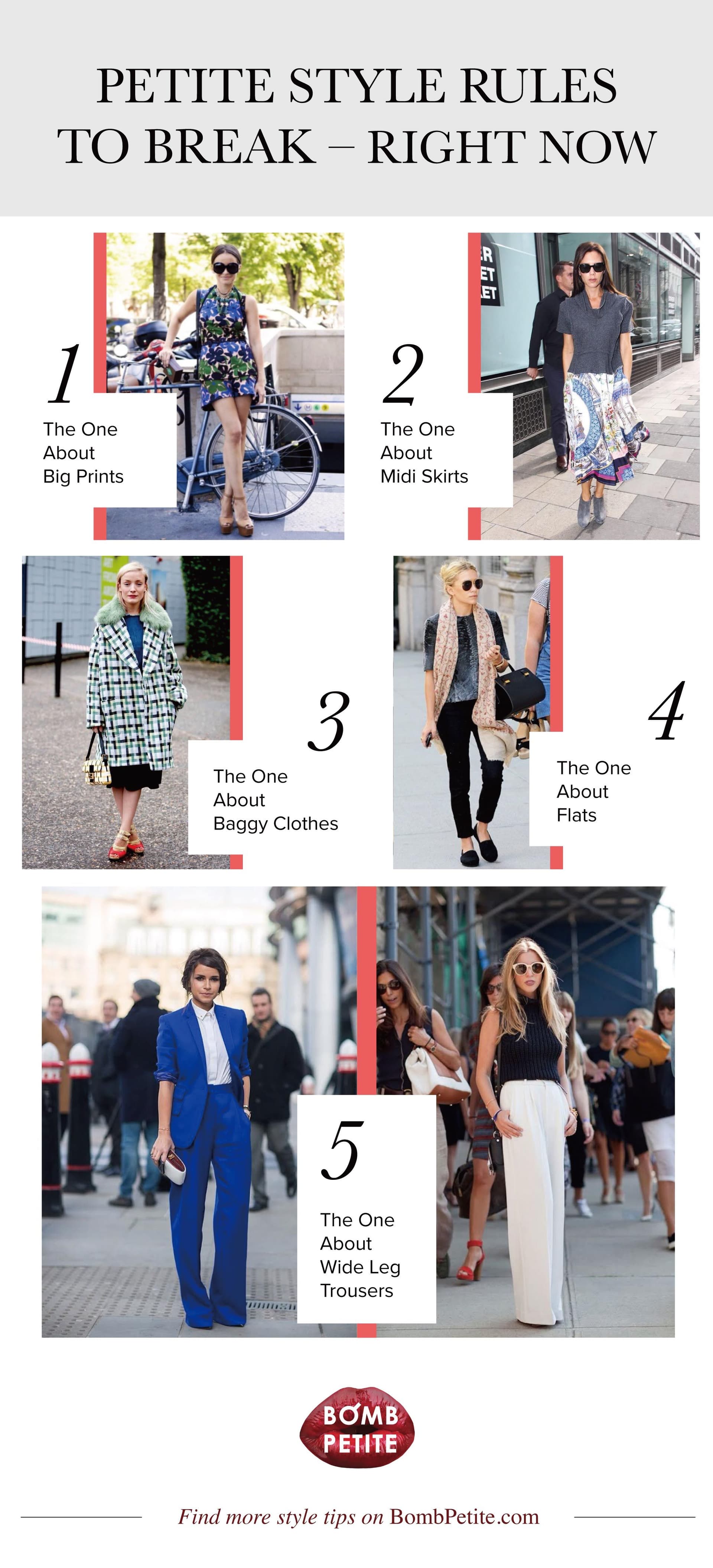
There's a version of petite fashion advice that gets recycled so relentlessly it's practically wallpaper: wear vertical stripes, avoid oversized anything, stick to monochrome. That advice isn't wrong exactly, but it's incomplete in ways that actually matter when you're standing in a fitting room trying to figure out why something that looks incredible on the hanger isn't working on your body. The real conversation about dressing a petite frame goes deeper than stripes and hemlines. It's about proportion logic, fabric weight, the architecture of a shoulder seam, and whether your bag is quietly undermining every other decision you made that morning.
Proportion is a system, not a single rule
The most common mistake petite dressers make isn't wearing the wrong silhouette; it's treating proportion like a single variable instead of a system. Every piece you put on is in conversation with every other piece, and the goal is to create a visual flow that reads as intentional rather than accidental. A cropped jacket over high-waisted trousers isn't just a cute outfit: it's a proportion decision that lengthens the leg line and keeps the eye moving upward. The crop isn't a trend choice here, it's a structural one.
Cropping done purposefully is one of the most effective tools in a petite wardrobe, and it's consistently underused because it gets conflated with casual dressing. A cropped blazer over a midi skirt, a shortened knit over wide-leg pants, a slightly abbreviated shirt tucked only in front: these are all deliberate proportion moves that manipulate where the eye reads the waist and where the leg appears to begin. The key word is purposeful. Random cropping, like a top that's just slightly too short without clear visual intention, reads as a fit issue rather than a style choice. When it's deliberate, it reads as knowledge.
The shoulder seam is doing more work than you think
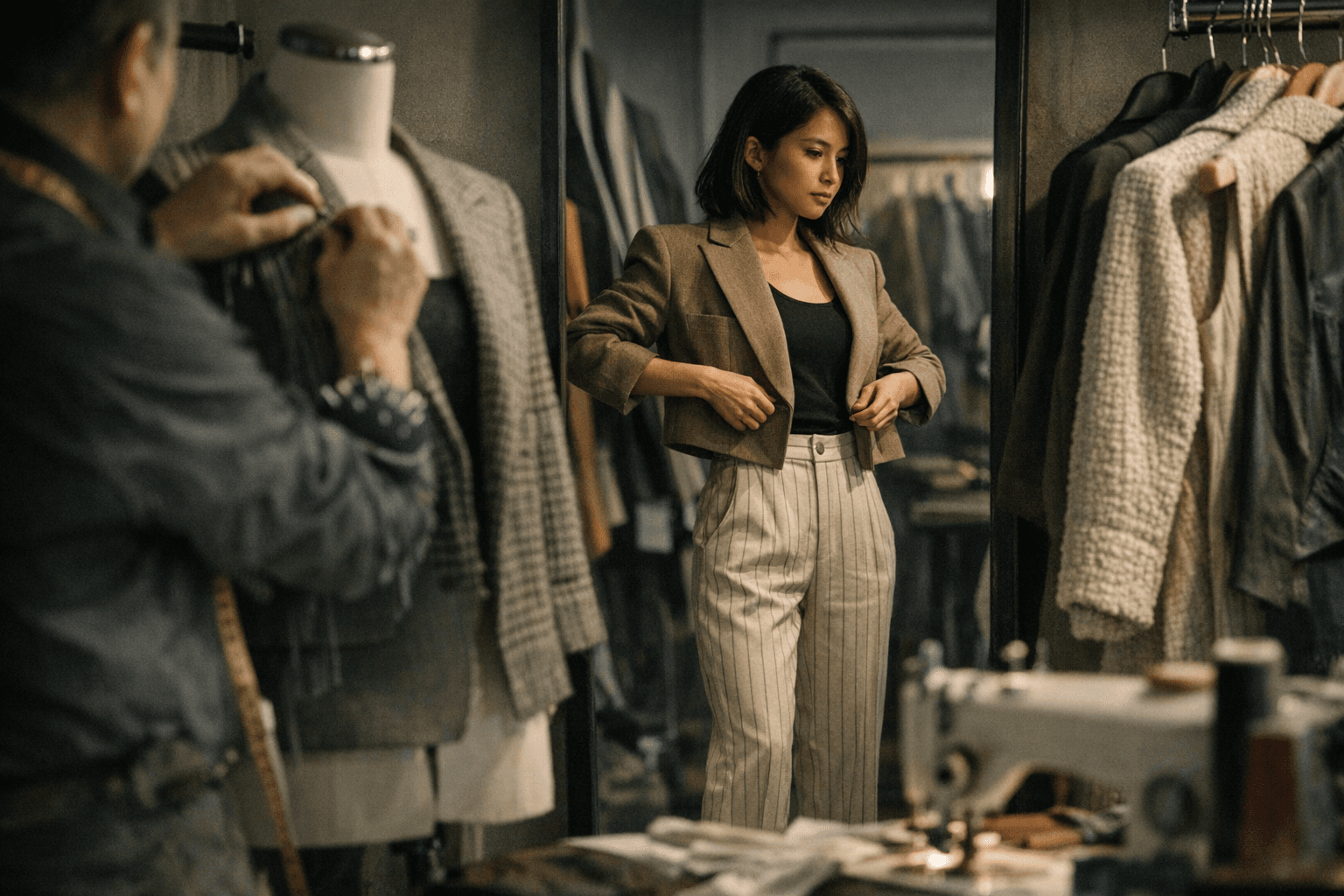
Shoulder tailoring is the single highest-impact alteration a petite person can make, and it's also the one most consistently skipped in favor of hemming. Here's why it matters: when a shoulder seam sits even half an inch past your actual shoulder, it collapses the upper body visually, rounds the silhouette, and makes sleeves hang incorrectly in a way that no amount of rolling or pushing up will fully fix. A shoulder seam that sits exactly where your shoulder ends is transformative. It makes everything above the waist read as structured and intentional.
Investing in shoulder tailoring means two things practically. First, it means being willing to pay for that alteration on pieces that deserve it: a great blazer, a structured coat, a dress that otherwise fits perfectly below the bust. Second, it means becoming a more discerning shopper, training your eye to check shoulder placement before you check anything else. Brands that cut specifically for petite proportions often get this right from the start, which is part of why a piece from a petite-specific line can feel dramatically different from the same silhouette in a standard size even when both technically fit.
Vertical texture goes far beyond stripes
The vertical stripe conversation in petite dressing is so dominant that it's obscured something more useful: vertical texture. The visual elongation that stripes create comes from directing the eye up and down rather than across, but stripes are just one way to achieve that effect. Ribbed knits with vertical construction, broderie anglaise with elongated eyelet patterns, pleating that falls from the shoulder or waist downward, topstitching that runs the length of a jacket: all of these create the same directional pull without the literal stripe.
This distinction matters because vertical texture gives you a much wider range of fabric, color, and pattern options. A vertically ribbed sweater in a rich burgundy or a deep forest green does the elongating work of a stripe while functioning as a solid color in terms of outfit-building flexibility. Pleated trousers with a clean vertical fall are doing proportion work while still reading as tailored and polished. The underlying principle is the same: direct the eye along the vertical axis, and the silhouette reads longer. The execution doesn't have to be a pinstripe.
Fabric weight is proportion's quieter partner
Fabric weight is where a lot of petite dressing goes quietly wrong, and it's harder to diagnose than a proportion issue because it's tactile rather than visual. Heavy fabrics can overwhelm a smaller frame not because of their color or pattern but because of how they hold and move. A thick double-faced wool coat might be impeccably proportioned in every measurable way and still feel visually heavy because the fabric has so much presence it competes with the person wearing it.
The solution isn't to avoid structure; it's to understand that structure can come from construction rather than weight. A well-cut blazer in a medium-weight crepe holds its shape and reads as sharp without adding the visual mass of a heavily lined tweed. Fluid fabrics like silk, viscose, and lightweight wool challis drape in ways that work with the body's line rather than against it, which tends to serve petite frames particularly well. The goal is fabric that moves with you and adds to the silhouette rather than sitting on top of it.
Accessory scale is the final proportion check
Bags are the most common scale mistake in petite dressing, and they're easy to underestimate because a bag doesn't seem like it should affect how tall you look. But a structured tote that hits mid-thigh or an oversized hobo that extends past the hip is actively shortening the visual line, cutting the leg at exactly the wrong point and adding horizontal mass where the eye should be moving downward. A bag that works for a petite frame sits at the hip or above it, has a profile that doesn't extend past the body's natural width, and has a strap length that can be adjusted to land at the waist or high hip rather than mid-torso.
This doesn't mean resigning yourself to tiny bags. It means thinking about proportion the same way you think about it with clothing: how does this read against the body, where does it hit, and is it adding to or interrupting the line I'm building? A medium-sized structured bag worn crossbody at the hip, a small to medium top-handle bag carried at the elbow, a compact shoulder bag adjusted to sit just below the armhole: all of these can carry what you need while keeping the proportion logic of the outfit intact.
The bigger point across all of these rules is that petite dressing is fundamentally about understanding proportion as a design system and then applying that understanding with specificity. The details that get overlooked, the shoulder seam, the texture direction, the fabric weight, the bag placement, are precisely the details that separate an outfit that works from one that almost works. Once you see them, you can't unsee them.
Know something we missed? Have a correction or additional information?
Submit a Tip