Smart Style Secrets Every Short and Petite Woman Should Know
Vertical lines, nude pumps, and one tucked top can visually add inches — here's exactly how petite women can dress to look taller and feel undeniably themselves.
Proportion is everything. If you're petite, you already know that a hemline half an inch too long or a print slightly too large can throw off an entire look. The good news: the principles that actually work are surprisingly learnable, and once you internalize them, getting dressed becomes less guesswork and more intention.
The vertical line is your best tool
The single most powerful trick in petite dressing is creating an unbroken vertical line from shoulder to floor. Monochrome dressing does this automatically: one continuous color reads as one long, uninterrupted column of you. No contrast at the waist, no color block that cuts you in half visually. A tonal outfit in any color — cream, navy, camel, black — immediately makes you appear taller without any tailoring required.
Accessories can reinforce this effect. A long scarf draped down the front of your outfit creates that same vertical pull and gives the illusion of height. It's a styling trick that works in any season: a silk scarf in a floral print worn loose over a tucked top draws the eye downward and lengthens the silhouette.
Define your waist, every single time
Waist definition is non-negotiable for petites. A high-waisted silhouette creates the impression of longer legs, which is exactly what you're working toward. "Wear sleek sheaths and dresses with high waist-line," is a guideline worth bookmarking permanently. Fitted sheaths are particularly flattering because they trace the body without adding volume or bulk that shortens the visual line.
Belts earn their place in a petite wardrobe not as accessories but as proportion tools. Placing a belt at your natural waist (rather than low-slung across the hips) anchors the eye at the narrowest point of your torso, making the legs read as longer below it. Even when a belt isn't visible, the principle holds: tuck your top to get the proportions right. A tucked top signals waist, creates separation between top and bottom, and prevents the fabric from draping over the hip line in a way that loses your shape entirely.
Bottoms: fit first, length second
With pants, the fit at the hips, bum, and thighs is the foundation. A pair of trousers that fits perfectly through the seat but needs hemming is infinitely more workable than a perfectly-hemmed pair that gaps or pulls. For silhouette, straight-leg cuts serve petite frames better than looser, wider fits, which add visual volume and make the leg look shorter rather than longer.
If your legs are proportionally short, capris and gauchos can actually function as full-length slacks, hitting at a point that looks intentional rather than simply cropped. It sounds counterintuitive, but the key is committing to the length with the right footwear.
Raw hems are genuinely petite-friendly once you know how to execute them properly. The protocol:
1. Buy jeans that fit perfectly around your hips, bum, and thighs.
2. Cut them to approximately the right length.
3. Put on the shoes you plan to wear with them.
4. Have someone else mark the final length, just half an inch (1.3 cm) above the floor.
That last point is critical. "Don't do the marking yourself! Bending the knees lifts the fabric! Once you stand straight again you will have a 'tail' in the front." The half-inch clearance is precise for a reason: too much, and the hem floats awkwardly; too little, and it drags.
Skirts and dresses: the maxi question
Skirt and dress lengths require the same proportion awareness as pants. High-waisted sheath dresses remain a strong choice because they borrow from every principle simultaneously: defined waist, sleek silhouette, vertical line.

The maxi debate is real. Many stylists advise against floor-grazing maxi dresses and skirts because the sheer volume of fabric can overwhelm a smaller frame. But the blanket prohibition isn't entirely fair. "Many stylists advise against wearing floor-grazing maxi dresses/skirts to not overwhelm the petite frame. However, a petite can rock the look, when getting the proportions right. Try a maxi with a slit." A slit breaks the solid wall of fabric, adds movement, and creates a vertical flash of leg that elongates the silhouette. Pair it with a fitted top tucked in at the waist and the maxi suddenly works exactly the way it should.
Shoes: the single item with the most leverage
Footwear choices have an outsized impact on how petite figures read, and the guidance here is consistent: heels, nude pumps, and strappy styles are your allies.
"Nude, read the color of your flesh, shoes elongate your legs. Therefore, strappy heels are a petite's best friends." This works because flesh-colored pumps remove the visual interruption at the ankle and foot, allowing the leg line to continue unbroken to the floor. But "nude" is not a single universal color. Reading your own skin tone honestly and matching the pump to it is what makes the technique work. Anne Klein's nude pump range is a practical starting point, but the principle applies across any brand.
Heel type and vamp height (the depth of the shoe's front opening) also matter. A lower vamp, meaning more of the foot is exposed, extends the leg line further. Strappy styles achieve this by design, which is why they remain consistent recommendations for petite dressing.
If you're not accustomed to heels, the commitment to learning pays off. As one styling guide puts it plainly: "There are 101 reasons why to wear heels over 40. Learn to walk in heels to gaining height." Wobbling undermines everything a heel is supposed to add, so practice is genuinely part of the strategy.
Prints, color, and scale
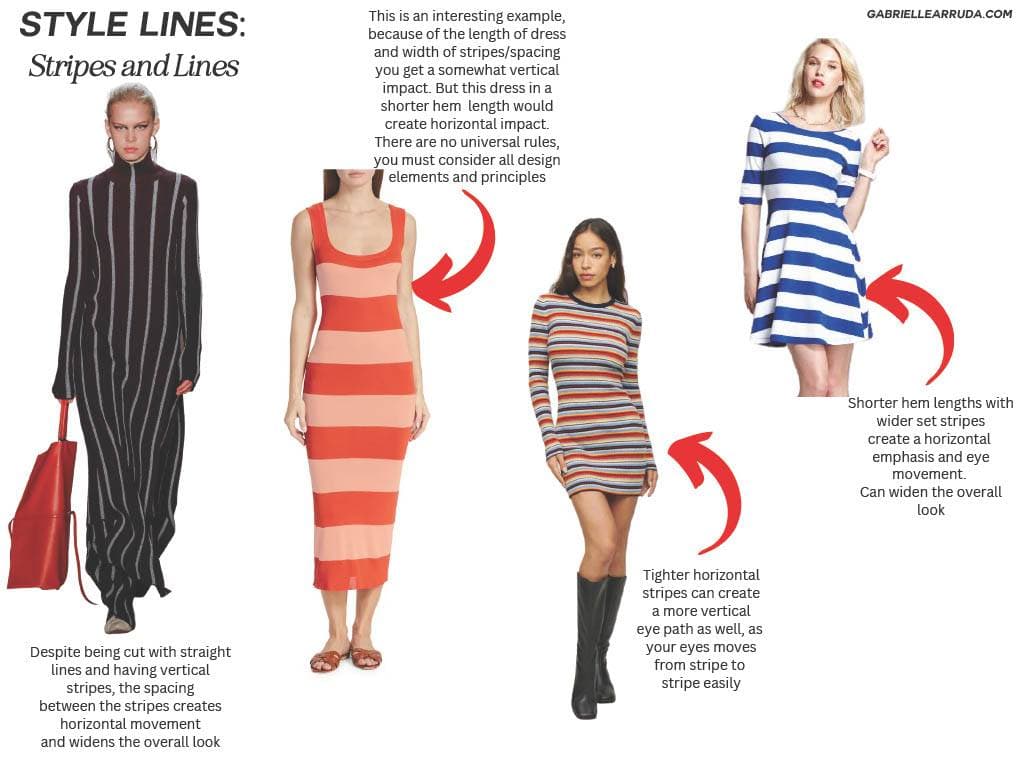
Print scale is one of the most overlooked variables in petite dressing. Oversized prints compete with your frame rather than complementing it; smaller, more delicate patterns stay in proportion. This doesn't mean avoiding prints entirely — a floral scarf, for example, can introduce pattern as a vertical accessory rather than a competing focal point.
Color can be strategic rather than safe. "A 'notice me' color makes you visible." There is a tendency in petite dressing advice to push neutrals and muted tones, but a strong, clear color draws the eye and presence in equal measure. The key is wearing that color head to toe, returning again to the monochrome principle, rather than using it as a contrast block that interrupts the vertical line.
Shopping smarter: beyond the petite section
One of the most practical pieces of advice for petite shoppers is also the most overlooked: "When shopping online, don't browse only petite clothes. Know your measures, and check the size charts. You may find pieces that work for you when shortened." Dedicated petite lines are useful, but limiting your search to them narrows the field significantly. A regular-size Sienna Studio leather skirt hemmed to the right length will fit better and look more polished than a petite option that wasn't cut with your specific proportions in mind.
Knowing your measurements in centimeters and inches, checking size charts before purchasing, and building a relationship with a reliable tailor opens up the entire market rather than a curated subset of it.
Putting it all together
The principles stack cleanly when you apply them simultaneously. Consider this: a top from Chico's tucked into a Sienna Studio leather skirt, a floral print scarf draped long to create that vertical line, Anne Klein nude pumps carrying the leg line to the floor, and a Hermes collier de chien bangle at the wrist as the single piece of hardware. The top is tucked in to get the proportions right. The scarf creates a vertical line which gives the illusion of height. The flesh-colored pumps elongate the leg. Three principles, one outfit, no visual noise. That's the entire framework made visible: it isn't about restriction or following rigid rules, it's about understanding which choices work with your proportions and making them on purpose.
Know something we missed? Have a correction or additional information?
Submit a Tip