Hiroshi Fujiwara, the godfather who bridged Tokyo streetwear and luxury
Fujiwara built streetwear’s modern playbook: tight collabs, sharp scarcity, music crossover, and the kind of co-signs that still move the market.
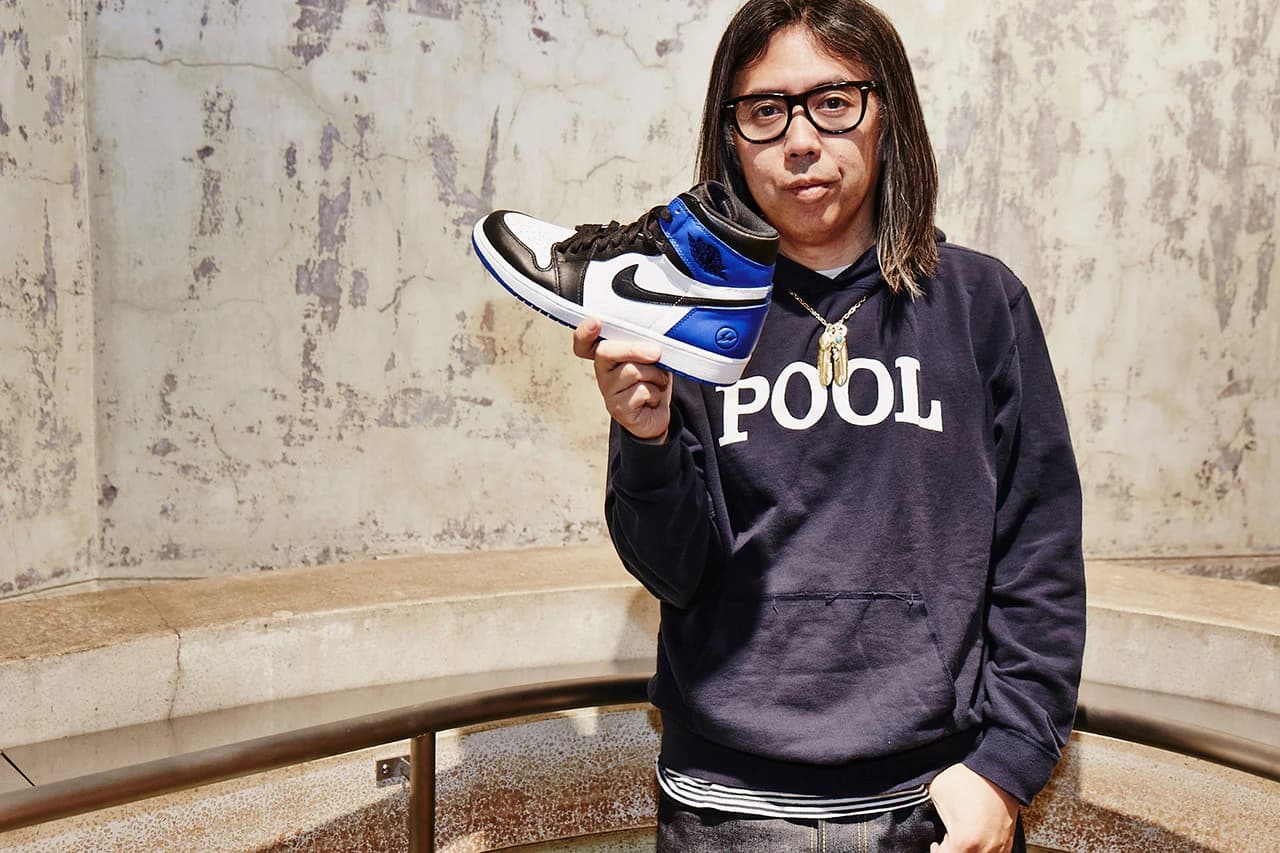
Hiroshi Fujiwara did not just help make streetwear cool. He helped define the business logic behind it: the collab as currency, the drop as theater, the logo as signal, and the right name on a product as the fastest route to cultural heat. Born in 1964 in Ise, Mie, Japan and based in Tokyo, he is widely called the godfather of streetwear for good reason. The man built a bridge between Tokyo and the West, then taught the industry how to walk across it.
Tokyo roots, global reach
Fujiwara’s backstory matters because it explains the point of view. SSENSE places him near Ise Jingū, the Shinto shrine that sits at the center of Japan’s spiritual life, while his career took shape in the opposite register: clubs, records, sneakers, and clothes that traveled fast through subculture. By the late 1980s, he had made a name for himself in Japan as one of Tokyo’s first hip-hop DJs, and some profiles go further, calling him Japan’s first hip-hop DJ. That early role was not side lore. It is the foundation of why his taste always felt plugged into music, youth culture, and social codes at the same time.
He also helped popularize hip-hop in Japan, which is part of why his influence extends beyond fashion circles. Long before streetwear became an industry term with luxury budgets attached to it, Fujiwara was already translating references across scenes. Highsnobiety has described him as a pivotal figure who connected Tokyo and the West in the 1990s, and that is the real story: he made Japanese style legible internationally without sanding down its specificity.
GOODENOUGH and the pre-hype blueprint
In 1990, Fujiwara founded GOODENOUGH, one of Japan’s first streetwear brands. That timing is crucial. He was building the infrastructure before the current hype machine existed, when the idea of a fashion label built on subcultural fluency rather than runway hierarchy still felt sharp. GOODENOUGH gave him a platform to shape taste from the inside, not as an outsider looking in.
Then came fragment design, commonly dated to 2003 in streetwear histories, and the formula got even cleaner. The label’s lightning-bolt logo became one of its defining symbols, but the real move was restraint. fragment design did not scream; it signaled. It used minimal branding and carefully chosen partners to turn each release into a quiet flex, the kind of product that feels more like a password than a purchase.
That is the part the market never stopped copying. Today’s best sneaker and apparel collaborations still rely on Fujiwara’s logic: limited runs, recognizable but not overworked graphics, and enough insider context to make a simple object feel like a reference chain. The industry loves to talk about originality, but Fujiwara has always understood that taste often lives in the edit.
Collabs as cultural currency
Fujiwara’s collaborations helped turn the collab from a marketing tactic into a language. fragment design has been associated with Nike, Jordan Brand, Levi’s, Converse, and Dr. Martens, a spread that tells you everything about how his aesthetic travels. He could move from sneakers to denim to boots without losing the thread because the thread was never just product. It was co-sign power.
The Fragment x Air Jordan 1 High, released in December 2014, is still one of the clearest examples of that system in motion. The shoe was hard to get, and that scarcity only sharpened the demand. In the modern streetwear economy, that is practically a blueprint: controlled supply, instantly readable branding, and a release that feels like cultural access rather than just footwear. Fujiwara understood early that scarcity is not only about numbers. It is about making a product feel like it belongs to a network people want into.
That model still echoes through luxury streetwear releases now. The current market loves a tightly managed drop, a high-low partnership, and a logo that can be spotted from across a room. Fujiwara was doing that before it became standard operating procedure.
Music, fashion, and the co-sign economy
Fujiwara’s role was never limited to design. Profiles consistently describe him as a musician, DJ, and creative director, and that mix is the reason his influence has such a wide radius. He did not separate sound from style. He treated them as one system, which is why his work always felt culturally alive rather than merely branded.
That network effect extends to the people around him. Fashion coverage has repeatedly named Nigo and Jun Takahashi among the younger figures he mentored, and later his name has been linked to Virgil Abloh and Kanye West as well. This is where the “godfather” label stops being lazy mythology and starts looking like a map. Fujiwara was not just a star. He was a node, moving ideas, people, and references through the scene.
His own philosophy makes that clearer. One widely cited line captures his approach: “I copy many things – almost everything I do could be called a copy in some way. But I copy with a certain respect.” That is not an apology. It is a design ethic. Fujiwara treats borrowing as a form of literacy, which is why his work feels referential instead of derivative. He copies with enough discipline to make the reference feel purposeful, not cheap.
Canonized, but still active
Fujiwara is no museum piece. Rizzoli New York published Hiroshi Fujiwara: Fragment, described as the first book devoted to his work, and that kind of monograph is how fashion formally admits someone into the canon. It frames him as a figure whose influence runs through contemporary fashion, music, and design, which is exactly right. He helped build the visual and commercial grammar that so much of the industry still uses.
The digital footprint matches the legacy. His Instagram account, @fujiwarahiroshi, is listed with 821K followers, a reminder that his taste still has pull far beyond archival reverence. People still watch what he wears, what he posts, and who he stands next to because Fujiwara remains a live signal in a market obsessed with signals.
The fashion industry keeps pretending it has discovered new ways to sell culture. Fujiwara was there first, showing how to do it with restraint, with musical fluency, and with enough respect for the reference that the copy becomes its own original.
This article was produced by Prism’s automated news system from verified source data, official records, and press releases, then run through automated quality and moderation checks before publishing. The system is built and supervised by the people who set the standards it runs under. Read our full AI policy.
Did this article answer your question?