How the MA-1 bomber became streetwear’s most durable staple
The MA-1 started as pilot gear, then got claimed by Mods, punks, skinheads, hip-hop, and skate kids. Its clean shape keeps getting remixed because it still wears like a uniform.
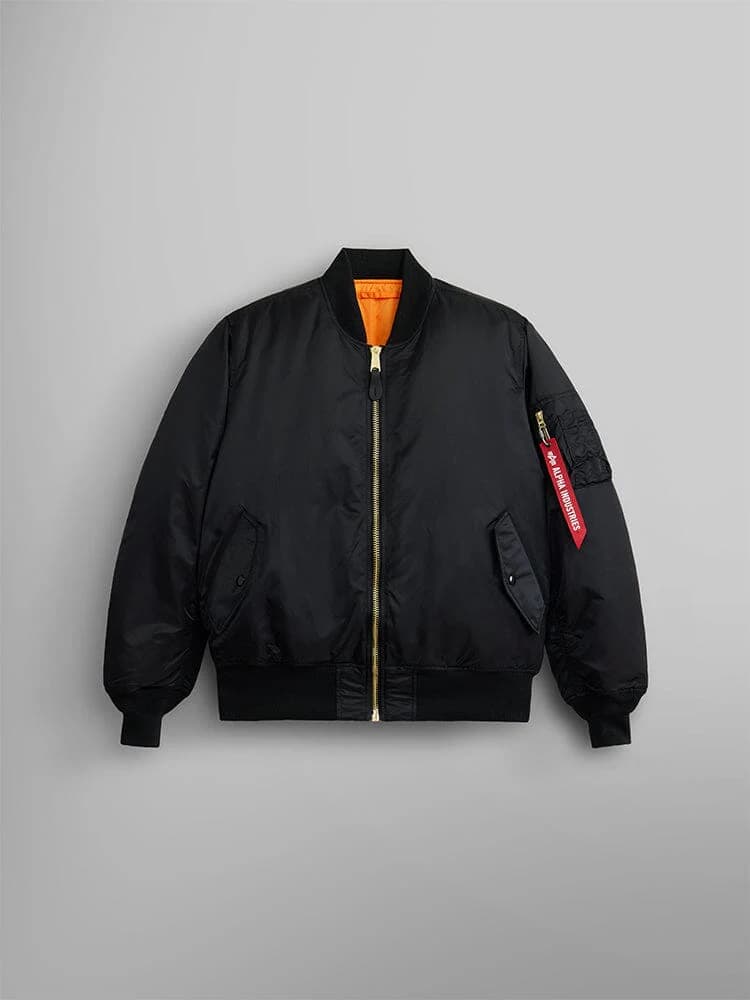
The MA-1 bomber keeps coming back because it was never just a fashion jacket. It was built for motion, for cold air, for survival, and that practical logic still reads clean on the street: nylon shell, ribbed cuffs and hem, a front zip, and that bright-orange lining that flips the whole mood when it shows. What looks effortless now was engineered for pilots, and that original discipline is exactly why the silhouette still feels right when brands try to make it new.
From cockpit function to street uniform
The MA-1 was first issued to United States Air Force pilots in the 1950s, right in the jet age, when lighter, more mobile flight gear made sense. Alpha Industries says its iconic MA-1 was manufactured to the same specifications for almost 40 years, which tells you everything about the jacket’s staying power: the shape worked, the details worked, and nobody needed to fix what already did the job. Hypebeast’s Alpha Industries lineage video highlights the knit trim and the recognizable right-arm zip pocket, two small design decisions that made the jacket feel engineered instead of decorative.
That’s the secret sauce. The MA-1 is compact, cropped enough to sit close to the body, and easy to layer over a hoodie, sweatshirt, or even a tee without swallowing the outfit. It’s a jacket that moves with you, not against you, which is why it slid so naturally out of military use and into streetwear’s appetite for functional uniforms.
Why the silhouette reads so clearly
Part of the MA-1’s appeal is how little noise it makes. The jacket’s body is clean, the lines are simple, and the proportions are easy to read from a distance, which is catnip for a scene that loves immediate visual codes. The orange lining is the flash of drama, but the outside stays restrained, almost severe, which lets the wearer decide whether the look goes sporty, hard, ironic, or polished.
It also helps that “bomber jacket” is a broader category than the MA-1 itself. In fashion terms, the phrase can refer to any cropped, waist-length jacket with fitted or elasticated waistband and cuffs and a zip closure. The MA-1 became the defining version of that family, but its shape was always flexible enough to become a template rather than a relic.
How subcultures turned utility into identity
Highsnobiety frames the MA-1’s story as a movement from World Wars to notorious subcultures, and that arc is the reason the jacket never felt locked to one tribe. In Britain, Mods took to it because it sat neatly in a wardrobe built on sharpness and attitude. Punk scenes and skinhead style gave it a harder edge, while hip-hop and skate communities later picked it up for the same reason streetwear keeps returning to it now: it looks like a uniform without looking precious.
That subcultural handoff matters more than any runway moment. Once a garment becomes a visible marker of group identity, it stops being just clothing and starts functioning like a shorthand. The MA-1 did that across different scenes because it could absorb each one’s attitude without losing its own frame.
Why brands keep reviving it
The bomber survives in retail because it is basically a perfect remix platform. Start with the same familiar shell, then change the fabric, proportion, finish, or hardware and you get something that feels both known and fresh. Oversized cuts make it slouchier and more contemporary. Satin finishes push it toward shine. Patchwork and embroidery turn it into a statement piece. Cropped proportions sharpen the silhouette, while stripped-back monochrome versions lean into minimalism.
That adaptability is the real commercial engine. Brands can reference the MA-1 without having to invent a new shape from scratch, and customers already understand the language of the jacket before they touch it. You are not buying mystery; you are buying a known form with a new accent.
What to look for when you buy one now
If you want the MA-1 to work in your closet instead of just looking nostalgic on a hanger, the details still matter. The best versions keep the ribbed collar, cuffs, and hem tight enough to preserve the shape, and they keep the body substantial enough that the jacket doesn’t collapse when you layer it. Nylon still makes sense if you want the original glide and slight sheen, but modern versions can shift into heavier fabrics or satin if you want a cleaner or more stylized finish.
A strong MA-1 should also preserve the jacket’s compactness. The point is not bulk for its own sake. The point is a controlled silhouette that sits neatly over sweats, denim, cargos, or tailored trousers without fighting the rest of the outfit. That is why the jacket reads so well in streetwear: it is easy to wear, easy to repeat, and easy to make your own without overthinking it.
Why it still belongs in streetwear
Heddels places American flight jackets in a longer runway of military-to-civilian style, from 1947 to the present, and the MA-1 sits right in that lane as one of the clearest examples of a piece that never really stopped working. It moved from flight gear to subcultural uniform to recurring commercial staple because its original design already solved the problem streetwear cares about most: how to look sharp, practical, and a little hard without trying too hard.
That is why the MA-1 keeps surviving each new styling cycle. It is small enough to layer, structured enough to hold a shape, and loaded enough with history to give even a simple outfit some voltage. Brands keep reviving it because the silhouette still sells like it is new, even when every detail says otherwise.
This article was produced by Prism’s automated news system from verified source data, official records, and press releases, then run through automated quality and moderation checks before publishing. The system is built and supervised by the people who set the standards it runs under. Read our full AI policy.
Did this article answer your question?