How to make monochrome streetwear look sharper and more intentional
One color, done well, makes streetwear look cleaner, pricier, and more deliberate. The trick is shade variation, texture contrast, and the right sneaker line-up.
How monochrome sharpens streetwear
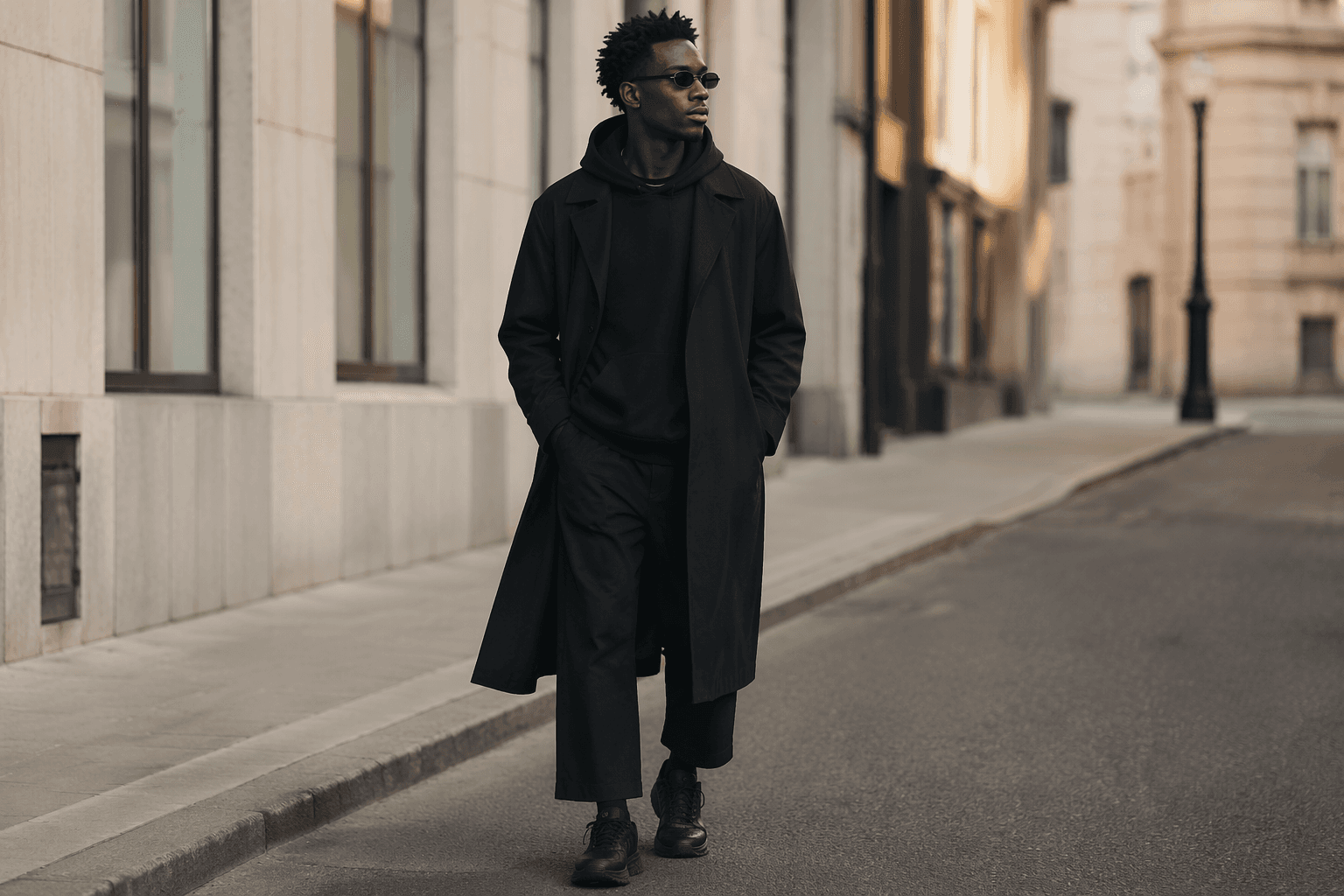
Monochrome streetwear works because it does two things at once: it simplifies the outfit and makes every detail look more considered. One color family, worn head-to-toe, creates an unbroken vertical line that streamlines the silhouette and can visually elongate the body. That is why a tonal look feels polished even when the individual pieces are humble, like a hoodie, cargos, and sneakers.
The best monochrome outfits are not identical from top to bottom. They are built from shades, tints, and textures inside the same color family, which gives the eye enough movement to read the outfit as intentional rather than flat. Fashion coverage often calls this tonal dressing, and in streetwear it has become one of the easiest ways to make affordable basics feel sharper without adding logos, color blocking, or too many styling tricks.
Why tonal dressing reads as more expensive
Streetwear can look busy fast. One of the quiet advantages of monochrome is that it removes the visual noise that cheapens an outfit, especially when the pieces themselves are familiar. A black hoodie, black cargo trouser, and black sneaker can feel austere in the best way, but only if the materials are doing different jobs: fleece against twill, matte against sheen, dense cotton against smooth rubber.
That contrast matters because exact matching is not the point. A charcoal sweatshirt with washed-black trousers and a near-black sneaker has more depth than a perfectly matched set, and that depth is what makes the outfit feel styled rather than accidental. Even the most minimal look benefits from this kind of precision, because monochrome only works when you can see the hand behind it.
Build the outfit around texture, not just color
The most successful monochrome streetwear outfits mix finishes inside the same family. A matte knit, smooth suiting fabric, and a wool coating all read differently, even before you notice the silhouette. In streetwear terms, that means pairing the soft hand of a hoodie with the crisper structure of cargos, or balancing a brushed tee with technical nylon and a clean sneaker.
This is where oversized and layered fits become especially effective. When volume increases, texture becomes the thing that keeps the outfit from collapsing into a single blur of color. A roomy hoodie under a slightly heavier outer layer, or a loose tee peeking from under a zip-up, gives the look dimension without breaking the monochrome discipline.
The easiest formulas to repeat
If you want the look to feel current, keep the formula simple and let the execution carry it. Monochrome does not need to be precious, and it does not need rare pieces to work. The strongest outfits usually come from a small set of streetwear staples:
- Black, softened: washed-black hoodie, black cargos, charcoal tee, black or dark-gray sneaker. The slight shift in shade keeps the look from feeling costume-like.
- Cream and ecru: off-white tee, bone-colored joggers, cream sneaker, with one textured layer such as a knit or a brushed fleece. This feels especially clean when the pieces are deliberately different in weight.
- Gray on gray: heather sweatshirt, slate sweatpants, silver-gray outer layer, and a sneaker in a similar neutral range. Gray works well because it naturally allows more visible depth between garments.
- Olive, tonal and grounded: faded olive tee, deeper green cargos, and a sneaker that stays in the same family rather than turning bright or contrast-heavy. This is one of the easiest ways to make streetwear feel intentional without looking formal.
Each formula depends on the same rule: do not match every item exactly. A few close shades are more interesting than a full lockstep set, especially when the fabrics change from piece to piece.
Sneakers should support the line, not interrupt it
In monochrome dressing, sneakers are not an afterthought. They are the base note that either keeps the outfit cohesive or breaks the spell. A clean runner, a simple retro basketball shape, or a pared-back low-top in the same color family usually works best because it preserves the long vertical read of the outfit.
The wrong sneaker can flatten the whole idea. A loud, high-contrast shoe pulls the eye down and fractures the tonal effect, which is exactly what monochrome is trying to avoid. If the rest of the outfit is subtle, the sneaker should stay disciplined too, even if it brings a slightly different finish, such as suede against nylon or leather against fleece.
From daywear to nightwear without changing the formula
One reason monochrome has stayed relevant across seasons is its range. The same tonal logic that makes a daytime hoodie-and-cargo look easy can also make a nighttime outfit feel more deliberate. Swap in a sharper outer layer, a denser fabric, or a sleeker sneaker, and the outfit reads more elevated without leaving streetwear territory.
That versatility is part of why monochrome continues to recur in fashion rather than disappearing as a microtrend. It fits capsule dressing, it works across weather shifts, and it suits the current appetite for clothing that looks edited instead of overbuilt. The look is especially persuasive when you want clothes that feel modern but not overdesigned.
The fashion context behind the look
There is a reason monochrome keeps returning in both streetwear and broader fashion coverage. It sits neatly between utility and restraint, which makes it useful for the way people actually dress now. The Council of Fashion Designers of America, founded in 1962, remains a key reference point in the United States fashion landscape, while The Business of Fashion positions itself as a leading global media company covering fashion news and analysis, intelligence, and advice for the fashion, beauty, and luxury industries.
That broader fashion context matters because monochrome is not just about looking minimal. It is about control, proportion, and the confidence to let silhouette and texture do the work that logos used to do. When you build a single-color outfit with real attention, streetwear stops reading as random basics and starts reading as a point of view.
The final edit
The sharpest monochrome streetwear looks are rarely the loudest in the room. They rely on shade matching that is close, not exact, on fabric contrast that you can feel, and on sneakers that extend the line instead of breaking it. That is why the style looks expensive even when the pieces are modest: it makes ordinary staples behave like a deliberate outfit, which is the whole point of good streetwear.
This article was produced by Prism’s automated news system from verified source data, official records, and press releases, then run through automated quality and moderation checks before publishing. The system is built and supervised by the people who set the standards it runs under. Read our full AI policy.
Know something we missed? Have a correction or additional information?
Submit a Tip