Issey Miyake unveils a flat-to-pleated TYPE-O CAP, shaped by steam
A flat cap blooms into pleats with steam, turning Issey Miyake’s TYPE-O CAP into a small, wearable demonstration of textile engineering.
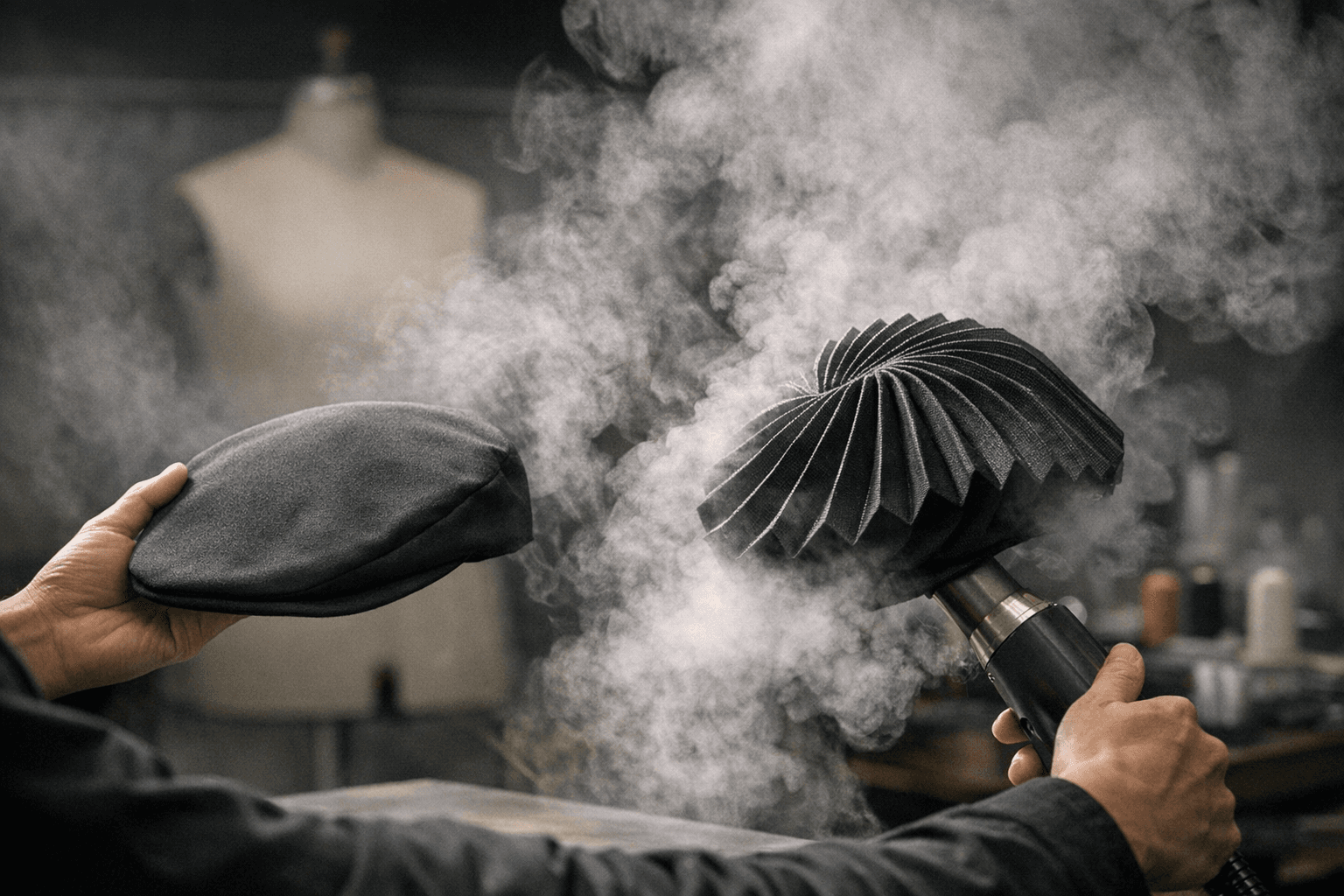
Issey Miyake has turned the baseball cap into a piece of moving architecture. The TYPE-O CAP begins as a flat sheet, then opens into a three-dimensional, head-shaping form when steam activates its geometric pleats, making the accessory feel less sewn than engineered. That is the quiet thrill here: a familiar streetwear object recast as a precise experiment in how cloth can change shape, travel lightly, and still land with a clean, futuristic line.
The cap sits squarely inside the A-POC ABLE ISSEY MIYAKE lineage, which has treated clothing as a system rather than a finished surface. A-POC, announced in 1998 as “A Piece of Cloth,” was built to rethink production and wearer participation, and the current line is led by a team of engineers under Yoshiyuki Miyamae, who joined Miyake Design Studio in 2001. That history matters because the TYPE-O CAP is not a novelty cap with a clever finish; it is the latest proof that Miyake’s design language still treats fabric as a technology, not just a material.
The details are exacting. The official TYPE-O CAP launch landed on Tuesday, October 1, 2024, and the cap is built with Steam Stretch, the technique that gives its pleated surface enough memory to spring from flatness into form. It has a drawcord at the back for size adjustment, and it is washable in water, which keeps the piece rooted in daily wear rather than museum display. The U.S. online store lists it at $350, with product code AT56AA090, a price that places it well above an ordinary cotton cap but squarely in the realm of design objects that ask to be handled as much as worn.
What makes the TYPE-O CAP distinctive is not only its silhouette, but its premise. In a market crowded with logo caps, cargo basics, and packable layers, Miyake is offering a cap that can be folded flat, steamed into volume, and adjusted on the head without losing its sharpness. That makes it a smart signal for the future of streetwear basics: garments that are easier to pack, more responsive to the wearer, and built with enough technical intelligence to justify their luxury price. If the best basics are the ones that do more than they first appear to do, this cap is already there.
This article was produced by Prism’s automated news system from verified source data, official records, and press releases, then run through automated quality and moderation checks before publishing. The system is built and supervised by the people who set the standards it runs under. Read our full AI policy.
Did this article answer your question?