Nike SB Air Force 1 Low in Flax gets a skate-ready redesign
Nike SB’s Flax Air Force 1 gets a tougher, lower ride and a clean workwear finish, landing June 9 at $120 with skate-shop access already rolling.
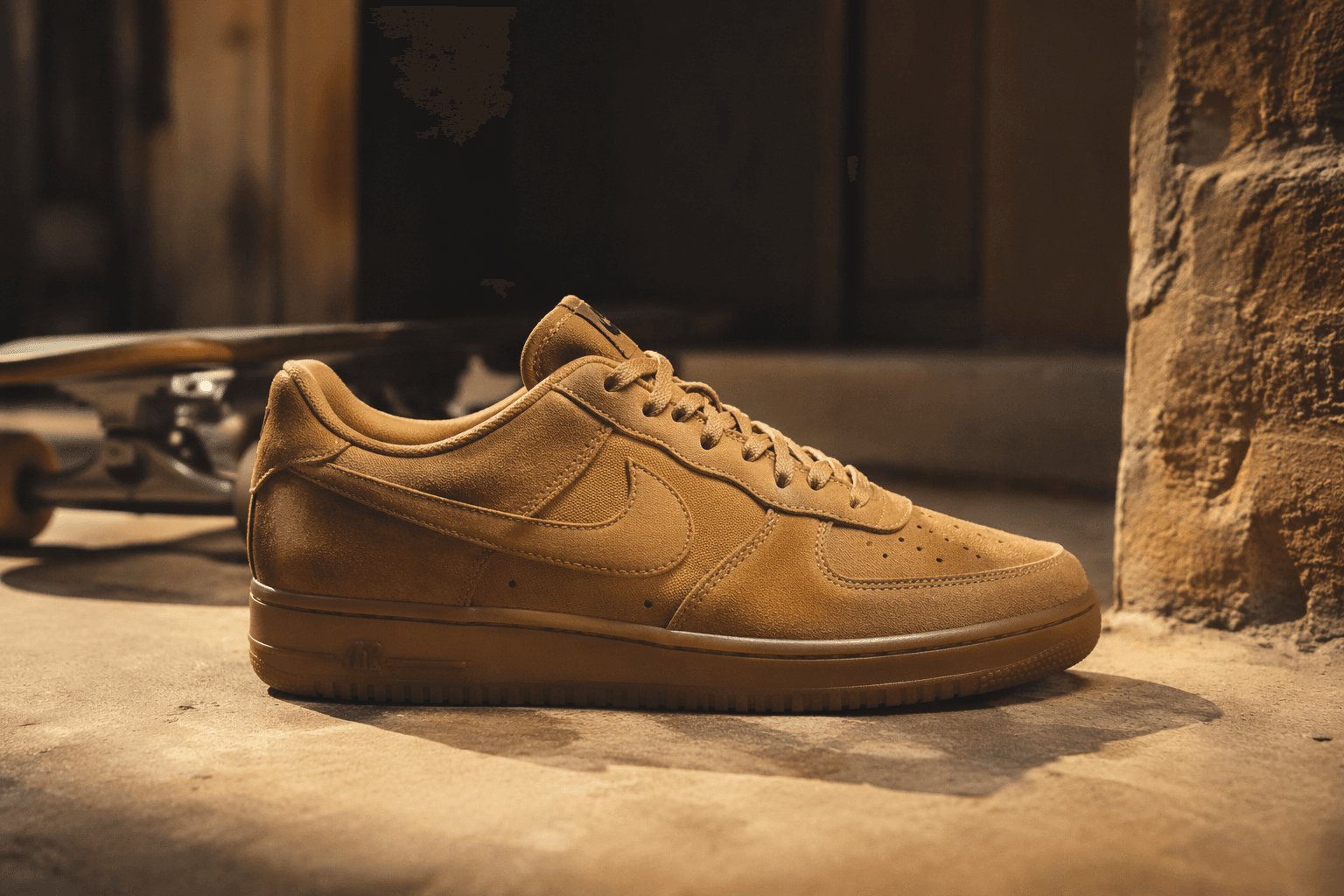
Nike SB’s Air Force 1 Low in Flax and Black, style code HM8517-200, lands on SNKRS June 9 at 2:00 PM for $120 after skate shops started getting pairs June 5. That timing matters because this is not a simple color flip on a classic. It is Nike’s full skate rewrite of the Air Force 1, and the wheat-toned version is the one that makes the smartest case for living outside the park as well as on it.
The drop, in plain terms
The shoe arrives as part of a broader SB Air Force 1 rollout Nike officially unveiled on March 31, 2026. The first launch colorway was Light Orewood Brown, which hit select skate shops on April 17 and SNKRS on April 21. Nike has also said additional colorways and special-edition drops will continue throughout 2026, so the Flax pair sits inside a longer program, not a one-off stunt.
That matters because the Air Force 1 is too big to treat like a novelty. At $120, the SB version is priced like a serious skate sneaker, not a hype-taxed fashion collab. You are paying for construction changes you can actually feel underfoot, not just a prettier box.
Why the Flax colorway hits harder
The Flax pair is the one with the clearest crossover energy. Nike describes it as a premium suede upper in Flax with a Gum Light Brown outsole, and that combo gives the shoe a workwear temperature that the original white-on-white AF1 could never touch. It reads less gym floor, more broken-in chore coat, more duck boots and denim than polished basketball nostalgia.
That is exactly why it has broad appeal. The color is muted but not flat, the suede has texture, and the gum sole keeps the whole thing grounded. It can sit under baggy carpenter pants, washed black jeans, straight-leg cargos, or wide chinos without trying too hard, which is usually how a sneaker escapes skate-only status and becomes a wardrobe anchor.
What changed for skating
Nike SB did not just tint a classic and call it technical. The SB Air Force 1 lowers the midsole, trims the silhouette, and adds an Air unit in the heel for impact protection. Nike also built in a modified herringbone tread pattern for grip and flexibility, plus a reinforced padded tongue, internal sit straps, fit pods in the collar lining, a revised toe profile, and durable stitch-turned seams.
Those updates are the difference between a shoe that looks skate-adjacent and one that can take actual abuse. The thinner midsole and lowered footbed bring the rider closer to the board, which improves board feel and forefoot control. The revised tread and flexible outsole help with grip during quick adjustments, while the tougher seams and reinforced upper are there for the repeated flick, drag, and blowout zones that kill regular AF1s fast.
Nike SB’s own archive also frames the model as reengineered with a lighter silhouette, lowered footbed, half-length midsole, memory foam collar pills, and Air Max cushioning. That combination says everything about the mission here: keep the plushness and recognizable shape, then strip away the clunky parts that make a normal Air Force 1 feel wrong under skate pressure.
What the build updates mean in real life
A lot of brands talk about skate-ready updates as if they are abstract performance poetry. These are not abstract. A thinner midsole means less dead weight and a cleaner connection to the deck. A revised tread pattern means the outsole can work for both grip and flexibility, instead of feeling like a slab.
The reinforced tongue and collar details matter too. More padding up top gives the shoe a fuller, more protective fit, which helps when you want the comfort of a classic while still stomping stairs, ledges, and long street sessions. Internal sit straps and fit pods are the quiet, unglamorous kind of detail that separates a real skate shoe from a fashion shoe pretending to be one.
Why this matters for streetwear, not just skating
The original Air Force 1 was built for the court. Nike says it debuted in 1982 as the first basketball sneaker to house Nike Air, initially as a high-top with an ankle strap, and the design drew from Bruce Kilgore’s inspiration from Nike’s Approach hiking boot. That lineage is what gives the shoe its reach. It was never just a performance sneaker. It was already a hybrid of sport utility and toughness, which is why it escaped basketball and became a street icon.
This SB version doubles down on that history instead of fighting it. By making the silhouette lower, tougher, and more tactile, Nike is giving the AF1 the kind of evolution that lets it compete in the current sneaker landscape, where the best everyday pairs have to do more than look clean in a product shot. They need to survive real wear, pair with looser tailoring, and still hold up when the rest of the outfit goes from skate lot to dinner line.
How to wear it without killing the point
The Flax pair wants clothes with texture. It looks best with heavy denim, canvas pants, cargos, overshirts, fleece, and anything that already lives in the workwear lane. Keep the shape relaxed so the shoe can breathe. The suede and gum sole already do the visual heavy lifting, so there is no need to force it with overstyled fits or loud color blocking.
If you skate, the appeal is obvious: a classic shape with real board-minded changes. If you do not, the appeal is just as obvious, because this is one of those rare Nike SB pairs that can actually stretch beyond the session and into daily rotation without losing its identity. The wheat colorway makes the whole thing feel less like a commemorative release and more like a genuinely useful object, which is exactly why it has a chance to travel farther than most skate sneakers ever do.
The best Nike SB Air Force 1 is not the loudest one. It is the one that looks like it already belongs on the floor, on the deck, and on the street. Flax gets there fast.
This article was produced by Prism’s automated news system from verified source data, official records, and press releases, then run through automated quality and moderation checks before publishing. The system is built and supervised by the people who set the standards it runs under. Read our full AI policy.
Know something we missed? Have a correction or additional information?
Submit a Tip