Why shell jackets and modular pockets keep returning to streetwear
Shell jackets win because they do three jobs at once: block weather, carry the day, and sharpen a fit without trying too hard.
The shell jacket is the streetwear answer to real life
A good shell jacket does what the loudest outerwear rarely can. It cuts wind, shrugs off rain, carries your phone, keys, and headphones without bulking up the fit, and keeps the whole look crisp instead of soggy. That is why it keeps coming back while trendier jackets fade out fast: it solves the problems people actually dress for.
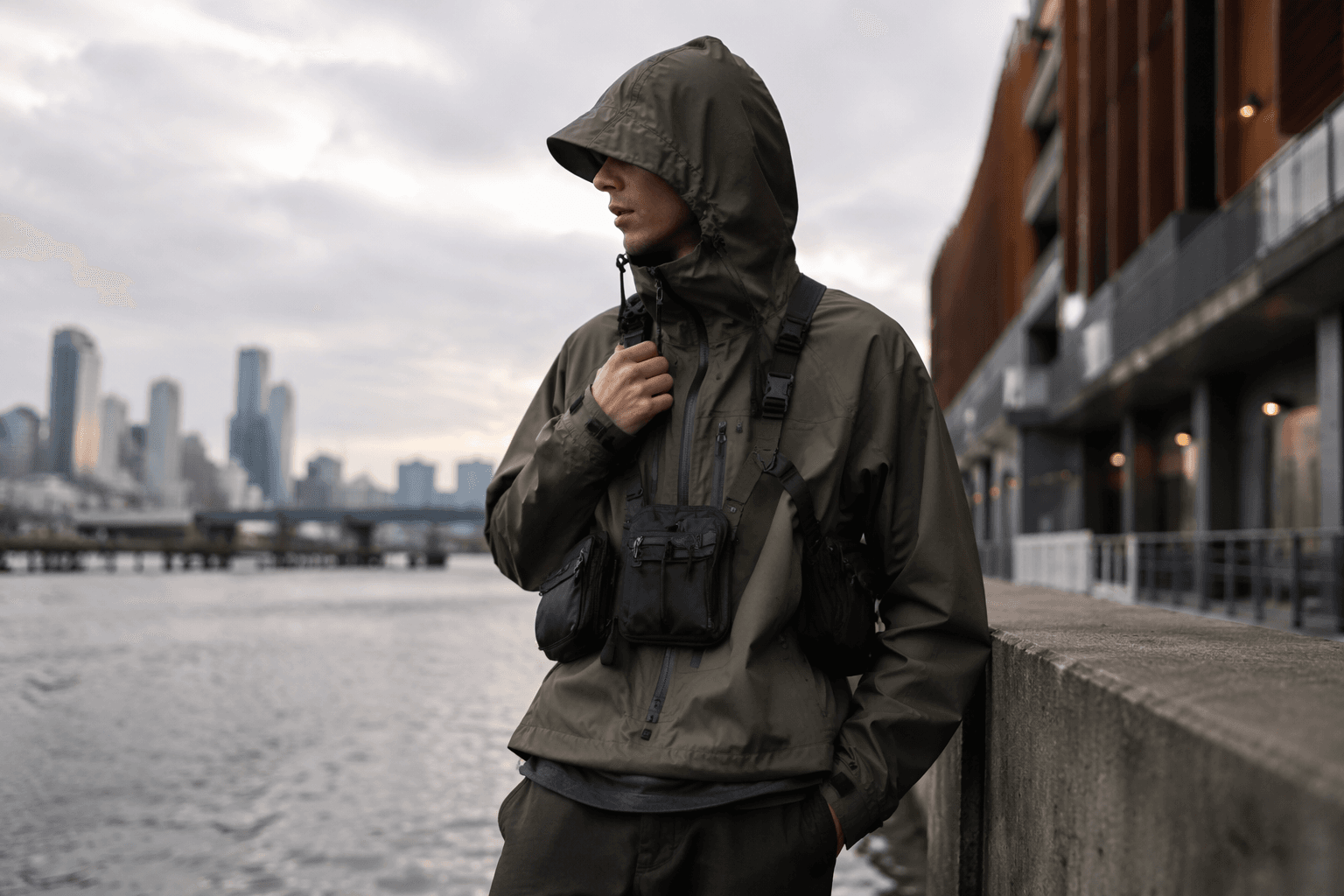
The modular pocket is part of that appeal. Extra zip compartments, chest pouches, flap pockets, and removable or expandable storage turn a jacket into a piece of equipment, but one that still reads as style. In streetwear, that balance matters. You want function that looks intentional, not a costume built for a trail you are never going to hike.
Why utility keeps beating novelty
Streetwear has always rewarded pieces that work harder than they look. A shell jacket feels modern because it treats weather as design, not inconvenience. It is the layer you throw on over a hoodie when the temperature drops, over a tee when the city gets humid, and over a knit when you need a cleaner line than a puffer gives you.
That is the real reason shells outlast flashier outerwear. Bombers sag in bad weather, wool coats ask for better conditions than most city days provide, and oversized puffers can swallow the whole outfit. A shell sits in the middle: lighter than a parka, sharper than a fleece, more useful than a fashion jacket that only photographs well indoors.
Cut is everything
The best shell jackets are not just waterproof, they are shaped right. A boxy cut gives room for layering and keeps the silhouette off the body, which matters when you are wearing hoodies, sweatshirts, or even a light sweater underneath. A slightly cropped hem can make the jacket feel more street than outdoorsy because it lets the pants lead the look instead of hiding them.
Pay attention to the shoulder line and sleeve volume. If the jacket is too tight, it reads technical in the wrong way, like gear borrowed from a catalog page. If it is too loose without structure, it becomes sloppy fast. The sweet spot is a clean body, enough room in the sleeves for movement, and a hem that does not fight the proportions of cargos, denim, or shorts.
What to look for in the fit
- A roomy but controlled torso so the jacket layers without ballooning
- Sleeves that bend naturally at the elbow instead of bunching
- A hem that hits where your pants rise, not halfway down your thigh
- A hood that sits flat when down and frames the face when up
- A zipper that closes cleanly without pulling the front panel out of shape
Pocket design changes the whole attitude
Pocket placement is not decoration on a shell jacket. It decides whether the piece feels like streetwear, hiking gear, or airport uniform. High chest pockets give easy access and keep small items off the hips. Lower hand pockets add balance and make the jacket feel more relaxed. Cargo-style pocketing on the body or sleeves gives the strongest modular look, especially when the compartments are zippered or asymmetrical.
The trick is restraint. Too many pockets and the jacket becomes a gimmick. The best versions look like they were engineered with purpose, then stripped of anything useless. That is what gives modular pocket design its edge in streetwear: it looks functional first, but the visual rhythm of the pockets also breaks up the surface in a way that feels expensive and considered.
Fabric does the heavy lifting
Technical fabric is what turns a shell from a light jacket into a weather tool. Nylon and polyester shells are popular because they are light, durable, and easy to pack. Ripstop weaves add toughness without adding much weight, while waterproof or water-resistant finishes help the jacket shed rain instead of soaking it up. Taped seams and laminated membranes matter too, because a shell is only as good as the construction holding it together.
The fabric also changes the vibe. Matte shells feel cleaner and more urban. Shiny, crinkled, or slightly papery fabrics push the jacket closer to performance gear. Either way, the material should move well and hold shape. That crisp hand, the slight rustle when you walk, the way the hood stands instead of collapsing, all of it gives the shell its edge.
Fabric details that matter
- Lightweight nylon for easy layering and packability
- Ripstop for a tougher, more rugged feel
- Water-resistant or waterproof treatment for real weather use
- Taped seams for a cleaner barrier against rain
- Breathable construction so the jacket does not trap heat all day
How to wear one without looking like you are headed up a mountain
The easiest mistake is going too far into gorpcore. If every other item is technical, the look starts to feel like cosplay. The shell works best when it is the one utility piece carrying the outfit while everything else stays familiar. That contrast is what makes it feel like streetwear instead of outdoor uniform.
With cargos, keep the rest of the outfit clean. A black or slate shell over a white tee and relaxed cargo pants gives you utility without clutter. If the cargos are already heavy and pocketed, choose a shell with simpler pocketing so the outfit does not overload itself. The jacket should sharpen the silhouette, not compete with the pants for attention.
With denim, the shell reads sharper and more city-ready. Straight or loose denim grounds the technical fabric and keeps the look from drifting too far into climbing gear. A crisp shell over faded jeans and a plain hoodie has the kind of contrast streetwear lives on: polished on top, lived-in below.
With shorts, the shell becomes a proportion play. A slightly cropped or boxier jacket keeps the outfit balanced, especially when the shorts are loose. This is where modular pockets help most, because they add visual weight up top and keep the fit from looking top-heavy or unfinished.
The color story matters more than people admit
Black, olive, navy, graphite, and muted stone shades keep shells easy to wear and harder to date. Those colors let the shape and pocket layout do the talking. Brighter tones can work, but they ask for more control elsewhere in the fit, and they can push the jacket closer to statement piece than everyday tool.
The most wearable shells are the ones that disappear when they need to and stand out when they should. That is the sweet spot streetwear keeps returning to: clothing that looks sharp in motion, survives bad weather, and still gives the outfit a point of view. Shell jackets and modular pockets keep winning because they do not force you to choose between style and usefulness, and in a wardrobe built for the street, that is the whole game.
This article was produced by Prism’s automated news system from verified source data, official records, and press releases, then run through automated quality and moderation checks before publishing. The system is built and supervised by the people who set the standards it runs under. Read our full AI policy.
Know something we missed? Have a correction or additional information?
Submit a Tip