African Fashion Coalition calls for regenerative, value-keeping industry shift
Africa's fashion economy is losing about US$8 billion a year as raw textiles leave and finished clothes return, a new manifesto says. Its fix is ownership, not just sustainability.
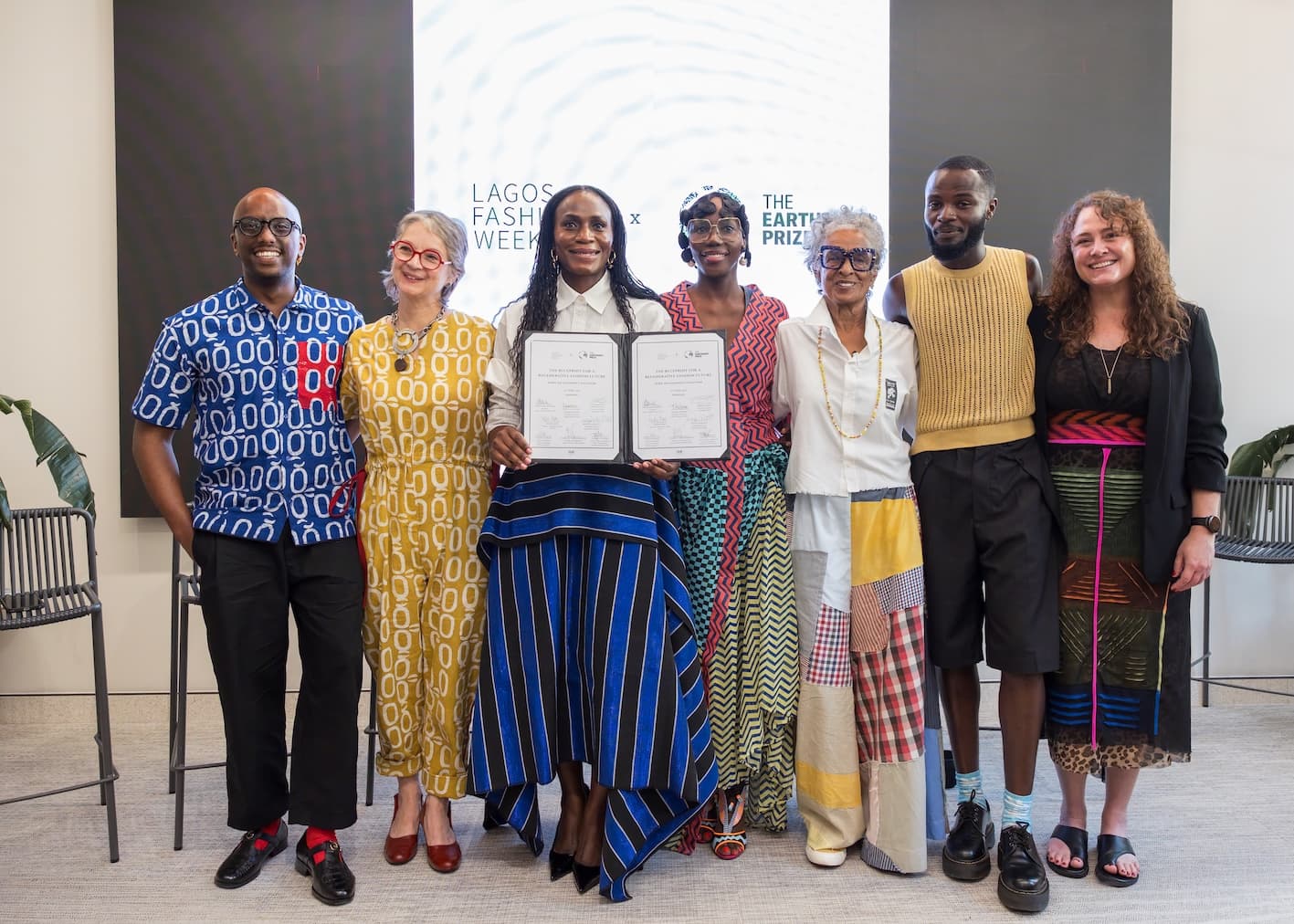
Lagos Fashion Week used London Climate Action Week to put a hard number on fashion’s old imbalance: Africa is losing about US$8 billion a year under a global system that ships out raw materials and buys back finished clothes at a premium.
The Blueprint for a Regenerative Fashion Future launched on June 22, 2026, in partnership with The Earthshot Prize as part of the African Fashion Compact II initiative. Africa already has the skills, the craft and the circular instincts, but too little ownership. The document puts the continent’s exports at roughly US$15 billion of raw textiles each year and imports at more than US$23 billion in finished clothing and footwear, a gap that leaves value, jobs and profit elsewhere.

If African-led systems take hold, cotton growers would move from selling low-margin fiber into deeper local processing, spinning and dyeing. Weavers, tailors and artisans would keep more of the work onshore instead of seeing their output reduced to inspiration boards and export shipments. Brands would have to build around local manufacturing power, intellectual property and regenerative production rather than treating Africa as a sourcing stop.
The document was shaped through convenings, workshops, consultations and stakeholder engagement, including a Manifesto Lab in April 2026.
In 2023, UNESCO said 37 of 54 African countries produce cotton, that Africa exports textiles worth US$15.5 billion a year and imports textiles, clothing and footwear worth US$23.1 billion a year, and that 32 African countries organize fashion weeks. Small and medium-sized enterprises make up 90 percent of fashion businesses on the continent, and demand for African haute couture is projected to rise 42 percent over the next 10 years, UNESCO said.
Africa’s fashion hubs include Abidjan, Casablanca, Dakar, Johannesburg, Lagos and Nairobi. Lagos Fashion Week said: “The question is no longer whether change is necessary. The question is who will lead it. Africa is ready.”
This article was produced by Prism’s automated news system from verified source data, official records, and press releases, then run through automated quality and moderation checks before publishing. The system is built and supervised by the people who set the standards it runs under. Read our full AI policy.
Did this article answer your question?


