Brett Johnson grows sales, launches circular footwear with take-back program
Brett Johnson says its new circular shoe is its most sustainable yet, pairing a TPU sole with recycled textile offcuts, a smartphone tag and take-back program.
Brett Johnson is treating footwear like a growth engine, not a side note. The luxury label said sales rose 35% in the first four months of 2026, then used that momentum to launch a circular shoe program for Spring/Summer 2027, a sign that sustainability is being pushed past slogan territory and into product engineering.
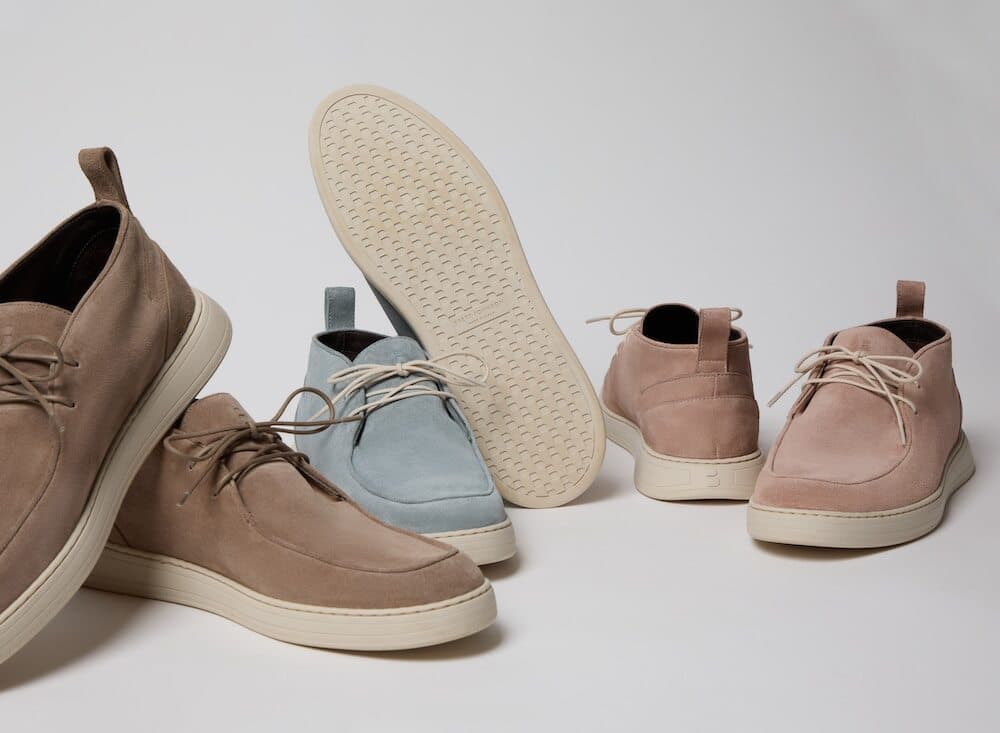
The line arrives in three models, offered in suede or leather and a bright spread of colorways that run from sand, powder pink and chestnut to beige, silver grey, bright green, aqua, white and blue. The custom sole is made from TPU, a material chosen for its lightness and flexibility, while the interior uses TecneGreen technology with additive polyurethane foam containing a high percentage of recycled textile materials taken from Brett Johnson ready-to-wear offcuts. That is the interesting part: the brand is not simply styling the shoe as “eco,” it is building the sustainability story into the part most shoes wear out first.
Each pair also carries a tag embedded in the sole that links by smartphone to product origin and production details, a small but smart move in a category where provenance often gets lost once the shoe leaves the box. Brett Johnson has added a take-back program as well, allowing customers to return worn pairs for recycling into new production processes. On paper, that gives the shoe a second life and gives the brand a cleaner answer to the question luxury shoppers are asking more often: what happens after I wear this?
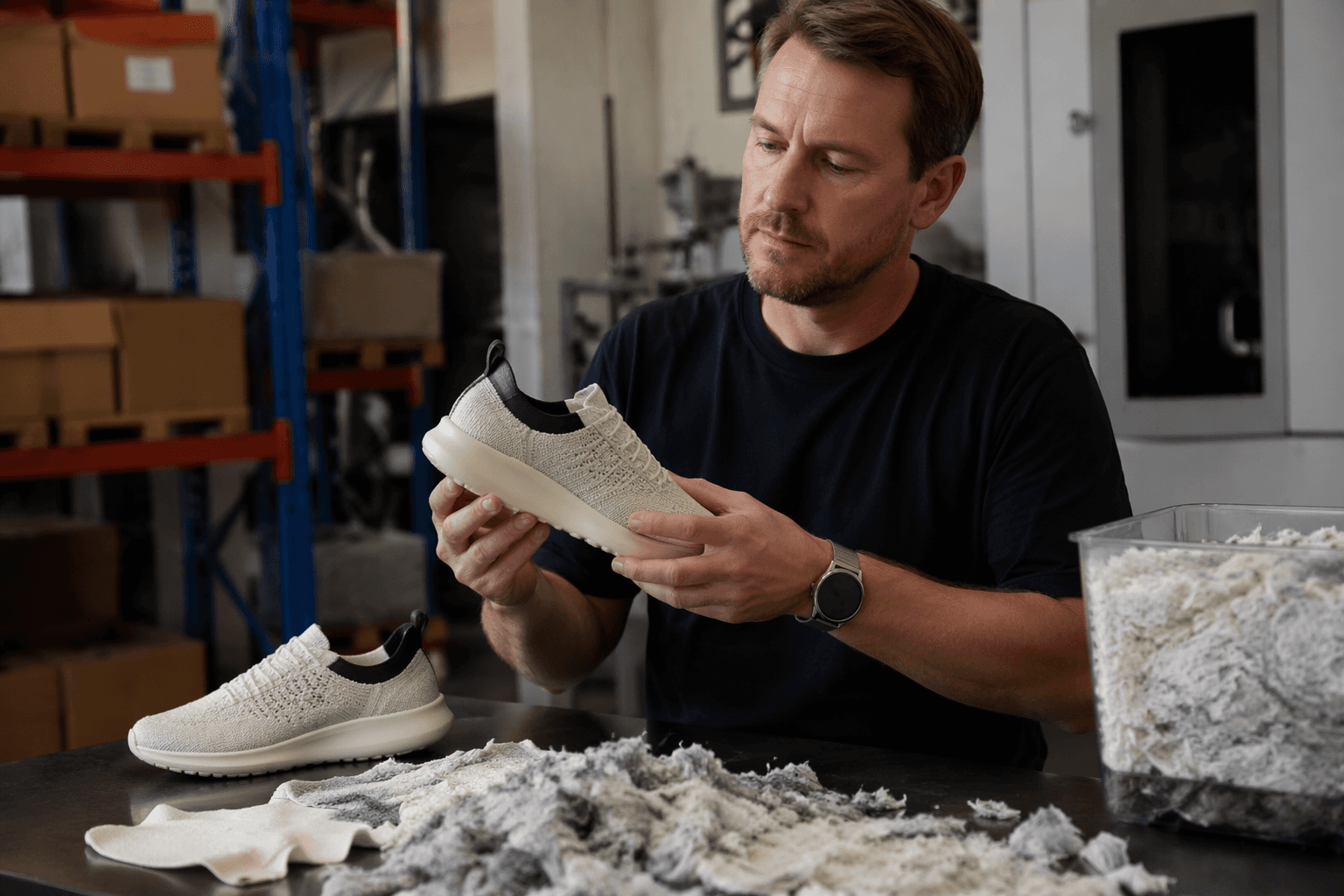
Marco Fiandesio said footwear is being treated as “a distinct category, not just an apparel complement,” and the positioning matters. Brett Johnson, founded in 2013 and manufactured exclusively in Tuscany and Umbria, has always sold an American-vision, Italian-craft fantasy. The new shoe has to do more than flatter that image; it has to prove that a smaller luxury label can design for repair, recovery and resale value without dulling the appeal.
Distribution may be the real stress test. Brett Johnson said it has begun selling in the SS27 season, is attracting new customers, and is seeing existing customers buy more, helped by quality, value and new colors due at the next Pitti Uomo. The brand’s push through JD.com suggests a bigger ambition: if circular luxury is going to scale in China, it will need more than beautiful materials and good intentions. It will need real distribution infrastructure, and the discipline to make sustainability work at retail speed.
This article was produced by Prism’s automated news system from verified source data, official records, and press releases, then run through automated quality and moderation checks before publishing. The system is built and supervised by the people who set the standards it runs under. Read our full AI policy.
Did this article answer your question?