Cascale boosts Higg FEM data credibility with 13,500 verifications worldwide
Cascale says 13,500 Higg FEM verifications across 70+ countries are tightening factory data, but the real test is whether brands trust the numbers enough to use them.
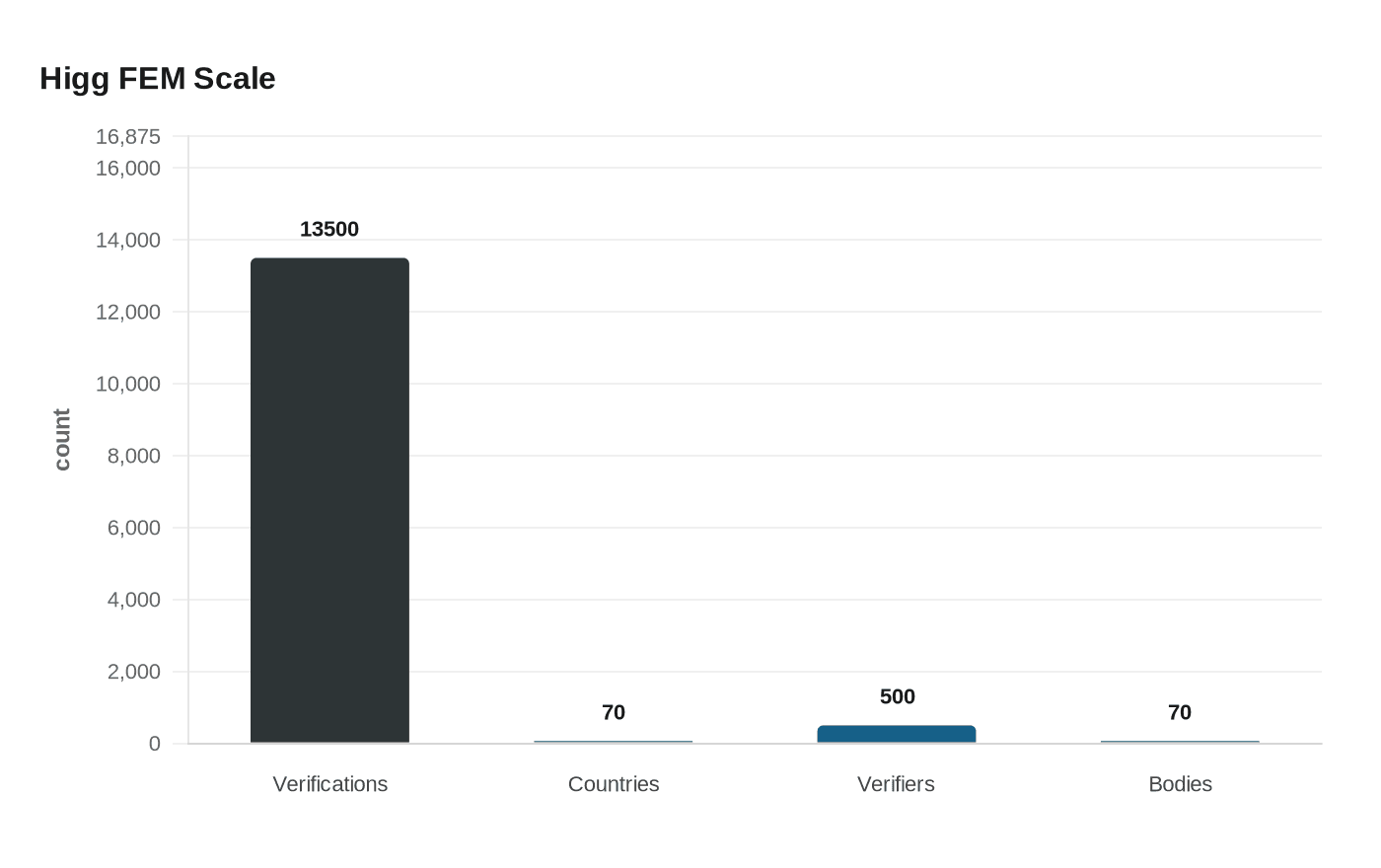
Cascale’s latest verification tally is less about volume than trust. The organization said 13,500 Higg FEM verifications were completed in 2025 across 70+ countries, a scale it says is helping make facility-level environmental data more “consistent, comparable, and credible” for consumer goods supply chains.
That matters because Higg FEM is not a vanity metric. It feeds Scope 3 reporting, regulatory disclosures and factory-level operational decisions, which is exactly why the industry has spent years arguing over whether environmental data is robust enough to support sourcing choices and public claims. Cascale says the verification layer is meant to improve assessment accuracy, reduce variability in how assessments are applied and sharpen interpretation across factories and regions. It also said the network now includes 500+ approved verifiers and 70+ approved Verifier Bodies.
Cascale released the Higg FEM Verification 2025 Annual Report on April 23, 2026, after spending 2025 stabilizing operations, strengthening quality assurance systems and reinforcing integrity mechanisms following the rollout of Higg FEM 4.0. On the Worldly platform, enhanced quality-assurance controls were used to prevent errors and detect issues in real time, a sign that the credibility battle is being fought as much in software logic as in factory audits.
Dhawall Mane, Cascale’s director of verification, training & insights, said the organization focused in 2025 on strengthening the systems, processes and oversight behind the program. The point is not simply to count more verified submissions. It is to make sure a facility in one country is being judged by the same yardstick as a facility halfway around the world, so buyers can compare emissions, water use, wastewater, waste, chemicals and management systems without inheriting the old measurement fog.
Jeremy Lardeau made that broader case in a December 17, 2025 blog post on Higg FEM data quality, arguing that the tool’s value extends beyond benchmarking inside a single factory. Cascale says that work included clearer questions, new guidance and training, updated emissions models and validation rules designed to prevent impossible answers. When Higg FEM 2025 launched on November 6, 2025, it also introduced sharper emissions metrics and enhanced verification.
The fine print still matters. Cascale’s guidance says annual updates to energy and emissions calculations improve data quality and alignment with industry and global models, but comparability with Higg FEM 2024 may be slightly affected for some energy sources. That is the credibility test in plain sight: better verification only counts if it helps brands make stronger decisions, and stronger claims, without replaying the measurement controversies the industry is still trying to leave behind.
This article was produced by Prism’s automated news system from verified source data, official records, and press releases, then run through automated quality and moderation checks before publishing. The system is built and supervised by the people who set the standards it runs under. Read our full AI policy.
Did this article answer your question?