Celio turns CSRD reporting into eco-design and sourcing changes
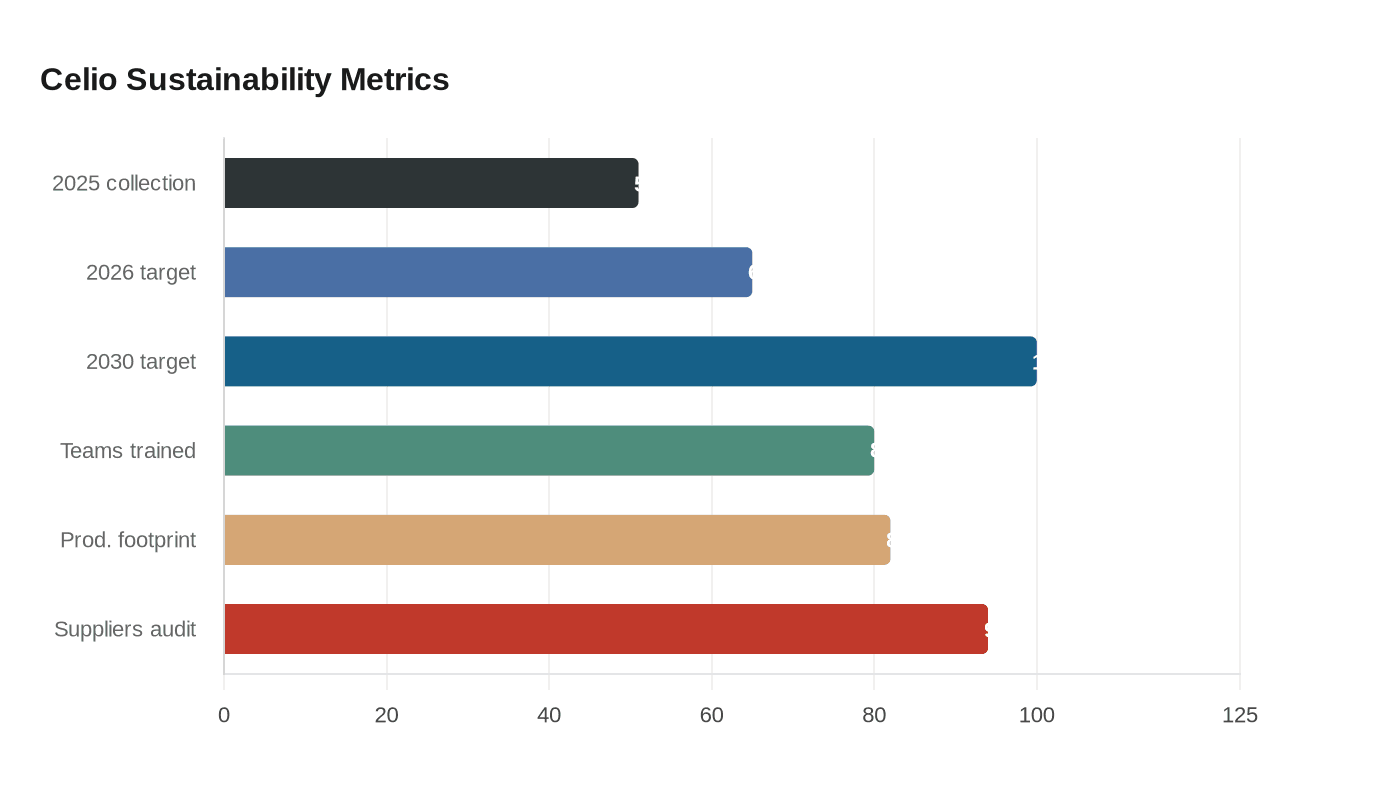
Celio said 51% of its 2025 collection met strict eco-design criteria, pushing sourcing, training and factory oversight to the center of its strategy. The French menswear chain aims for 65% by end-2026 and 100% by 2030.

Celio is treating CSRD reporting less like a compliance exercise and more like a redesign of how a mid-market menswear chain actually works. The French retailer said 51% of its 2025 collection met strict eco-design criteria, a threshold that only matters if it starts changing how garments are conceived, sourced and signed off. That is the real story here: the report is not a glossy sustainability profile, but a map of the internal levers Celio is trying to pull.
The company’s target is bluntly ambitious for a label operating in the commercial middle of the market, where margins are tighter and product cycles are faster. Celio wants 65% of its products to meet eco-design criteria by the end of 2026 and 100% by 2030. To get there, it said 80% of its buying and design teams have already been trained, a signal that sustainability is no longer parked with a CSR department, but pushed upstream into the people choosing fabrics, trims and suppliers in the first place.
That matters because Celio says 82% of its carbon footprint comes from production. In fashion terms, that is the blunt truth behind every neat sustainability chart: the biggest emissions cuts will not come from corporate messaging, but from what gets made, where it is made and under what conditions. Celio also said 94% of its suppliers are covered by a valid social audit, through systems such as amfori BSCI, Sedex and SA8000, which shows how heavily the brand is leaning on audit infrastructure to manage risk and standardize expectations across its supply base.
The company said it completed a double materiality assessment at the end of 2024, an important marker for a brand trying to move from broad intent to prioritization. That kind of exercise forces a retailer to decide which issues are truly strategic, whether that means emissions, labor rights, sourcing geography or product design. Celio’s CSR director, Pétronille Ricard, brings a background in international purchasing and sustainable development, including work on CSR strategy at Etam Group, and that purchasing lens is visible in Celio’s emphasis on linking buying decisions to sustainability outcomes rather than treating them as separate conversations.
Celio’s Bangladesh work underlines the same point. The company points to the Employment Injury Scheme Pilot, launched by the Government of Bangladesh on June 21, 2022, to provide compensation for work-related injuries to around 4 million workers in the export-oriented ready-made garment sector. More than 80 international brands are funding and supporting the scheme through June 2027, and a 2025 midterm review said it had evolved into an operational system covering about 2.8 million workers, with expansions into commuting accidents, EPZs and the leather sector. For Celio, that is what compliance starts to look like when it reaches beyond a report and into production: not just cleaner product language, but deeper involvement in the systems that make the clothes possible.
This article was produced by Prism’s automated news system from verified source data, official records, and press releases, then run through automated quality and moderation checks before publishing. The system is built and supervised by the people who set the standards it runs under. Read our full AI policy.
Did this article answer your question?


