China white paper makes low-impact textile chemistry a market-access issue
China’s latest textile white paper turns greener chemistry into a ticket to market access, pressuring brands to rethink dyes, finishes and PFAS-heavy fabrics.
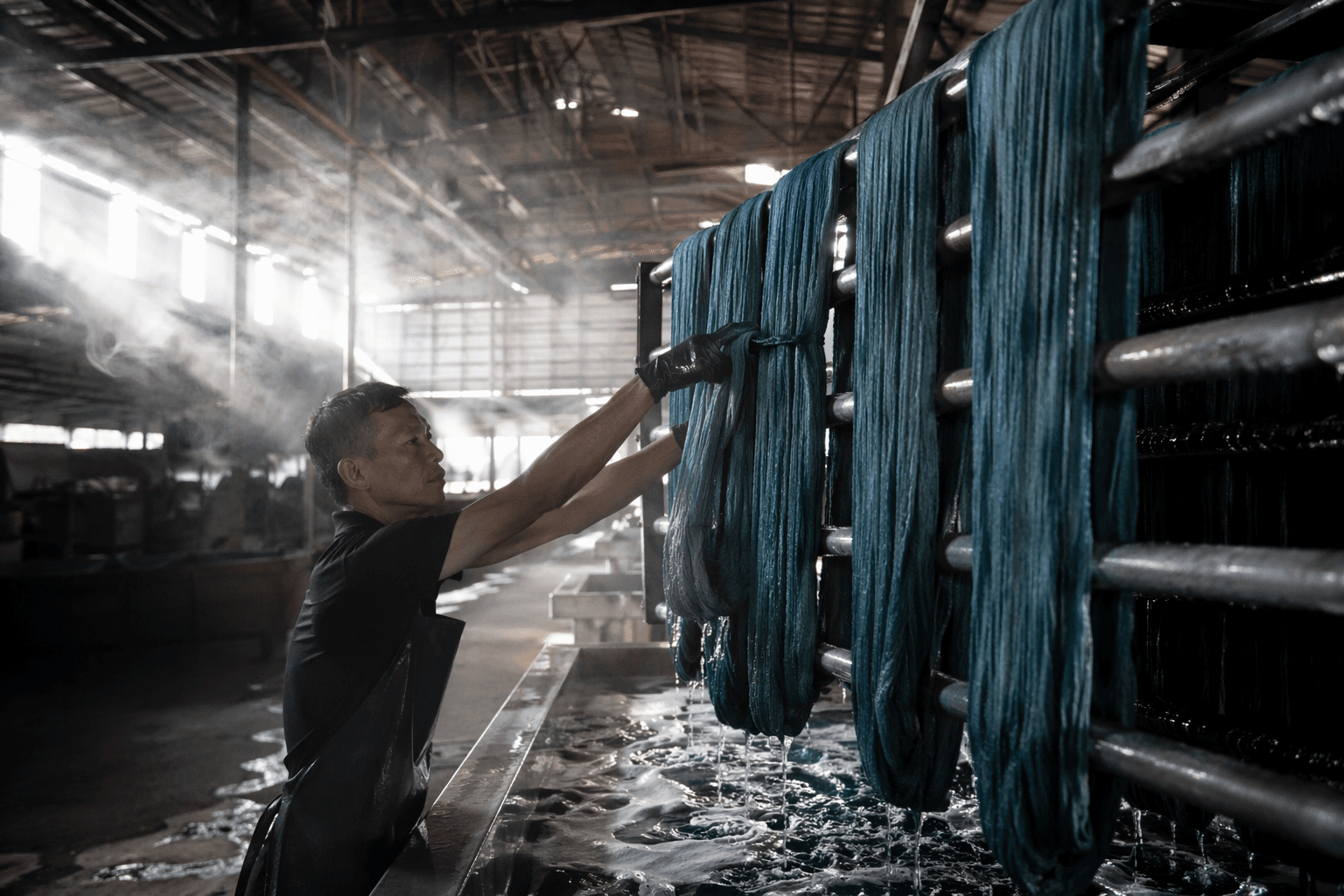
China’s textile sector is no longer treating cleaner chemistry as a nice-to-have finishing touch. In Shanghai, Transfar Chemical launched a white paper on April 15, 2026 that frames low-impact textile chemistry as a requirement for staying in the game, not a voluntary sustainability flourish.
Titled “Green Transformation Across the Value Chain” and released with the China Textile Information Center, the National Key Laboratory of Textile New Materials and Advanced Processing, and the China Dyeing and Finishing Industry Association’s textile chemicals branch, the paper maps global environmental rules, restricted-substance lists and consumer demand. Its message is blunt in fashion terms: the chemistry that gives fabric its color, hand feel, water resistance and easy-care finish is becoming the part of the supply chain most likely to decide who can keep selling.
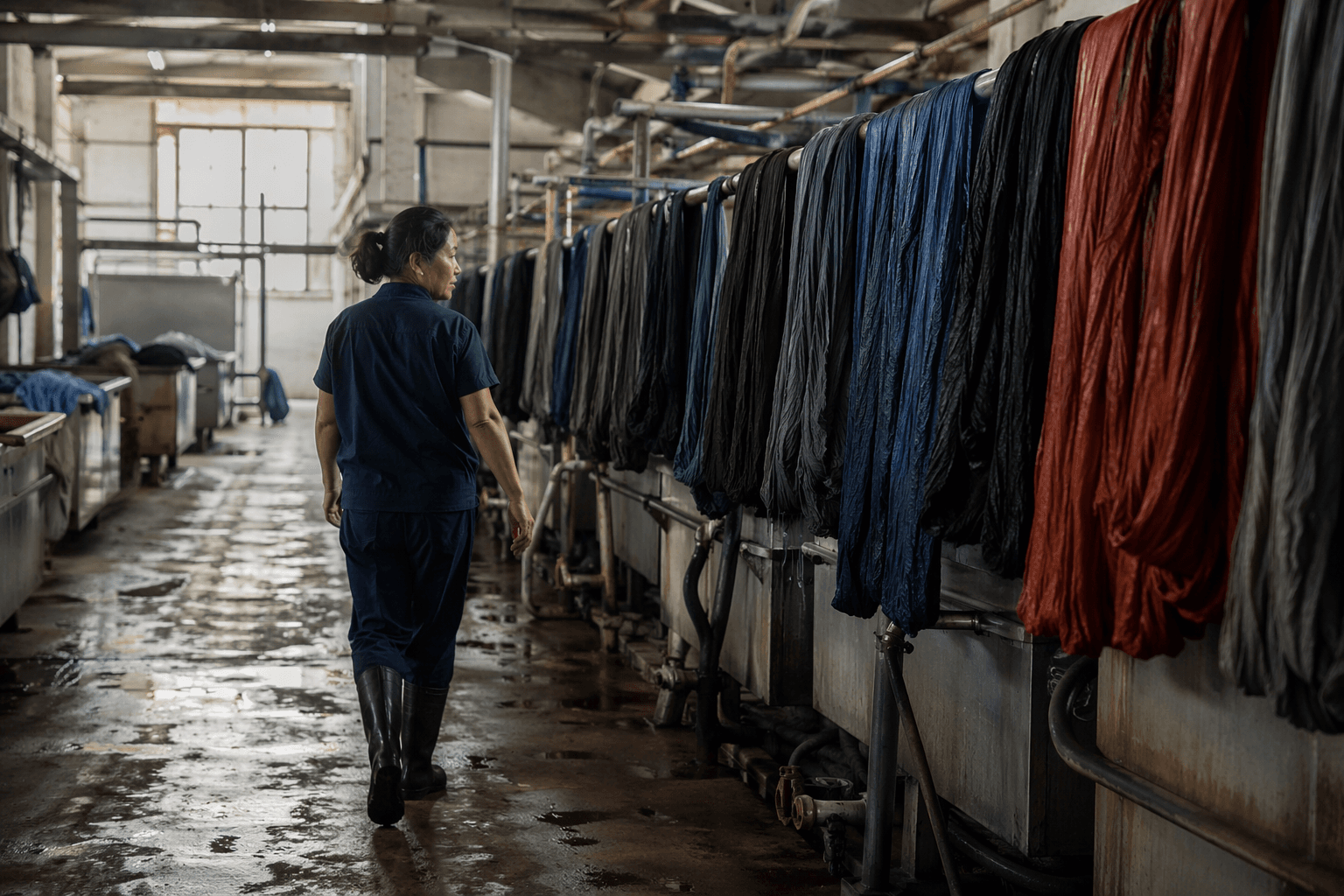
That matters because the pressure is moving from brand manifesto to factory floor. Transfar says the white paper was built around tighter European Union measures, including carbon-border rules and REACH tightening, alongside expanding controls on PFAS and bisphenols. For labels, that means the problem is not just what a garment looks like on the hanger. It is what has been used to make the denim dark, the jersey soft, the raincoat slick, or the lining stain-resistant. The fabrics and finishes that once read as premium can now become liabilities if they fail restricted-substance checks or cannot clear greener sourcing requirements.
The broader policy backdrop makes the shift harder to ignore. The United Nations Environment Programme has said textiles are a key sector because production and consumption keep growing while reuse and recycling remain low, and because harmful chemicals continue to pollute air, water and soil. In China, UNEP and the China Environmental United Certification Center pushed that agenda through a 2025 sustainability initiative, and a June 19, 2025 consultation in Qingdao focused on ecolabelling as a path to green transition. UNEP says the new Chinese textile ecolabel standard reaches from cotton cultivation to finished garments, with traceability, low-carbon production, pollution control, corporate social responsibility and labor protection all built in.
That is the real wardrobe-level shift here: “clean” is no longer just a marketing adjective. It is becoming a procurement standard, and then a market gate. UNEP’s five-year programme, launched in 2021 with textile-producing countries, already tied chemical management to eco-innovation, occupational health and safety, and the phaseout of PFAS and other chemicals of concern. Now Transfar is trying to translate that logic into a practical industry playbook, saying the white paper is meant to help firms navigate green trade barriers rather than sit untouched on a shelf.
Cascale has argued that China’s textile and apparel sector can strengthen sustainability through renewable energy, circular practices and digital innovation. The chemistry piece may be the quietest part of that puzzle, but it could prove the most consequential. The brands that reformulate early will keep more doors open; the ones that delay may find that the new baseline for “clean” fashion has already been set.
This article was produced by Prism’s automated news system from verified source data, official records, and press releases, then run through automated quality and moderation checks before publishing. The system is built and supervised by the people who set the standards it runs under. Read our full AI policy.
Did this article answer your question?


