Europe’s circular fashion market could reach €104 billion by 2030
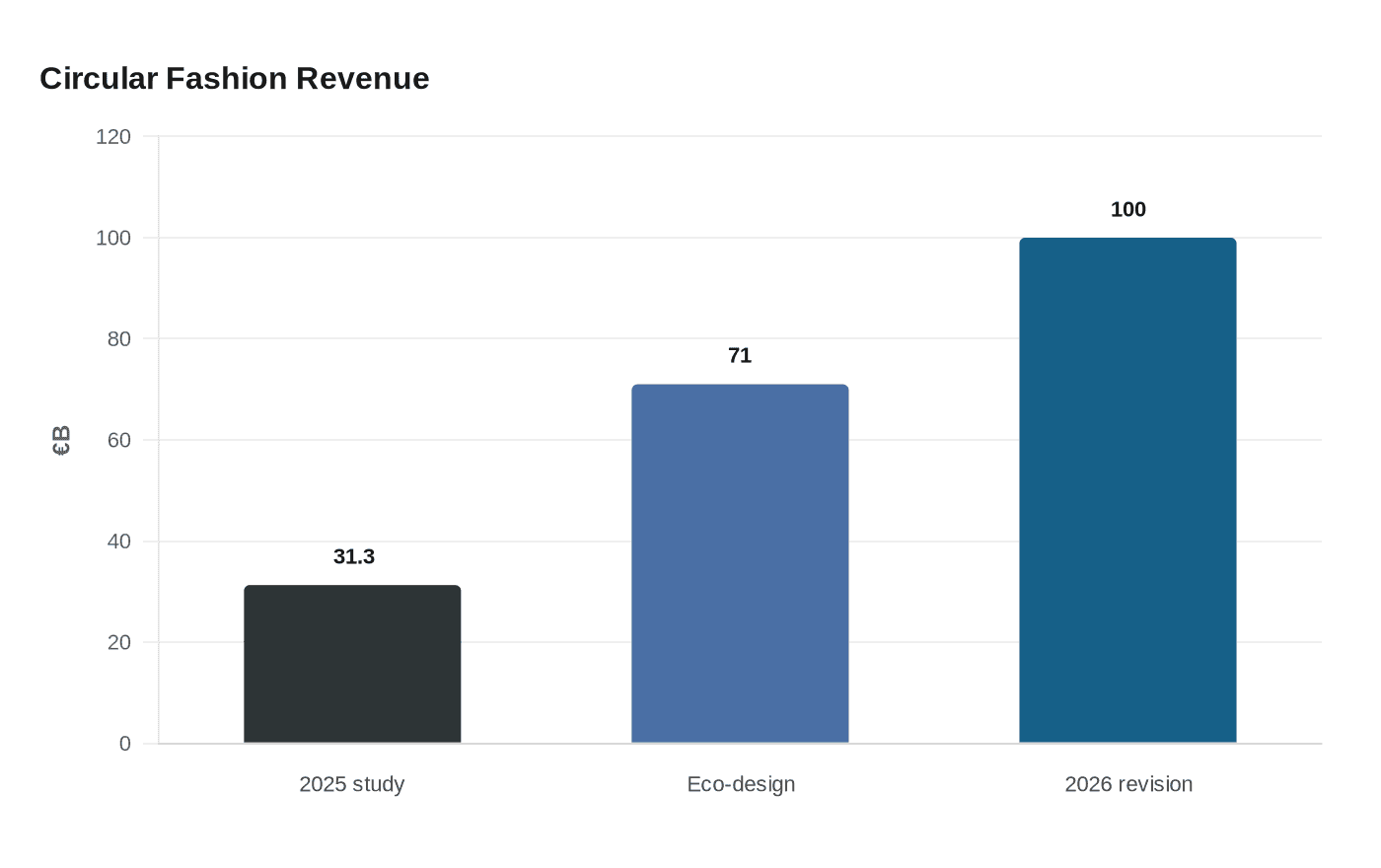
Europe’s circular fashion economy is no niche: KPMG now sees four circular pillars topping €100 billion by 2030, with eco-designed goods alone at €71 billion.

The real money in circular fashion is no longer sitting in the resale app or the feel-good repair pop-up. It is moving into the parts of the business that can survive regulation, prove product data, and turn waste into margin. KPMG and the Circular Fashion Federation now say Europe’s four circular fashion pillars could pass €100 billion in annual revenue by 2030, with eco-designed products alone reaching about €71 billion and climbing from roughly 6 percent of the European fashion market today to nearly 15 percent by the end of the decade.
That is a sharp jump from the first market study unveiled on Circular Fashion Day 2025, which put the same four pillars, reinvent, reuse, repair and recycle, at €31.3 billion in turnover and nearly 88,500 jobs by 2030. The 2026 revision is not just a bigger headline. It rewires the forecast around eco-design, which is where brands can win early if they build for durability, repairability, recycled inputs and the digital trail that will soon follow every garment.
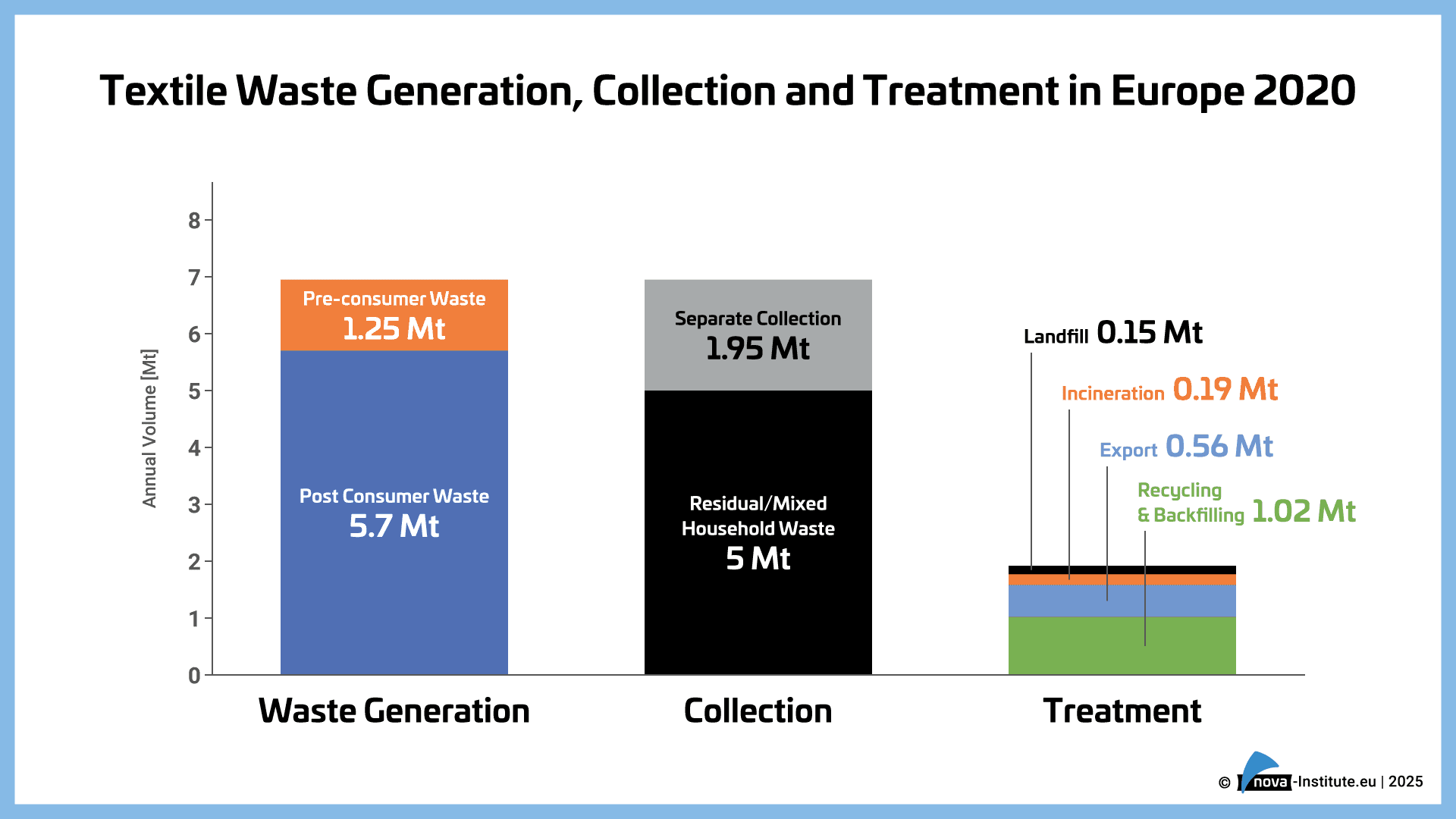
The policy pressure is already baked in. The European Commission says textile consumption has the fourth-highest environmental and climate impact in the EU, after food, housing and mobility, and that 5 million tonnes of clothing are discarded every year, about 12 kilograms per person. Its 2030 vision is blunt: textiles sold in the EU should be durable, repairable, recyclable and largely made from recycled fibres. It also plans a Digital Product Passport and mandatory, harmonised extended producer responsibility rules across all member states.

The European Parliament tightened that direction on 9 September 2025, approving revised Waste Framework Directive measures that make every producer placing textiles on the EU market, including non-EU sellers using e-commerce, pay for collection, sorting and recycling. Member states have 20 months to transpose the rules and 30 months to set up textile EPR schemes, with micro-enterprises getting 12 extra months. That is where the cost shifts from vague sustainability language to actual balance-sheet pressure.
The winners are easy to spot. Brands that can document materials, add repairability into design, and plug into resale and take-back systems will be first in line for the new economics. Recyclers that can scale sorting and local processing will become infrastructure, not side characters. Repair and recommerce operators already have proof that demand can be pulled forward: France’s repair bonus covers textiles, household linen and shoes, and after one year Refashion said more than 1,530 repairers were labeled and 826,000 repairs were financed.
Europe’s circular fashion boom is not a trend story. It is a policy-to-practice reset, and the money will flow to the players that can make circularity look boring, reliable and scalable.
This article was produced by Prism’s automated news system from verified source data, official records, and press releases, then run through automated quality and moderation checks before publishing. The system is built and supervised by the people who set the standards it runs under. Read our full AI policy.
Did this article answer your question?