Fashion sustainability needs faster action, experts say
Isolated brand pilots are not bending fashion’s footprint. The next 12 to 24 months will show whether the industry can turn waste, energy and materials into real change.
Fashion’s sustainability story now hinges on a blunt reality: isolated brand pilots have not stopped the footprint from growing. The sharpest takeaway from The Interline’s podcast, “Science, Sustainability, And The Slow March Of Reality,” is not that the industry lacks ideas. It is that fashion keeps mistaking isolated progress for system change, while the emissions, waste and material imbalance continue to scale faster than the fixes.
The size of the problem is still industrial, not boutique
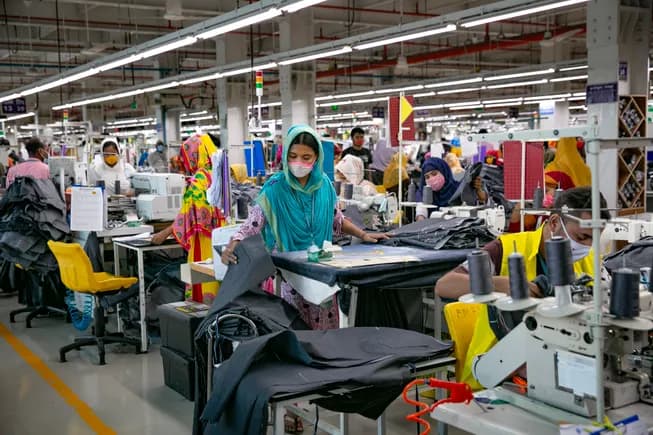
The numbers are hard to dress up. UNEP says the textile industry produces 2 to 8 percent of global greenhouse gas emissions, uses 86 million Olympic-sized swimming pools worth of water each year, and carries a sizeable chemical footprint. That is not a niche environmental issue tucked into the margins of fashion week. It is a supply-chain problem with a climate bill, a water bill and a toxicity bill.
The material story is just as stark. A May 2025 UN report said global fibre production reached 116 million tonnes in 2022, with synthetic materials making up about 65 percent of total production volumes. In other words, the industry is still leaning hardest on the very inputs that are hardest to decarbonize and most difficult to recover at end of life. The more polyester and other synthetics dominate, the more fashion’s waste problem becomes a fossil-fuel problem in disguise.
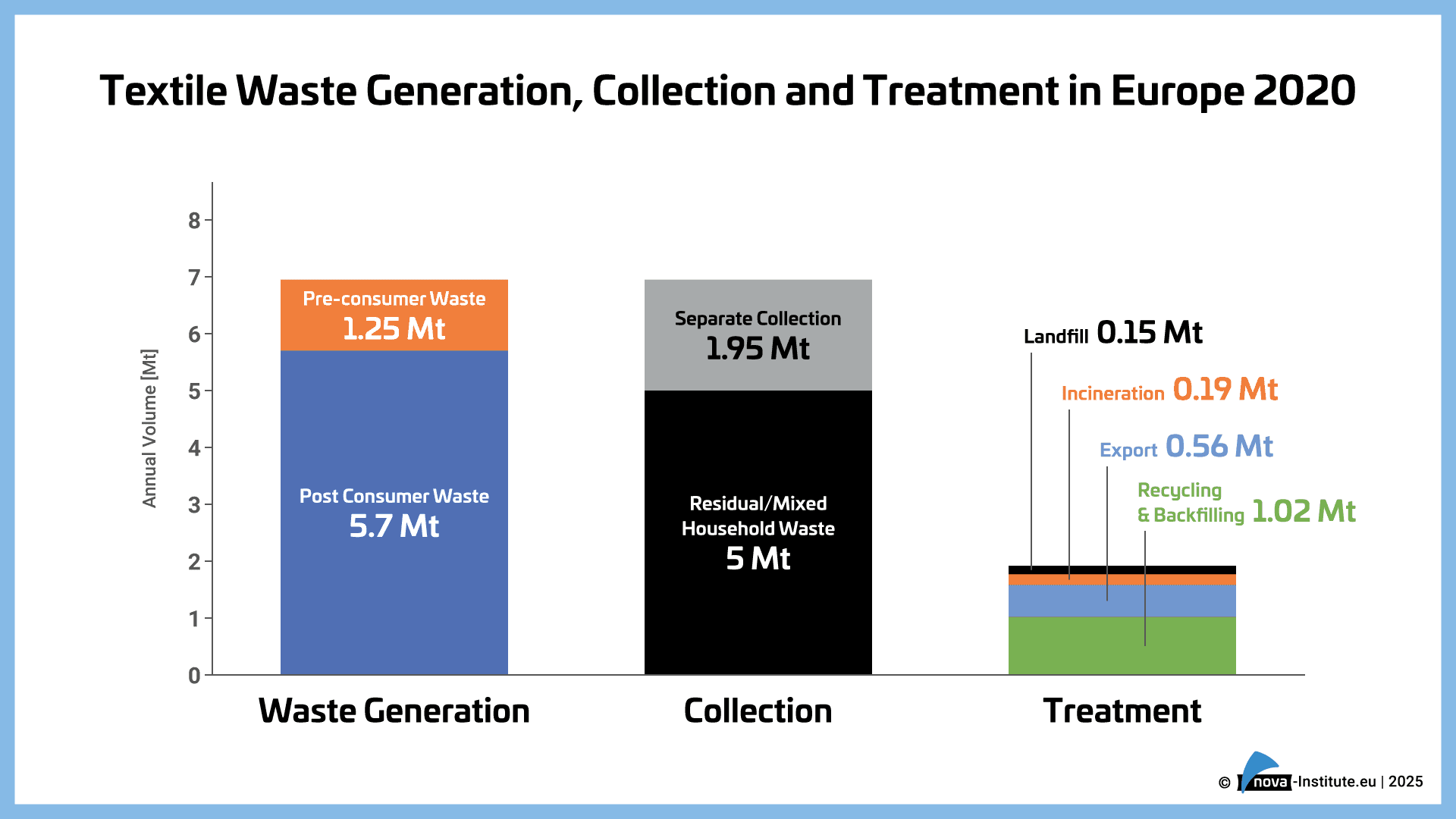
Then there is the afterlife of all that product. BCG said in August 2025 that global textile waste reached 120 million metric tons in 2024 and could exceed 150 million metric tons annually within five years. About 80 percent ends up in landfills or incinerated. That is the part consumers rarely see when a collection is pitched as “conscious” or “responsible”: the mountain of discarded material that still has nowhere elegant to go.
Why rhetoric keeps outrunning reality
Ben Hanson’s conversation with Gianluca Belotti, who is both Business Leader at Stahl and an Expert Evaluator for the European Commission, lands because it frames sustainability as a meeting point between ambition and operational reality. The industry has no shortage of pledges, but pledges do not rewire mills, dye houses, logistics routes or energy contracts. The podcast’s core argument is that fashion’s footprint has not been reversed by individual brand effort alone, and that truth is becoming impossible to ignore.
That is where the gap opens up. A flagship brand can switch a capsule collection to recycled content, test a lower-impact finish or announce a pilot with a preferred supplier. Useful, yes. Transformative, no. The sector-level change required is broader and less glamorous: renewable energy across manufacturing, better chemistry, transparent material data, credible finance for supplier upgrades and a decisive shift away from false solutions that let companies sound cleaner than they are.
NewClimate Institute and Carbon Market Watch captured that tension in June 2025, saying fashion has made progress in climate strategies but still falls short on key transitions. Their warning about reliance on false solutions like biomass and fossil gas matters because it exposes the gap between what sounds transitional and what actually locks in emissions. Biomass can look neat in a presentation; it does not automatically solve the problem of combustion, scale or feedstock impacts. Fossil gas, meanwhile, is still fossil infrastructure by another name.
The UNFCCC Fashion Charter points in the right direction, keeping pressure on collaboration, transparency, climate finance, adaptation and the phaseout of fossil fuels in favor of renewable energy. But even that list is only as serious as the implementation behind it. Fashion has spent years talking about collective action. The question now is whether the sector will accept collective accountability.
The real leverage points in the next 12 to 24 months
The shortest path to meaningful progress is not another mood board of innovation. It is execution on the unglamorous levers that change how the business actually runs. Fashion for Good’s World of Waste initiative, launched in November 2024 with industry stakeholders, is a case in point. Centralizing textile waste data sounds almost administrative, but that is exactly the point. Fashion cannot solve what it does not measure, and one of the industry’s oldest habits has been to fragment responsibility until no one sees the full picture.
UNEP’s work with small and medium-sized textile enterprises in Kenya, South Africa and Tunisia shows what more grounded progress can look like. The real challenge is not just the brand at the top of the pyramid announcing a target. It is helping the factories, dyers, spinners and converters that actually make the clothes transition toward circularity without being pushed into insolvency by the cost of change.
WIPO GREEN’s September 2025 sustainable fashion report adds the scale argument that should keep executives honest: the global fashion industry is worth US$1.7 trillion and provides jobs to over 300 million people. That economic weight is exactly why sustainability cannot stay rhetorical. When a sector this large moves slowly, the consequences ripple through livelihoods, investment decisions and national industrial policy.
What would proof look like over the next two years?
- Absolute emissions reductions, not just intensity improvements, across owned operations and key suppliers.
- Renewable electricity deals and phaseouts of fossil fuel contracts in manufacturing hubs, with public timelines.
- Cleaner chemistry commitments backed by supplier testing, disclosure and enforcement.
- Material shifts away from virgin synthetics toward lower-impact inputs, with traceable volume data.
- Textile waste systems that report how much is collected, sorted, reused and truly recycled, not merely announced.
- Climate finance that reaches suppliers, especially smaller firms, so decarbonization is not treated as a luxury upgrade.
- Evidence that pilots in places like Kenya, South Africa and Tunisia are scaling into repeatable models, not remaining showcase projects.
The best test is simple: does the industry produce fewer emissions, less waste and better data next year than it did this year? If the answer is buried under fresh jargon, then fashion is still selling aspiration instead of accountability. If the answer is measurable, public and verifiable, then sustainability finally starts to look less like rhetoric and more like operations.
This article was produced by Prism’s automated news system from verified source data, official records, and press releases, then run through automated quality and moderation checks before publishing. The system is built and supervised by the people who set the standards it runs under. Read our full AI policy.
Did this article answer your question?