Global Change Award winners target waste with repair and resale tools
H&M Foundation backed 10 winners with €200,000 each, spotlighting Canvaloop’s waste-to-fiber textile and Alu’s QR-code passports for repair and resale.

H&M Foundation named 10 winners of the Global Change Award 2026 on June 8, giving each one a €200,000 grant and a year-long GCA Changemaker Programme. The strongest ideas in the cohort go after fashion’s most stubborn waste bottlenecks: how raw material is made, and what happens after a garment is bought.
Canvaloop’s Agro-Lyocell is the most straightforward materials play in the group. The Indian company turns agricultural waste into forest-free textile fibres, replacing wood-based inputs with a closed-loop process that converts farm residue into textile-grade material for fashion and home textiles. That matters because the industry still leans heavily on virgin feedstocks, even as pressure rises to decouple cloth from deforestation and land use. Canvaloop raised $1.5 million from GVFL and Rockstud Capital in March 2026 to scale the platform in India, with founder Shreyans Kokra framing the company as a manufacturing bet as much as a materials one.
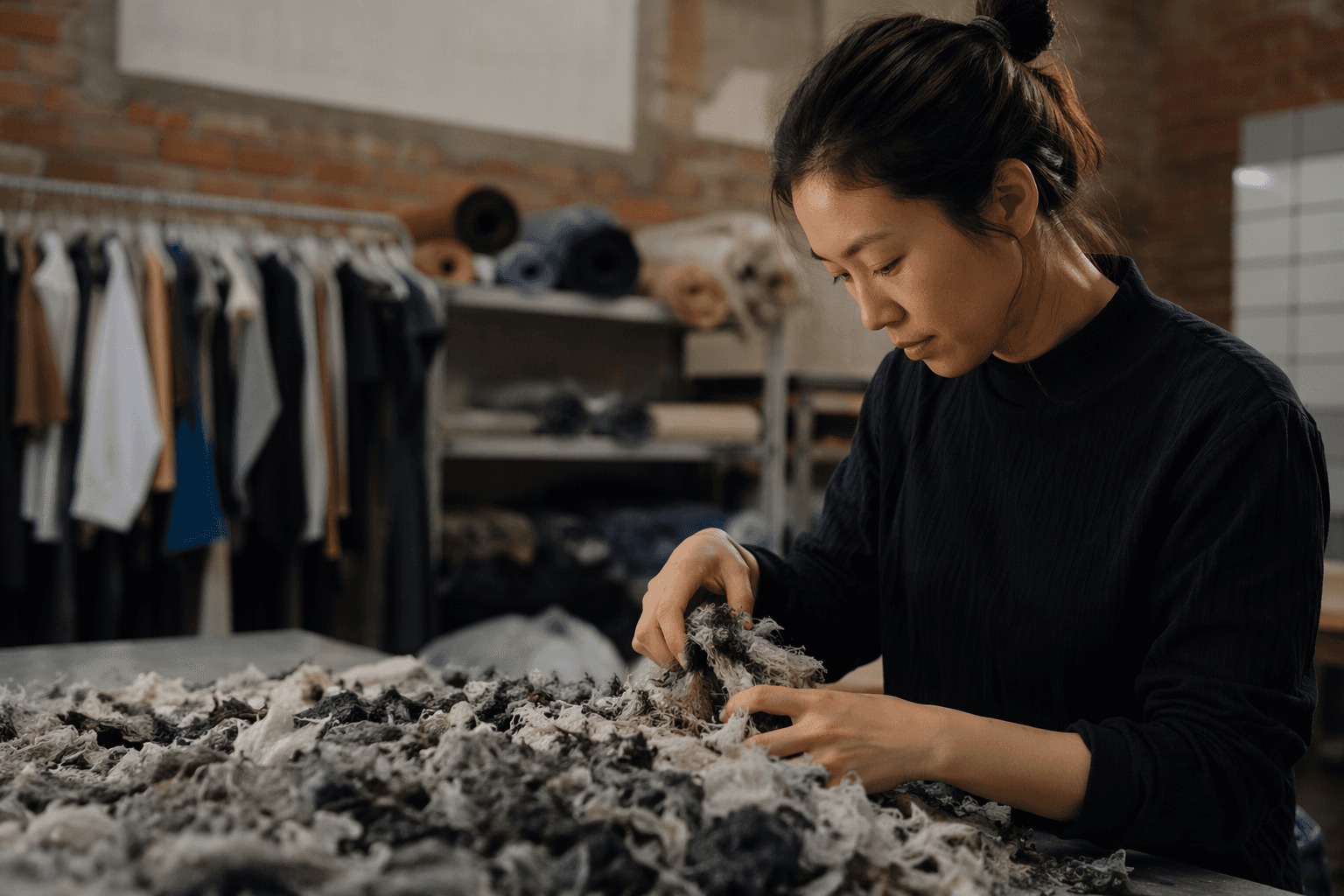
Alu attacks a different flaw in the system: the way clothes disappear once they enter a wardrobe. Founded by Donatela Bellone in the United States, the platform uses psychology and AI to turn digital product passports into something a shopper might actually scan. A QR code or NFC tag can open repair, resale, rental, rewards, content and community experiences, turning a label into an after-sales interface instead of a dead end. That is a more credible answer to waste than another marketing promise, especially when the H&M Foundation says more than 100 billion garments are made annually and many are worn only a handful of times before being discarded.
The case for digital passports is not theoretical. A June 2024 European Parliament study said a textile DPP could improve traceability, transparency and circularity across the sector, helping producers, regulators, sorters, recyclers and consumers alike. It surveyed more than 80 stakeholders and laid out a three-phase deployment scenario for textiles, which is the kind of operational detail the industry has been missing while talking about circularity in the abstract.
H&M Group said the 2026 cohort reflects a shift toward early-stage innovation and systems change, with winners spanning next-generation materials, bio-based alternatives, textile-to-textile recycling and low-impact production. Taken together, the list reads less like a parade of green ideas than a map of where fashion’s waste problem can still be moved: at the fiber line, at the point of sale, and in the years after the first wear.
This article was produced by Prism’s automated news system from verified source data, official records, and press releases, then run through automated quality and moderation checks before publishing. The system is built and supervised by the people who set the standards it runs under. Read our full AI policy.
Know something we missed? Have a correction or additional information?
Submit a Tip