Harnest expands circular trims with Ambercycle and Indorama Ventures
Harnest widened its Responsible Trims Collection into recycled polyester and textile-to-textile feedstock, aiming at the labels, elastics and drawcords that still break circularity.

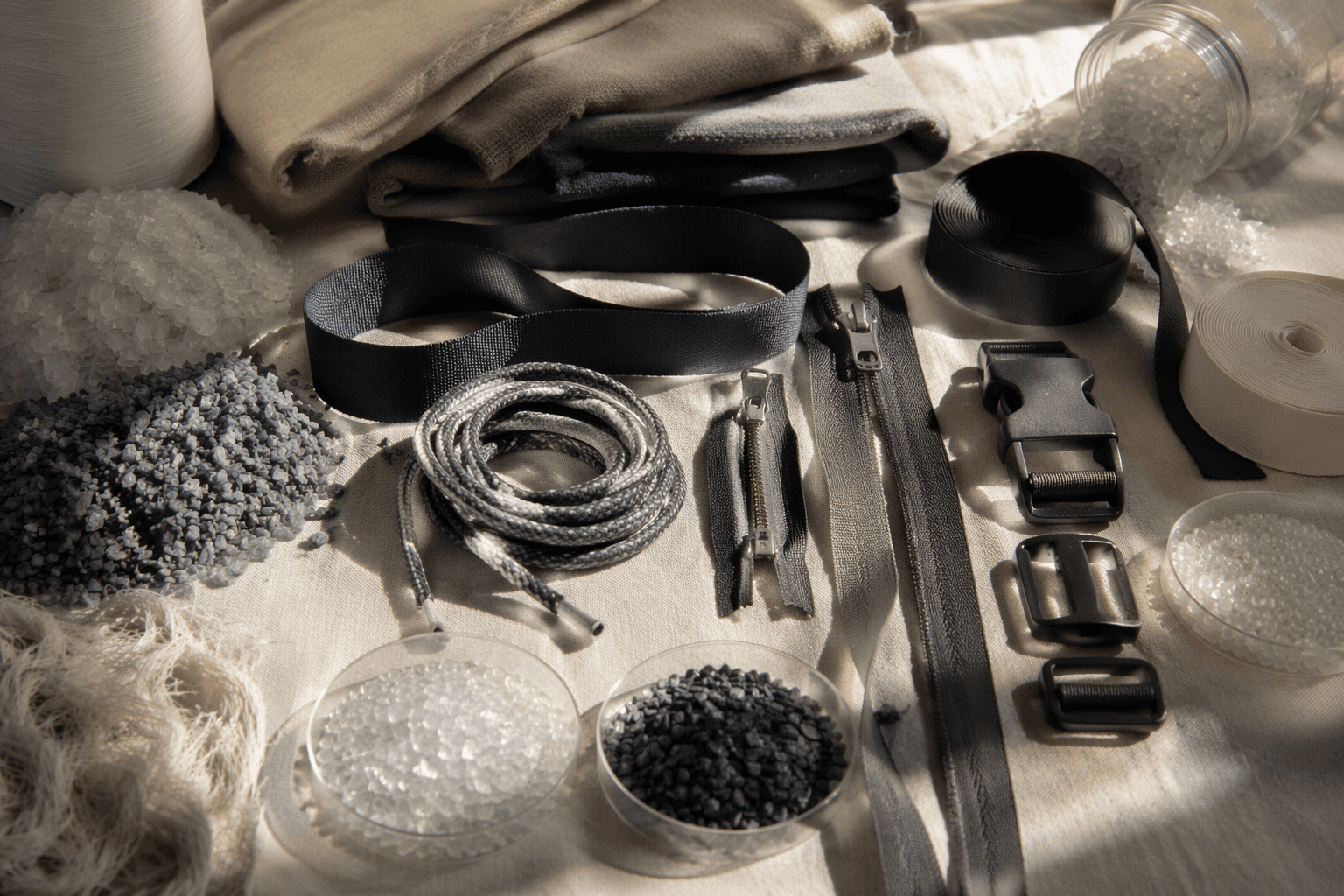
Harnest expanded its Responsible Trims Collection with Ambercycle and Indorama Ventures, pushing the program beyond biodegradable polyester and into industrial recycled polyester and textile-to-textile regenerated polyester. The real story is not the yarn story at all: it is the neck label, the waist elastic and the drawcord, the small components that too often keep a garment from ever becoming truly circular.
The Bangladesh-founded company says the Responsible Trims Collection is a curated portfolio of responsible trims, threads and accessory materials built for real-world apparel production. Harnest, which says it has operated since 1993, brings more than 50 years of parent-company expertise across healthcare, ceramics and textiles, and its trims range already covers threads, elastics, drawcords and labels. For brands trying to design beyond a single sustainable shell fabric, that matters. A circular jersey top still falls apart as a systems idea if the thread, label backing or elastic strand cannot follow the same recovery logic.
Harnest’s own threads division gives the expansion practical muscle. The company says it handles raw material through twisting, texturing, dyeing, coating and finishing in-house, with 1,000-ton capacity. Ambercycle’s Cycora, meanwhile, is positioned as a textile-to-textile regenerated polyester made from existing above-ground goods, and CETI found that it meets virgin-material spinnability standards while outperforming other recycled materials in testing. Indorama Ventures said in 2025 that it expanded its deja™ portfolio to include PET fibers and filament yarns made solely from discard textile waste. Taken together, the three names point to a market moving past recycled content as a marketing badge and toward the actual infrastructure of production.
That shift already has backing from the biggest buyers. Inditex has earmarked tens of millions of euros toward Ambercycle’s textile waste-derived polyester, while H&M Group has also been securing circular polyester capacity. Ambercycle has kept the momentum going with a three-year offtake agreement with MAS Holdings in June 2024, a partnership with GANNI in January 2025 to access Cycora from its first commercial facility, a Play Earth Fund investment from Goldwin in 2025 and a three-year agreement with REI Co-op in October 2025. Harnest’s move fits that same logic: circularity now lives or dies in the trims basket, where apparel development either becomes easier to scale or stalls at the seam.
This article was produced by Prism’s automated news system from verified source data, official records, and press releases, then run through automated quality and moderation checks before publishing. The system is built and supervised by the people who set the standards it runs under. Read our full AI policy.
Know something we missed? Have a correction or additional information?
Submit a Tip