HeatWatch maps extreme heat risk across India’s garment factories
A new dashboard turns India’s factory heat into a sourcing map, exposing nearly 13,000 sites and the production risk hiding inside the red zones.

Heat is no longer just a climate headline. In India’s garment supply chain, it has become a live sourcing metric, and the new HeatWatch and Open Supply Hub dashboard makes that impossible to ignore. The map tracks nearly 13,000 manufacturing facilities, color-coding them from cool blue at 20 to 24C to deep red at 45C and above, then drilling down from district-wide patterns to individual factory pins with names, addresses, associated organizations and the latest climate reading.
That is the point, and Apekshita Varshney said it plainly: the goal was to make heat, an abstract and often invisible risk, visible to stakeholders in supply chains. The dashboard updates daily at the facility level using temperature data from the India Meteorological Department, processed through IMD Live, plus humidity data from the Open-Meteo API. It also shows seasonal exposure across winter, summer, monsoon and fall, which matters because the heat problem does not politely arrive only in peak summer; it hangs over production calendars, line speeds and delivery windows.
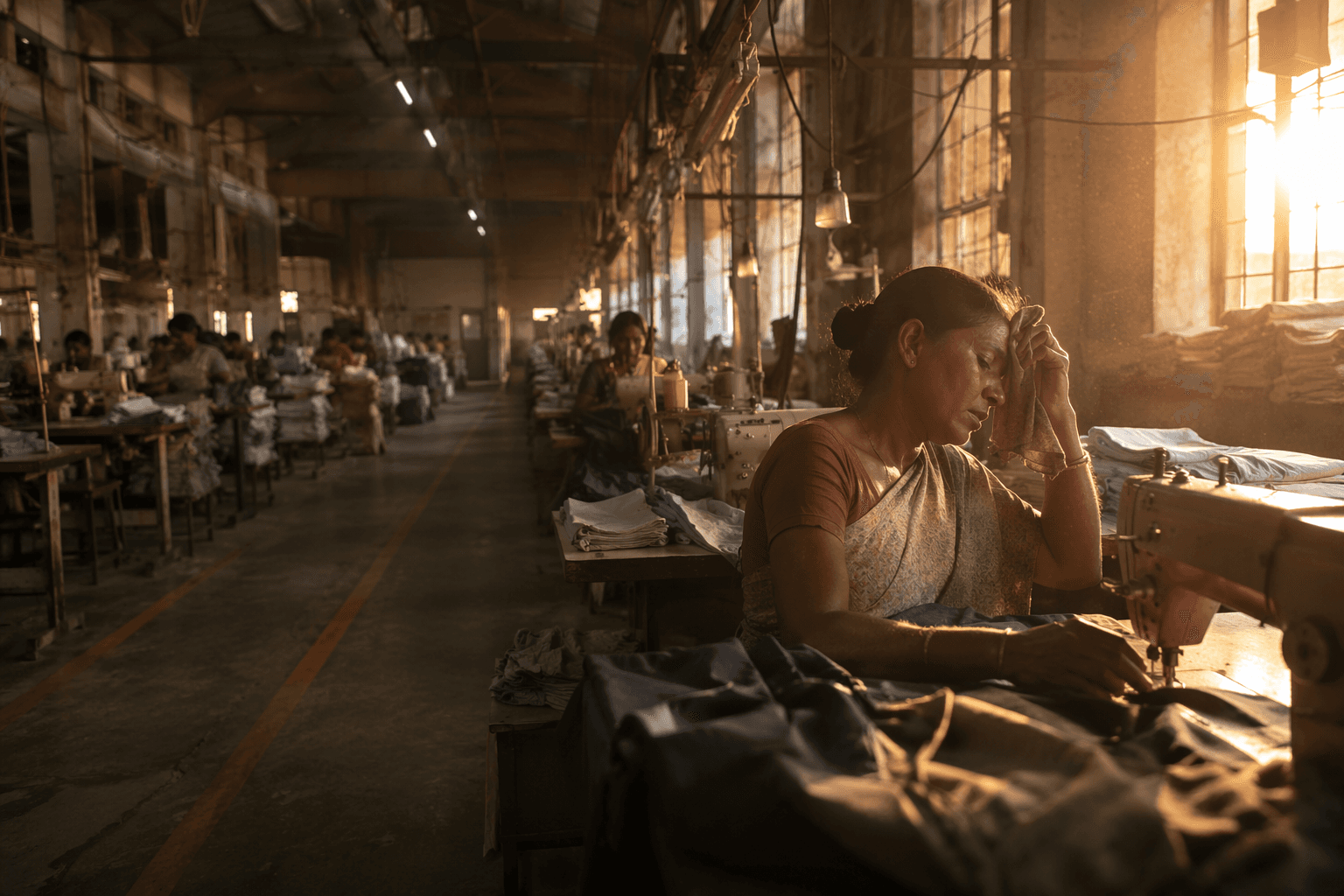
The worker story behind the map is already brutal. In a HeatWatch and Tata Institute of Social Sciences study, Breaking Point: Heat and the Garment Floor, researchers surveyed 115 garment workers, conducted 47 in-depth interviews and studied 15 garment and textile units in Tamil Nadu, Delhi-NCR and Gujarat. The numbers are ugly: 87% reported headaches, dizziness and muscle cramps in summer, 78.3% said their workstation felt like “working in a furnace,” and 78% skipped breaks to meet production targets. The average Heat Stress Index was 58.9, putting most workers in the high-stress category, while a quarter scored above 70, a critical state. The report also said factory conditions often exceeded ISO 7243 WBGT thresholds for moderate and heavy work.

This is not small-batch labor drama; it is macroeconomics in a sweat-soaked shirt. India’s textile and apparel sector contributed 8.63% of merchandise exports in 2024-25, worth $37.7 billion, and India was the world’s 6th-largest exporter of textiles and apparel in 2024. A HeatWatch summary puts the sector’s workforce at around 45 million people. When a supply chain that big starts cooking its own labor force, brands cannot treat heat stress like someone else’s problem.
The commercial response has to be sharper than a glossy sustainability pledge. HeatWatch has tied the dashboard to its Clean Heat for Cool Work framework with Fashion Revolution, pushing worker-led temperature monitoring and a shift away from onsite fossil-fuel thermal processes toward clean electricity. That is the real test now: whether brands adjust production calendars, upgrade factory investment, harden audit standards and build actual worker protections before the red zones start dictating who gets to ship on time.
This article was produced by Prism’s automated news system from verified source data, official records, and press releases, then run through automated quality and moderation checks before publishing. The system is built and supervised by the people who set the standards it runs under. Read our full AI policy.
Did this article answer your question?


