HKRITA, Jeanologia and Looptworks scale circular textile recycling
A June 25 pact ties HKRITA's Green Machine to Jeanologia and Looptworks, pushing cotton-poly recycling from pilot runs into a commercial ecosystem.
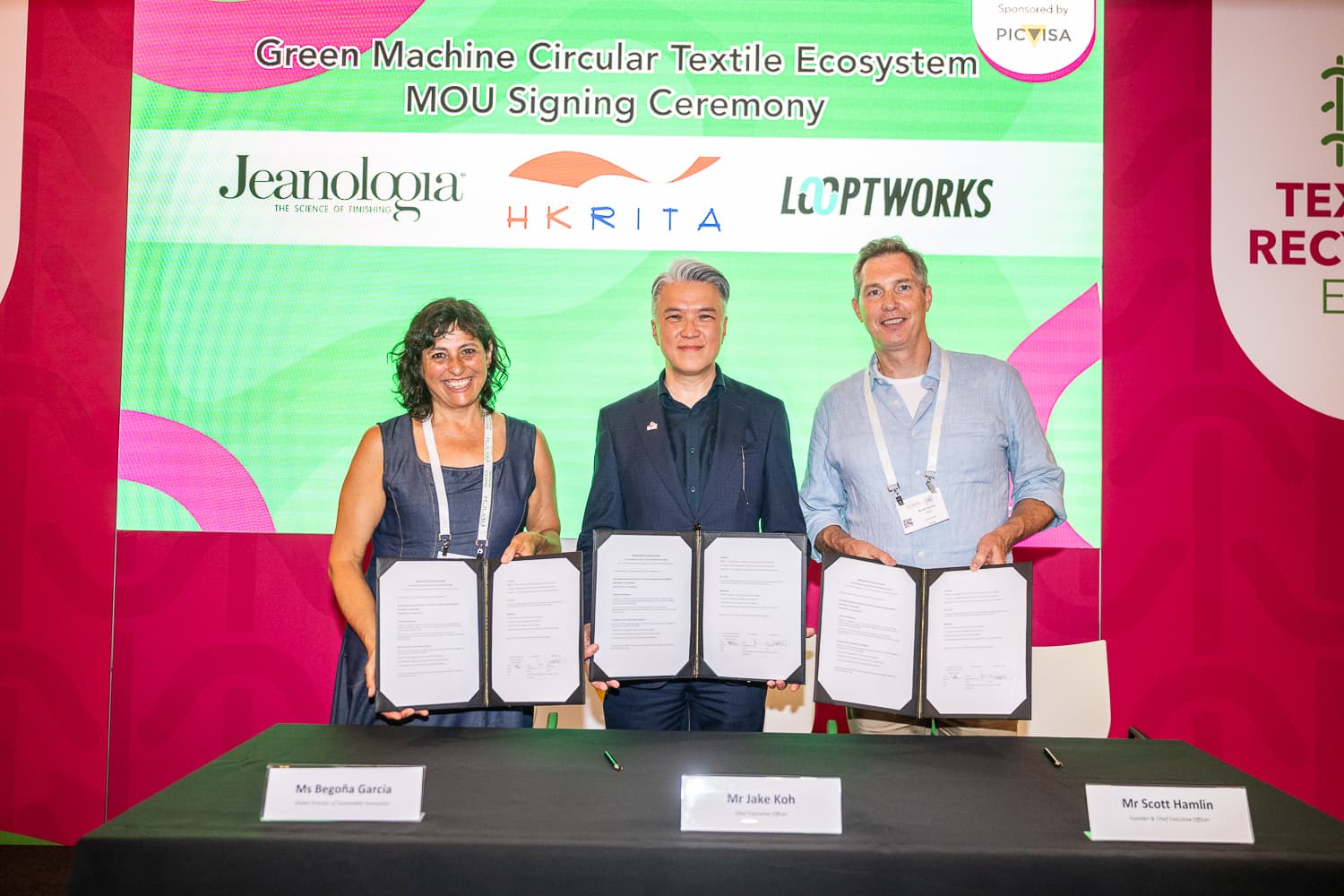
HKRITA, Jeanologia and Looptworks signed a memorandum of understanding on June 25 to build the Green Machine Circular Textile Ecosystem, a three-way effort to turn cotton-polyester recycling into an industrial workflow rather than a one-off lab success. HKRITA called the partnership a first-of-its-kind push to accelerate large-scale recycling of blended textiles, the mixed-fiber category that has long resisted clean separation.
At the center is Green Machine 4.0, which HKRITA says can recover polyester at 98 percent or higher purity from cotton-polyester textiles. The process uses heat, water and less than 15 percent biodegradable chemical to break down the cotton into cellulose powders, leaving a polyester stream that can be spun back into new fiber. That split matters because blended garments are exactly where circularity gets jammed up: the fabric performs like one cloth on the rack, but at end of life it has to be unstitched at the molecular level before either component can be recycled well.
The technology did not arrive out of nowhere. HKRITA developed the Green Machine with the H&M Foundation, announcing the project in 2020, and the system has already picked up a 2022 R&D 100 Award, a bronze Edison Award in 2023 and a Gold Medal at the 46th International Exhibition of Inventions of Geneva. The trophies are useful not for bragging rights, but because they mark a platform that has survived the jump from concept to proof.
That proof became more tangible in 2024, when HKRITA’s Open Lab processed more than 1,200 cotton-polyester blended polo shirts contributed by ISS Hong Kong. The recovered fibers were then mechanically recycled into yarn, the kind of follow-through that separates a promising chemistry demo from something a mill can actually plan around.

Looptworks adds the commercial muscle on the collection and recycling side. The U.S.-based recycler, which says it has been helping brands and organizations recycle end-of-life textiles since 2009 and is a certified B Corp, officially obtained the Green Machine technology license in 2024. Jeanologia brings the factory-floor logic: the company, founded in 1994, says its textile operating model is eco-efficient, cost-neutral, scalable, agile and digital. Together, the three companies are trying to connect the missing handoffs, from recovered blended fabric to processed fiber to production-ready systems.
The test now is whether the model can stretch beyond one pilot and one machine. If it does, the most stubborn fabric in fashion may finally have a commercial route back into circulation.
This article was produced by Prism’s automated news system from verified source data, official records, and press releases, then run through automated quality and moderation checks before publishing. The system is built and supervised by the people who set the standards it runs under. Read our full AI policy.
Did this article answer your question?


