HKRITA pushes sustainable textile supply chains toward commercial deployment
HKRITA’s Green Machine moved from showcase to strategy, with Shanghai, Chengdu and major mainland partners now testing whether textile recycling can scale.

The real question is no longer whether HKRITA can invent a cleaner textile process. It is whether that process can survive the grind of commercial deployment in mainland China, where supplier adoption, trial runs and industrial scale decide whether sustainability becomes infrastructure or remains a polished prototype.
That shift came into focus in Shanghai, where HKRITA CEO Jake Koh joined a roundtable at the 2026 Corporate Sustainability Development Conference on April 28. The discussion brought together leaders from finance, building materials and food manufacturing around a blunt agenda: sustainable supply chains, end-to-end carbon reduction and cross-industry collaboration. Representatives from the Shanghai Municipal Government, the United Nations in China and L’Oréal Group were also in the room, a sign that textiles are now being treated as part of a wider industrial decarbonisation push, not a niche materials conversation.
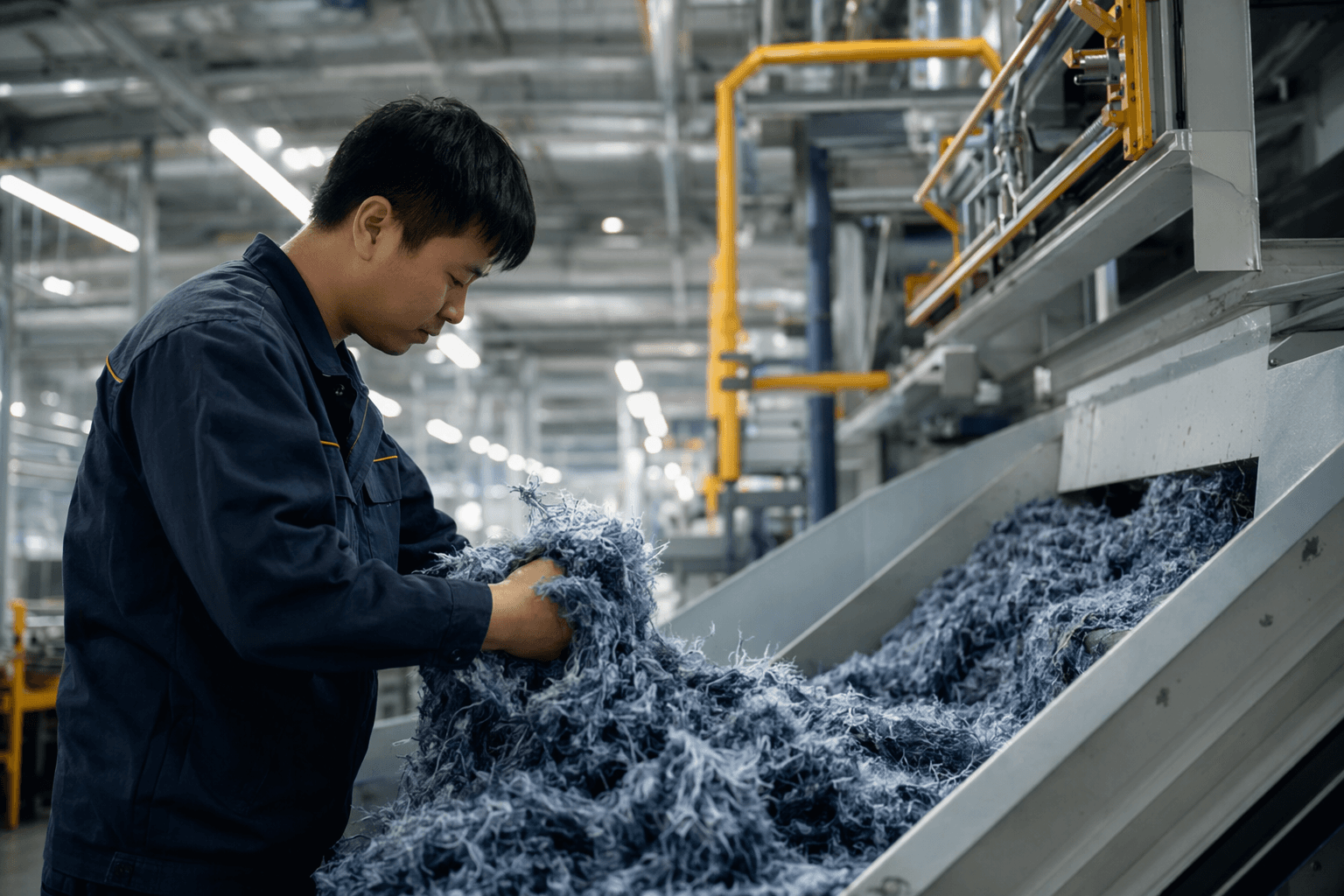
HKRITA used that platform to put its Green Machine at the center of the story. The institute said the system was selected as one of 20 Shanghai Outstanding ESG Cases, and it has become the clearest example of what HKRITA means by commercialisation. The technology uses hydrothermal treatment to separate and recycle blended polyester-cotton waste, a long-standing bottleneck in textile recycling because mixed fibres are notoriously difficult to recover cleanly. HKRITA says the process supports closed-loop recycling while reducing carbon emissions and pollution, the sort of practical promise that matters when brands and mills are under pressure to show measurable results rather than recycled-language branding.
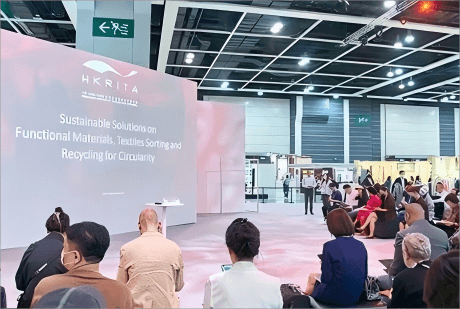
The institutional scaffolding around that technology has been building for more than a year. HKRITA signed memoranda of understanding with China Textile Academy in February 2025 and with Donghua University in March 2025 to speed technology transfer, pilot tests and intermediate trials. The Donghua work also covers textile material recycling, microplastics solutions and functional fibres and textiles, which suggests HKRITA is not chasing a single breakthrough so much as building a pipeline from lab work to manufacturable systems.
The network widened again on April 23, 2026, when HKRITA welcomed Chengdu Qinggong Polytechnic University to its Open Lab and signed a memorandum of cooperation focused on research commercialisation. HKRITA also has a partnership with ANTA Sports Products Group aimed at sportswear innovation and sustainable development. Taken together, the mainland partnerships point to a clear industrial strategy: move sustainability from the language of experimentation into the discipline of production, where capacity, standards and export relevance decide whether the next generation of textiles actually reaches the market.
This article was produced by Prism’s automated news system from verified source data, official records, and press releases, then run through automated quality and moderation checks before publishing. The system is built and supervised by the people who set the standards it runs under. Read our full AI policy.
Did this article answer your question?