How to spot lower-impact jeans in a murky market
The cleanest jeans are the ones that prove their work. In 30 seconds, check the fiber, the wash, the certification, and whether the brand can back up its claims.

The 30-second denim test
If you are standing in a fitting room or scrolling a product page with no patience left, ignore the word “sustainable” until the jeans earn it. The five checks that actually matter are simple: preferred fibers, a lower-water wash, a credible certification, solid construction, and a repair path. Everything else is usually atmosphere.
- Fiber content: Look for organic, regenerative, or recycled cotton, and treat that as a starting point, not a finish line.
- Dye and wash process: Real signals include low-water finishing, laser or ozone treatments, e-Flow, and non-toxic dye systems.
- Certification: GOTS and bluesign mean something; vague eco badges do not.
- Build and repair: Heavy denim, tight stitching, reinforced seams, and brand repair support lower the cost per wear.
- Claim language: Specific numbers and methods matter. “Eco-friendly” by itself is just a mood.
Why denim is never innocent
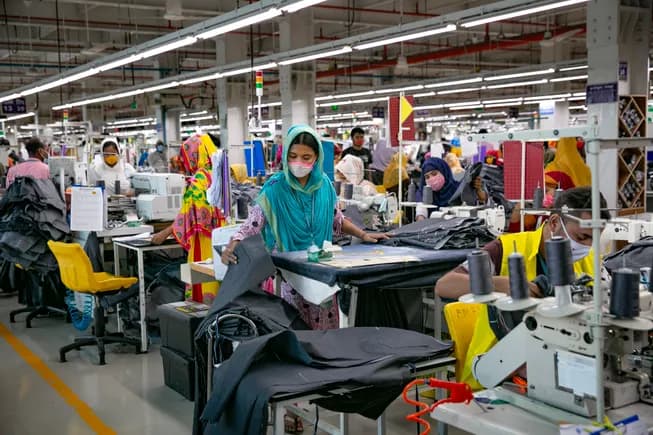
Denim wears a rugged image, but making it is resource-hungry and chemical-heavy. The fashion industry is often cited at about 10% of global greenhouse gas emissions, while textile and apparel are commonly pegged at 8 to 10 percent. More than 70% of fashion emissions come from upstream activity, especially raw material production and processing, which is exactly why the fiber choice matters before a pair even reaches the shelf.
Water is the other giant problem. Levi Strauss & Co. says a single pair of jeans can use up to 3,800 liters of water over its lifetime, and the International Finance Corporation puts the figure at about 1,000 gallons across cotton growing, manufacturing, shipping, and laundering. That is why denim has become a favorite canvas for brands trying to sound cleaner than the category usually allows.
Fiber first, but don’t stop there
Preferred fibers are the easiest place to start and the easiest place for brands to hide behind buzzwords. Regenerative cotton, recycled fibers, and organic cotton all point in the right direction, but they are not interchangeable and they do not cancel out wasteful processing later on. There is no universal definition of “sustainable” denim, which is why one brand’s green story can be another brand’s greenwash.
Regenerative cotton is the flashiest phrase in the mix right now, but the supply chain change is slow. Lindex says the transition can take five to six years for farmers, which tells you how capital-intensive and patient this shift really is. If a brand talks big about regenerative inputs without naming where the cotton comes from, how much of the garment uses it, or how long the program has been running, keep your skepticism on.
The wash is where the swagger gets expensive
The best-looking pair in the room may also be the dirtiest to make. Denim finishing is one of the biggest pressure points in the category, because the faded, broken-in look shoppers love can take a lot of water and chemicals to fake. Science and industry sources point to laser and ozone technologies, plus e-Flow and other digital methods, as ways to cut both water and chemical use.
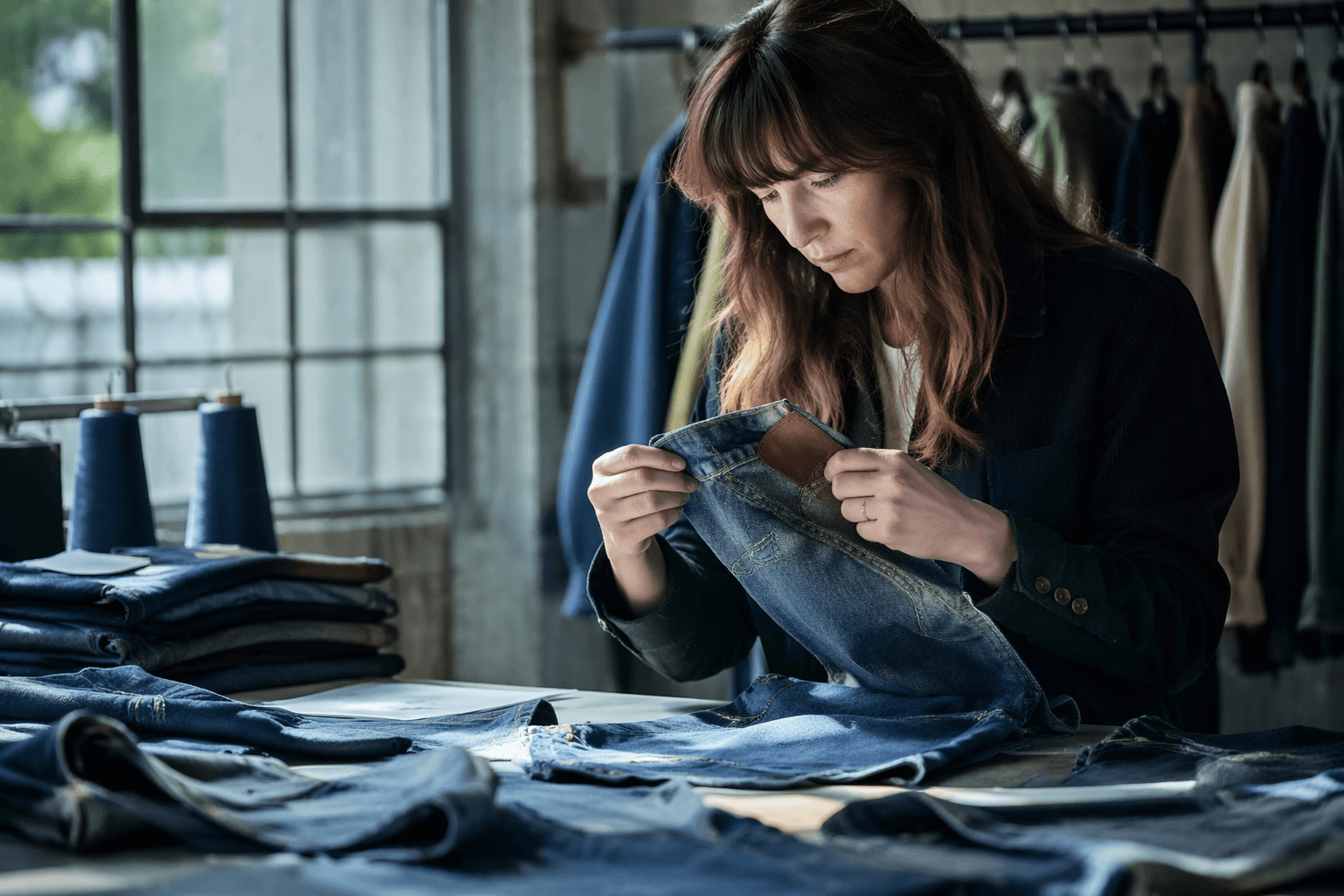
This is where the real innovation lives. The EU’s LIFE ANHIDRA project says closed-loop garment finishing can reduce water use by 92% and reuse 98% of that water, which is the kind of number that actually changes a factory’s footprint. If a jeans label names its finishing method, that is a good sign. If it only says the denim was “washed for softness” or “given a vintage feel,” the process is still a black box.
Certifications that earn their keep
Credible certifications are the fastest shortcut when you do not have time to interrogate a product page. GOTS says its standard covers raw material harvesting through environmentally and socially responsible manufacturing, which makes it useful when a brand is leaning on organic cotton language. bluesign is narrower but still serious, focusing on safer chemistry and responsible textile production, which matters in a category built on dye baths, finishing agents, and chemical treatments.
That distinction matters because a certification should do more than decorate a hangtag. It should tell you whether the brand has taken a serious pass at chemistry, processing, and supply-chain discipline. If the label has none of that and the copy is all breathy adjectives, you are looking at marketing, not proof.
Durability is the least glamorous sustainability metric
A lower-impact jean should feel like it can survive a life, not a season. Dense denim, solid seams, a stable fit, and a brand that offers repairs or spare parts are not fashion extras. They are the difference between buying once and buying every few months, and that matters when so much of denim’s footprint is already baked in upstream.
This is the part greenwashing always tries to skip. A jean that lasts longer spreads its impact over more wears, more washes, and more years in rotation. The cleanest pair is not the one with the prettiest hangtag. It is the one you keep reaching for because the fabric still has backbone, the knees have not blown out, and the brand has made it possible to fix what fails.
Why the market feels murkier by the week
Brands are marketing jeans as “sustainable” because shoppers are paying attention, and regulators are tightening the frame around what can be claimed. The Federal Trade Commission’s Green Guides are meant to help marketers substantiate environmental claims and avoid misleading consumers, while the European Commission is moving to curb greenwashing through proposed green-claims rules. That makes vague language like “eco-friendly” not just empty, but increasingly risky.
The broader tension is bigger than one pair of jeans. Shein’s acquisition of Everlane, a brand long associated with transparency and sustainability efforts, laid bare the central contradiction in modern denim and apparel: scale, affordability, and lower-impact production do not naturally coexist. Until the industry proves otherwise, the smartest move is to treat every claim like evidence. If the brand cannot tell you the fiber, the finish, the certification, and the repair story, it is not a better jean. It is just a better-worded one.
This article was produced by Prism’s automated news system from verified source data, official records, and press releases, then run through automated quality and moderation checks before publishing. The system is built and supervised by the people who set the standards it runs under. Read our full AI policy.
Did this article answer your question?