Kantamanto Market study links secondhand fashion waste to soaring microplastics
Kantamanto is choking on the fashion system’s leftovers, with airborne microfibers measured at 20x to 100x other cities and lagoon pollution spiking even higher.

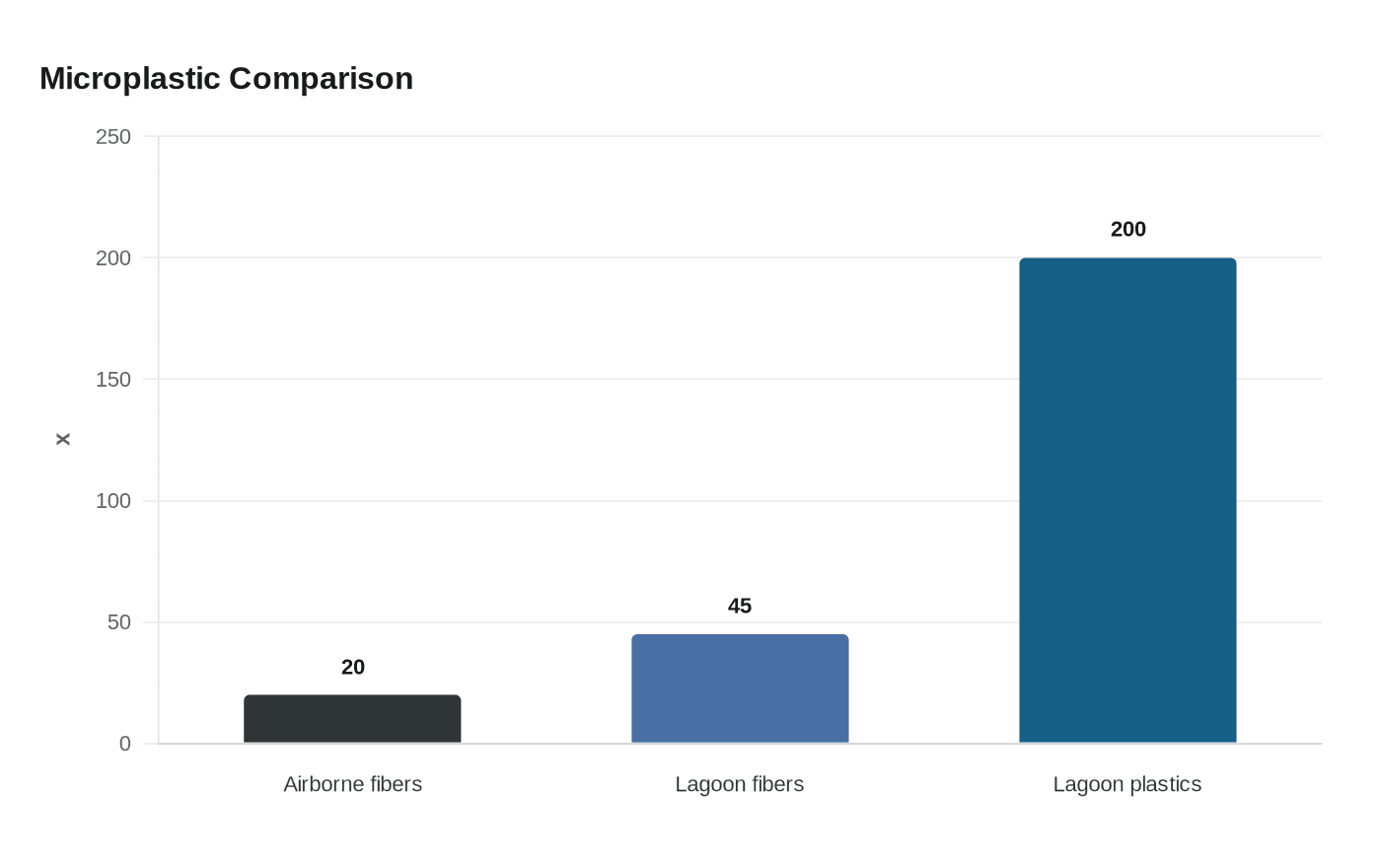
Kantamanto Market is doing what the global fast-fashion machine never has to do itself: carry the waste. A citizen-science study tied the Accra market’s textile spillover to microplastic levels so extreme that airborne microfiber concentrations around the market ran more than 20x to 100x above levels reported from other metropolises, while the adjacent Korle Lagoon showed up to 45x more microfibers and up to 200x more microplastics than previously reported for lagoon waters worldwide.
The 2024 bioRxiv preprint, which has not been peer reviewed, frames Kantamanto as the world’s largest secondhand resale and upcycling market for clothing and textiles. It says the market receives tons of garments every week shipped under HS Code 6309 from Global North countries, then points to a hard visual clue that the crisis is not abstract: brand tags found on discarded market garments matched tags washed up on nearby beaches. That connection turns a pollution problem into a supply-chain problem, and it lands squarely on the way surplus clothing is exported, sorted, dumped, and left to break apart in place.
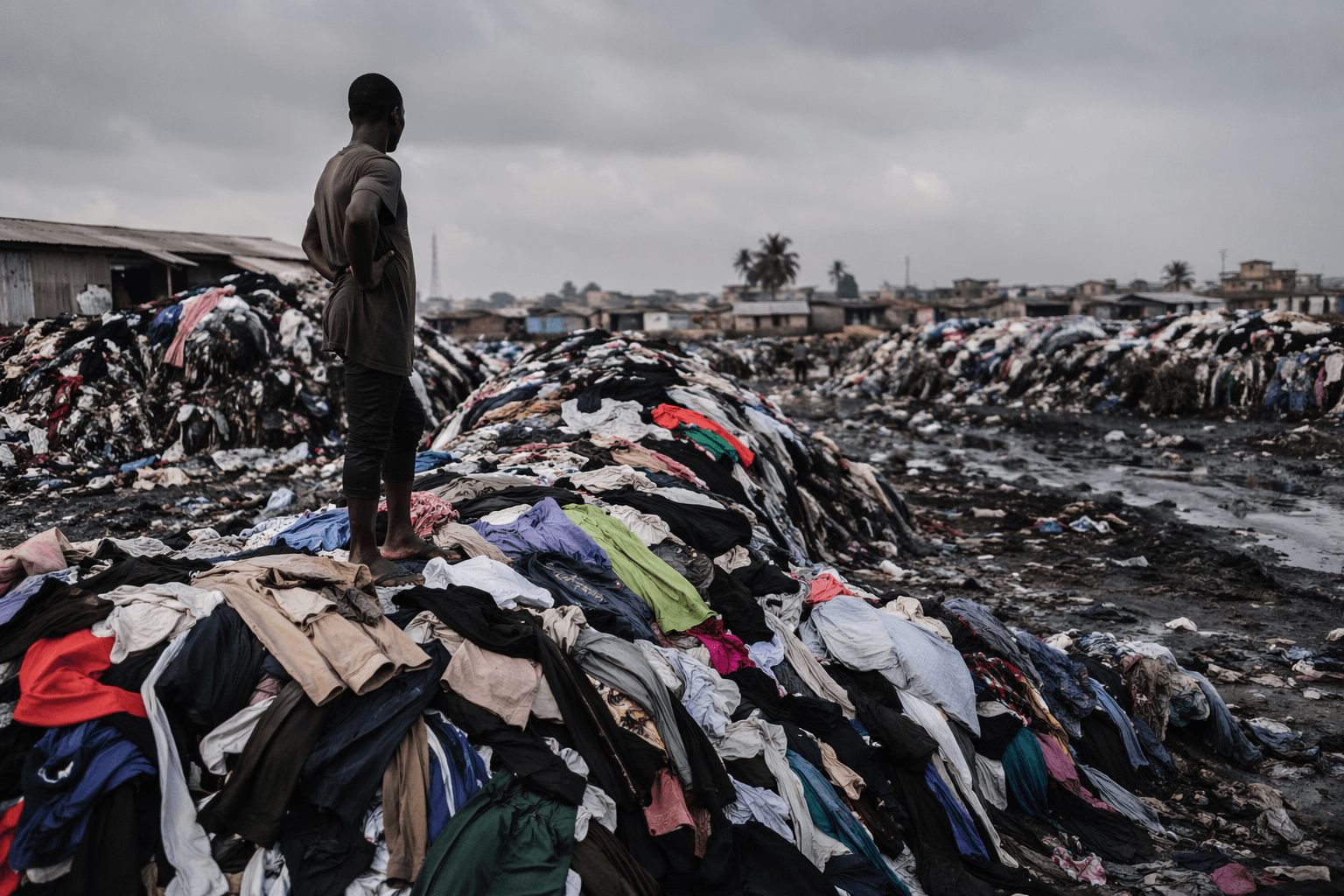
The scale in Ghana is already staggering. TIME reported that Ghana imported $214 million of used clothing in 2021, the most in the world, and described Kantamanto as spanning 42 acres and taking in about 15 million pieces of used clothing each week, roughly 225,000 tons a year. Other reporting has placed the market at about 30,000 traders across 18 acres, which only underscores how dense this ecosystem is, how many hands depend on it, and how impossible it is to separate trade from trash once the bales start bursting open.

The Or Foundation has been in Ghana since 2011, and its response has been local, relentless, and physical. The group says its beach cleanup program removes more than 18 tons of textile and other plastic waste from Accra’s beaches every week, while its Kanta Keepers work in the market alongside the Accra Metropolitan Assembly. Pulitzer Center reporting said about 69% of the clothing strewn on Accra’s beaches is synthetic polyester- and nylon-based fabric, and the organization and its collaborators call the system “waste colonialism,” a phrase that fits the geography too neatly to ignore. The preprint also lists funders including the SHEIN Global EPR Fund, the Biomimicry Institute, and Soliii Earth, a reminder that the microfiber problem is not just about what is thrown away, but who profits on the way to the discard pile and who lives with the fallout.
This article was produced by Prism’s automated news system from verified source data, official records, and press releases, then run through automated quality and moderation checks before publishing. The system is built and supervised by the people who set the standards it runs under. Read our full AI policy.
Did this article answer your question?