Karnataka garment workers protest wage revision that leaves them out
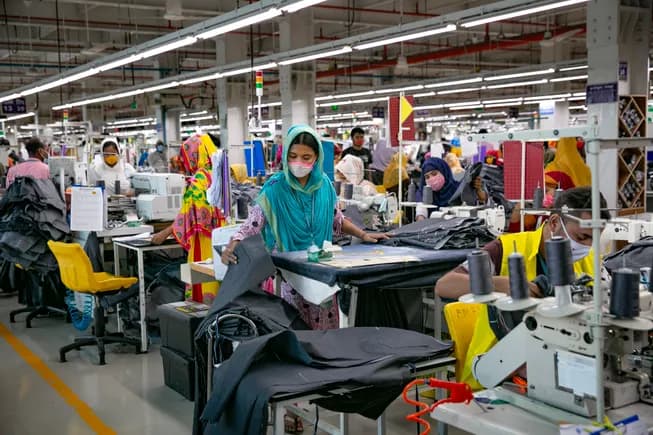
A 60% wage reset in Karnataka lifted pay for 81 jobs, but garment workers, most of them women, were left outside the first round.

Karnataka’s latest wage reset reads like a full-scale correction for much of the state’s labour market, but not for the women stitching its clothes. The May 22 notification revised minimum pay for 81 scheduled employments, lifting wages by about 60 percent on average, with new monthly floors ranging from roughly 19,300 for an unskilled worker in Zone 3 to about 31,100 for a highly skilled worker in Zone 1. Garment work, one of the state’s most visible export-facing industries, was left out.
That exclusion has turned a payroll decision into a sharper question about what sustainable fashion actually costs. The Garment and Textile Workers’ Union, or GATWU, said the carve-out is discriminatory and leaves a mostly female workforce behind. In Karnataka, the union says the garment sector employs over four lakh workers, nearly 80 percent of them women, and a worker in Bengaluru still earns about 13,000 a month. That is not a living wage in any meaningful sense, especially in a city where the clean drape of a finished dress or the crisp shoulder of a work shirt begins with a highly gendered, underpaid labour chain.

GATWU has demanded that the chief minister and the labour department revoke the exemption clause and bring garment work into the standard revision along with the other 18 sidelined sectors. The union had already pushed, in July 2025, for a minimum monthly wage of 42,000, underscoring how far current pay lags behind inflation and the long-delayed review. The broader revision itself had been pending since 2016 to 2017, which helps explain why the May notification was greeted by many workers as overdue relief, even as garment employees watched from the margins.
Officials have said garment work and the other excluded industries will be handled separately through a committee method under the Wage Code, 2019, because of piecework patterns. That procedural split may be tidy on paper, but it pushes the real burden down the chain: from state policy to household income, from household income to supplier margins, and from supplier margins to the purchasing decisions of global labels that source in Karnataka. If buyers demand lower prices while the state keeps garment wages outside the main revision, the squeeze lands where it always does, on the cutting table and the sewing line.

The legal fight is now moving in parallel with the labour protest. Employer groups have challenged the wage hike in the Karnataka High Court, which issued notice on June 2 and set the next hearing for June 9. For an industry that likes to speak the language of responsibility, Karnataka is offering a blunt test: sustainability cannot stop at fibre choice or factory audits if the people making the clothes are still paid like an afterthought.
This article was produced by Prism’s automated news system from verified source data, official records, and press releases, then run through automated quality and moderation checks before publishing. The system is built and supervised by the people who set the standards it runs under. Read our full AI policy.
Did this article answer your question?