Kering cuts leather use as EU eases deforestation rules
Kering vows a 30% leather cut by 2028 even as Brussels weighs exempting leather from deforestation rules, exposing a gap between luxury promises and policy.
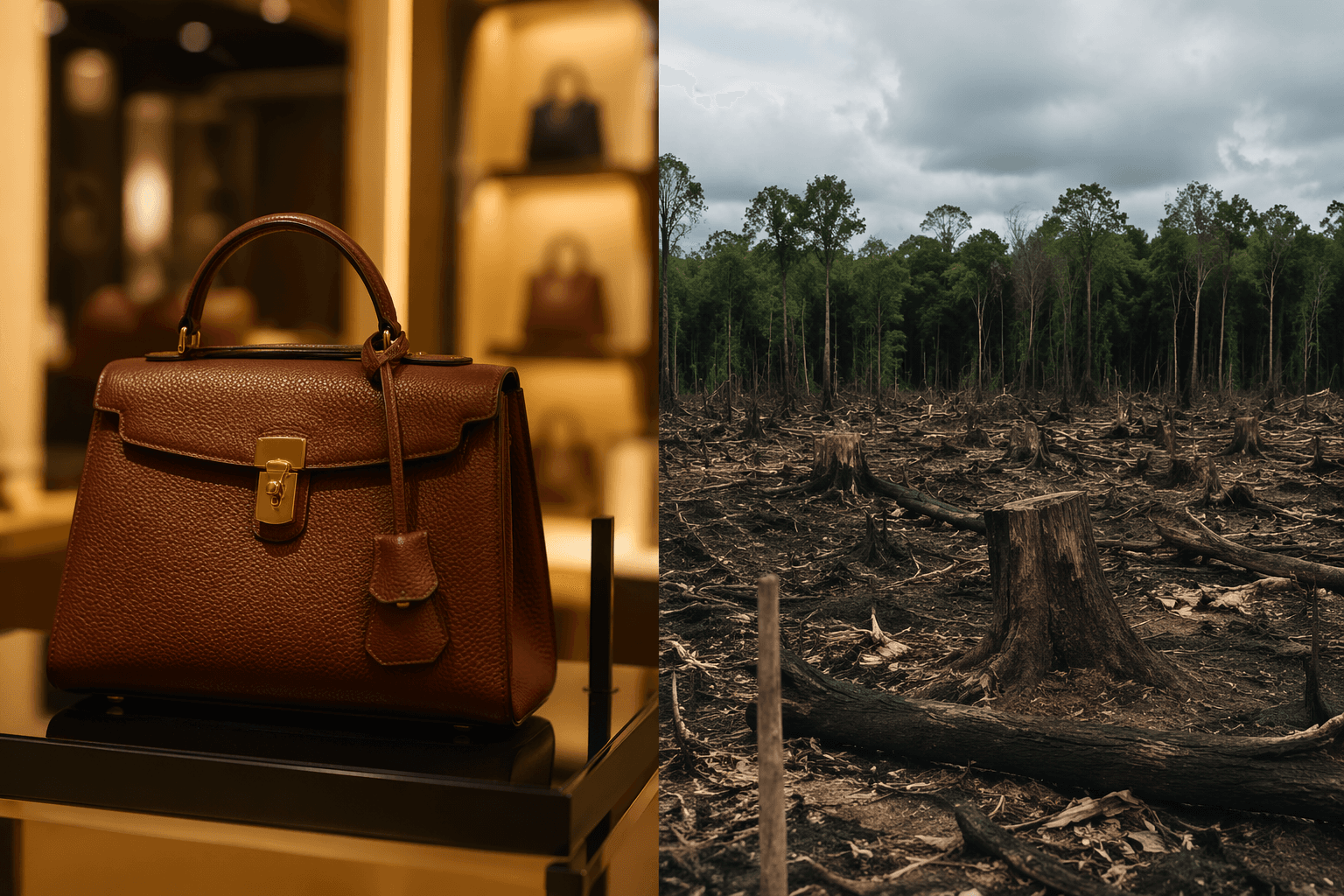
Luxury sustainability is being judged not by glossy commitments, but by what Brussels chooses to regulate. Kering is moving to cut its reliance on leather by 30 percent by 2028, yet the European Commission’s latest simplification package would exclude cattle hides, skins and leather from the EU Deforestation Regulation, the very law meant to police forest-risk commodities at the border. The Commission said the revised package, published on May 4, could trim annual compliance costs by about 75 percent, but the leather carve-out has turned that efficiency push into a credibility test for fashion’s most public climate promises.
The Deforestation Regulation was adopted in 2023 and is meant to cover seven commodities: cattle, cocoa, coffee, palm oil, soy, wood and rubber. Leather was not left in the shadows by accident. The Commission’s draft delegated act would remove it from product scope just as the law heads toward application by the end of 2026. On March 30, a coalition of civil society groups urged the Commission to keep leather in the regulation, arguing that excluding it would weaken the law and create policy incoherence. Investors have made the same point, warning that the exemption would open a significant loophole.
That concern is not abstract. Earthsight says cattle pasture expansion accounted for 42 percent of global deforestation driven by agriculture between 2001 and 2022, with most cattle-linked forest loss occurring at the expense of the Amazon rainforest. Its briefing also says Europe imports about €1.3 billion worth of bovine leather and hides each year, while European leather processing generates about €125 billion in turnover. The same analysis argues leather cannot be treated as a harmless byproduct of beef, because hide revenue helps shape slaughterhouse economics. Brazilian leather exports alone generated US$1.26 billion in 2024.
Kering sits directly inside that contradiction. The group, whose brands span ready-to-wear, couture, leather goods, jewelry, eyewear, beauty and art de vivre, said bovine leather remains a major sourcing category and described its “responsible leather” approach in terms of traceability, farm-level environmental practices, animal welfare, soil regeneration and chrome-free tanning. WWD reported that Kering sourced about 38,000 tons of cow and sheep hides in 2025, while leather accounted for roughly half of its total raw material use and 49 percent of global revenue.
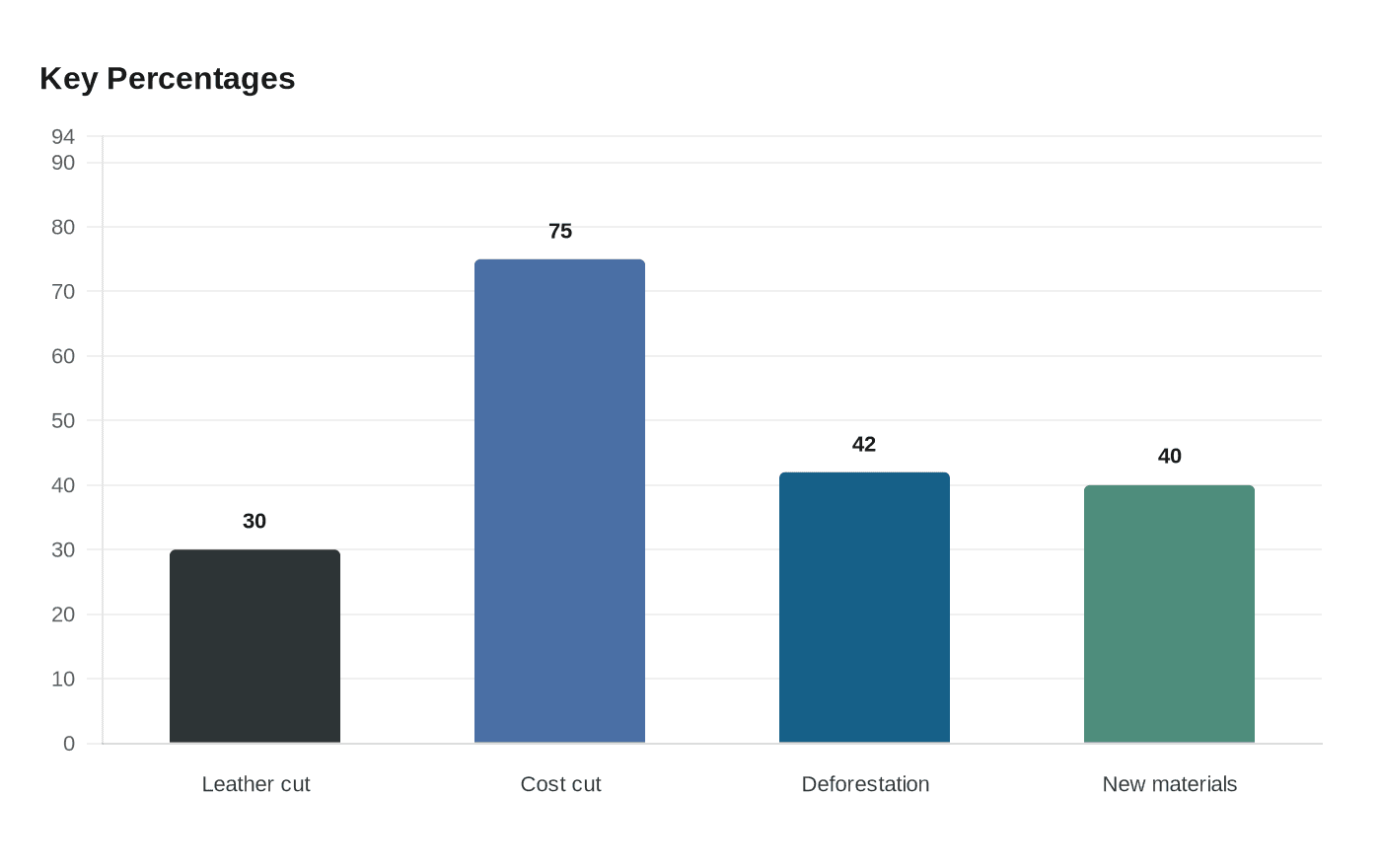
The company is also betting on substitution. WWD reported that Luca de Meo has said next-generation materials could represent as much as 40 percent of Kering’s materials by 2035. For a luxury house built on calfskin, suede and polished hide, that shift is significant. But if leather is excluded from the EU’s forest-risk rules, the industry may keep its most lucrative material outside the same scrutiny it asks of cocoa, coffee and soy, even as it claims to be leading on traceability.
This article was produced by Prism’s automated news system from verified source data, official records, and press releases, then run through automated quality and moderation checks before publishing. The system is built and supervised by the people who set the standards it runs under. Read our full AI policy.
Did this article answer your question?