Kraig Biocraft Laboratories Boosts Spider‑Silk Output Fivefold to 1.3 Metric Tons in a Month
Spider silk just crossed into commercial territory: Kraig Biocraft's 1.3 metric ton monthly output, a fivefold record, gives mills enough volume to begin qualification trials.
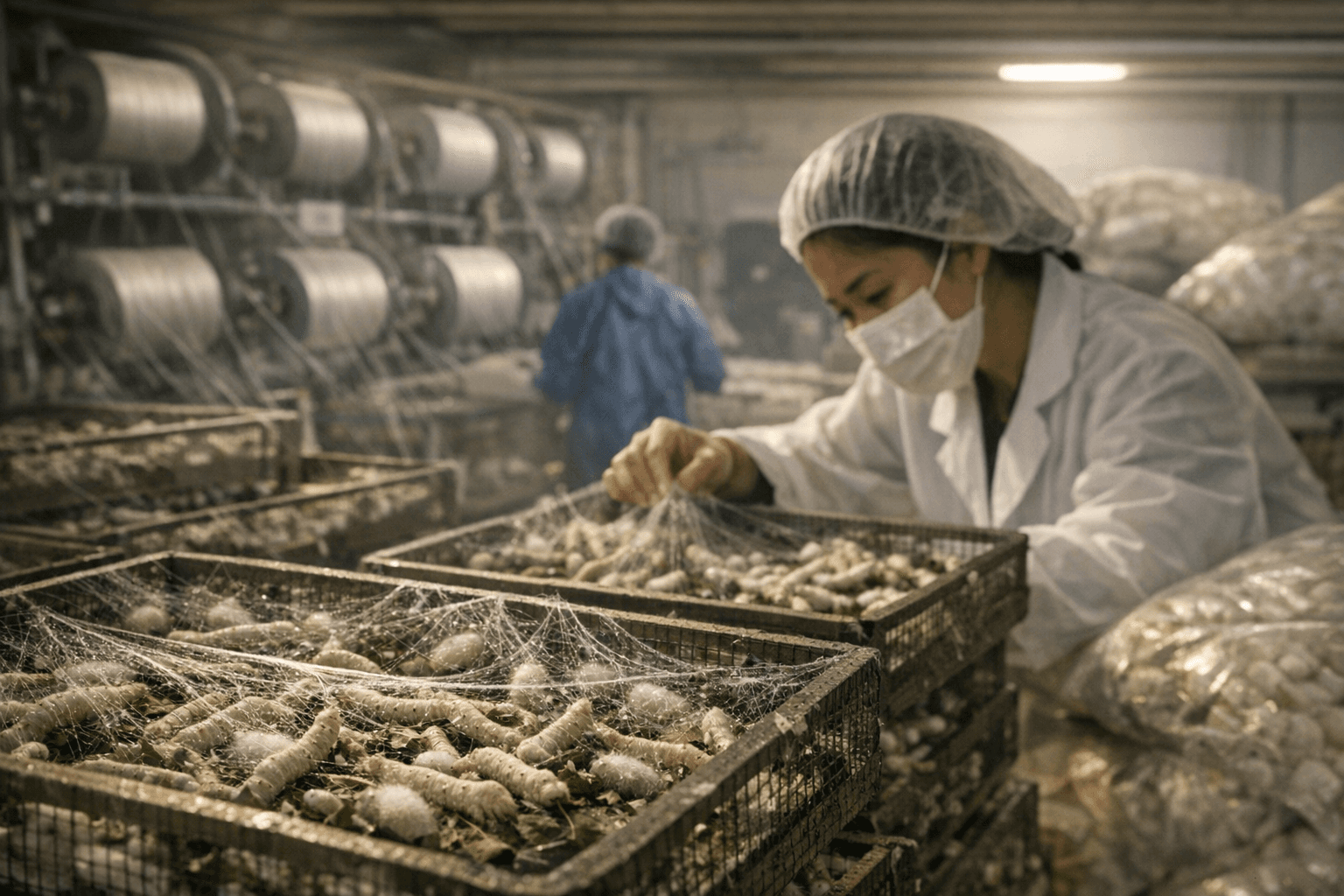
The fiber that outperforms steel by strength-to-weight ratio just cleared its most significant commercial hurdle yet. Kraig Biocraft Laboratories produced more than 1.3 metric tons of recombinant spider silk cocoons in a single month, shattering its own previous production record by a factor of five and marking the first time any company has generated spider silk at this kind of industrial volume.
The Ann Arbor, Michigan-based company achieved the milestone through its BAM-1 platform, a system of genetically engineered silkworms that incorporate spider silk proteins directly into their fiber output. Unlike conventional silk, which silkworms spin naturally, the BAM-1 strain is designed to produce larger cocoons with improved reelability and higher volume while retaining the extraordinary mechanical properties that have made spider silk one of materials science's most coveted targets for decades. Just one week prior, on March 30, Kraig deployed more than 700,000 BAM-1 Alpha production hybrids, a deployment scale that directly drove the record-breaking output.
For fashion, the implications are specific and immediate: volume is the gating factor between a novel fiber and a commercial textile. At 1.3 metric tons in a month, Kraig can now supply enough material for mills and brands to begin formal qualification trials, the testing protocols that determine whether a fiber can hold color, survive laundering, perform against pilling and seam stress, and meet the consistency standards that industrial weaving and knitting machines demand.
CEO and founder Kim Thompson has described the technology's potential "across numerous applications from apparel to medicines, industry, and defense technologies," with apparel as the stated commercial priority. The BAM-1 platform's reliance on sericulture, the centuries-old practice of silkworm cultivation, maps naturally onto existing textile supply chains in ways that other bio-fiber programs have struggled to achieve. A signed collaborative agreement with a government agency in Southeast Asia, where sericulture expertise and infrastructure are already concentrated, signals that Kraig is building toward a genuinely distributed production model rather than a single-facility operation.
The company's next declared target is 10 metric tons per month, roughly another eightfold increase from the current record. Reaching that level would put spider silk in meaningful competition with premium technical fibers on a supply basis, not just a specification sheet. The material's cultural ascent has kept pace with its technical one: Kraig's spider silk work earned a National Geographic cover in March 2026, the moment it crossed from scientific niche to mainstream visibility.
The caveats are real. Consistent fiber quality across production batches, verified wash-and-wear performance, regulatory clearance for commercial apparel use, and biocompatibility data for end-of-life disposal all remain outstanding requirements before any brand could launch a spider silk product at retail scale. But the qualification cycle cannot begin without volume, and 1.3 metric tons in a month is the first number in this story that a production manager at a textile mill would actually underline.
This article was produced by Prism’s automated news system from verified source data, official records, and press releases, then run through automated quality and moderation checks before publishing. The system is built and supervised by the people who set the standards it runs under. Read our full AI policy.
Did this article answer your question?