Longchamp builds circular luxury with B Corp and repair model
Longchamp is turning circularity into an operating system: B Corp, repairs, and wind-powered freight are reshaping luxury, but only parts of the model scale.
Longchamp is making a rare case for circular luxury that looks like business, not branding. The French house is using B Corp certification, an unusually robust repair network, and a wind-powered cargo partnership to show that sustainability in luxury can be operational, not ornamental. The real question is not whether the story sounds responsible. It is whether the model can survive the demands of craftsmanship, logistics, and margin.
B Corp as structure, not a slogan
Longchamp's B Corp certification matters because it turns a long-standing philosophy into something more legible, and more accountable. The brand says the certification structures its social and environmental commitments and reinforces a long-term vision, rather than changing the maison's identity. Adrien Cassegrain put it plainly: "At Longchamp, being a certified B Corp doesn’t change who we are. It simply recognises what we’re already doing and what we’ve already achieved."
That distinction is important in luxury, where many brands borrow sustainability language without changing how they operate. Longchamp's overall B Impact score is 91.0, comfortably above the median 50.9 for ordinary businesses completing the assessment. In other words, this is not a soft badge for a press release. It is a third-party framework that asks the brand to prove discipline across governance, production, distribution, and human resources.
Craftsmanship at scale, without losing the hand-finished feel
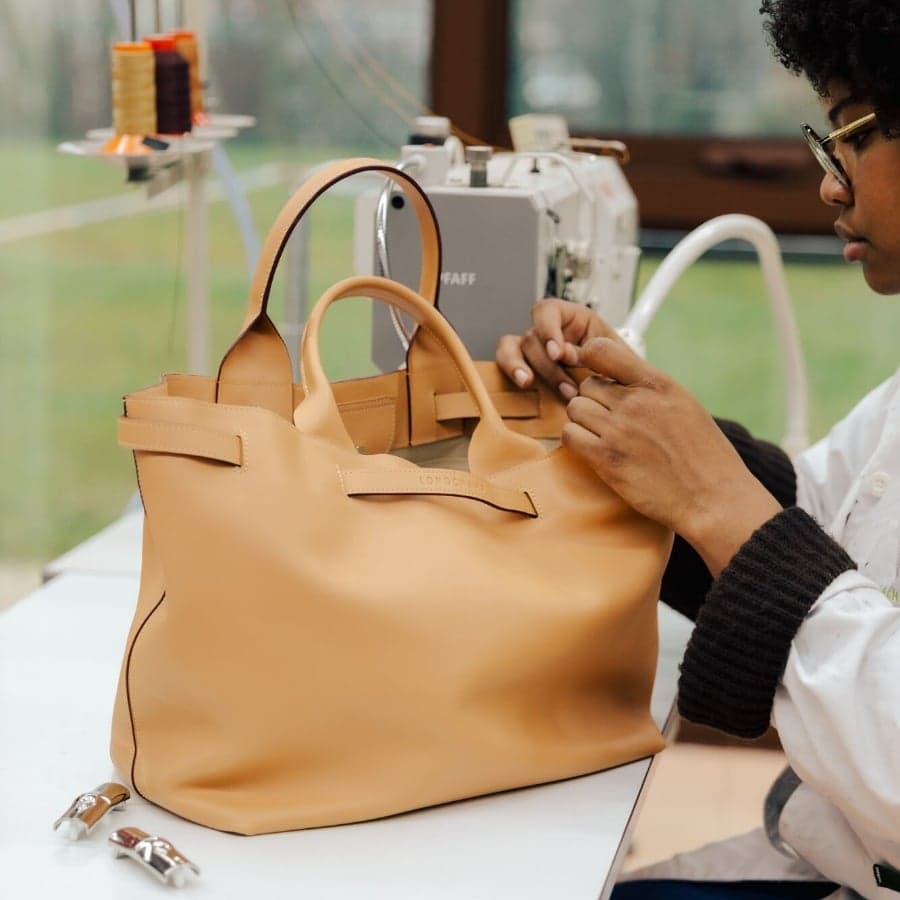
Longchamp was founded in 1948, and its present-day footprint tells you a lot about how it sees luxury now. The company says it has six production sites in western France and more than 800 people across 25 workshops. That matters because circularity is only credible when the product still feels expensive in the right way: tactile leather, sharp stitching, proper structure, and enough durability to justify repair.
The brand has also said its tanneries are audited by the Leather Working Group, and one 2025 interview reported that 79% of the leathers used in 2023 were certified Gold. That puts leather sourcing closer to a measurable standard than a vague promise. For a house built on bags, small leather goods, and travel pieces, the material story is not secondary. It is the whole proposition.
Repair is where the model becomes tangible
If luxury sustainability is going to win over real shoppers, repair is the least abstract way to prove it. Longchamp restored 75,000 products in 2024, including 45,000 in Segré and 30,000 internationally. In another interview, Adrien Cassegrain said the company restores more than 60,000 products a year across five workshops in France, which underlines how central longevity has become to the brand's operating model.
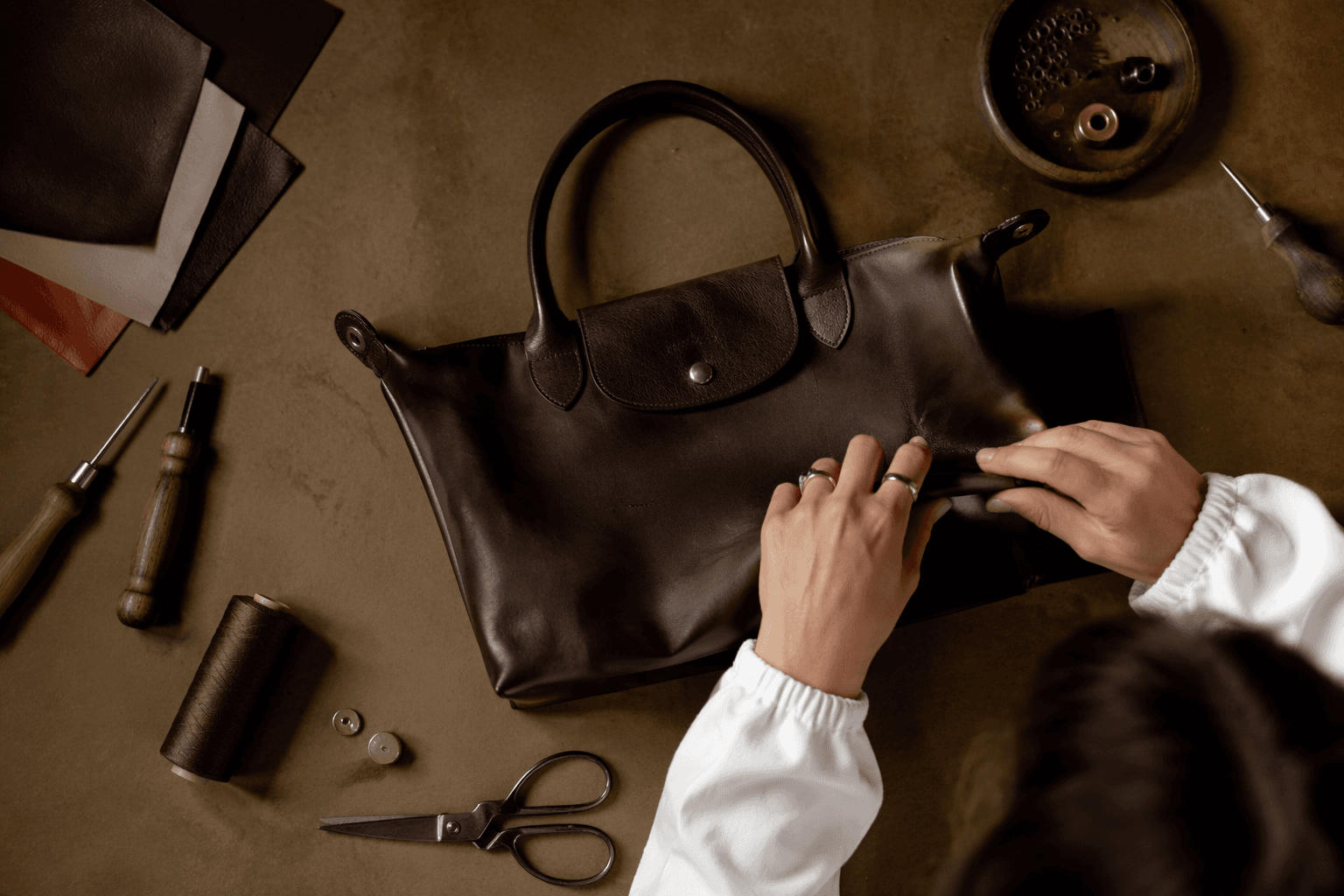
That scale gives Longchamp an edge over brands that talk about care but never build the infrastructure to support it. Repair changes the customer relationship, because a bag is no longer a one-season purchase but a piece that can be maintained, revived, and kept in circulation. It is also one of the clearest examples of circularity that can actually travel beyond luxury: not every brand can launch a sail-powered freight program, but almost every premium label can invest in repair, restoration, and aftercare.
The cargo ship is the boldest, and most expensive, part of the story
Longchamp first announced its partnership with Neoline on July 12, 2021, signaling an effort to cut emissions from its transatlantic supply chain. The company later said that from September 2025 it would consign a significant portion of transatlantic shipments to the Neoliner Origin, the first wind-powered roll-on/roll-off cargo ship developed by Neoline. The vessel is described as 136 metres long, with nearly 3,000 square metres of SolidSails and foldable carbon masts.
That is the most visually striking piece of the strategy, and perhaps the hardest to replicate. Neoline's development milestones, including keel-laying on February 14, 2024, show a project that is real, engineered, and moving toward commercial deployment. But this kind of logistics shift is not a quick fix. It depends on specialized infrastructure, route planning, and a level of coordination that most brands, even well-funded ones, will not easily match.
What is replicable, and what remains niche
The strongest lesson here is not that every luxury house should chase the same headline. It is that the most durable parts of circularity are the least glamorous: repair systems, sourcing audits, production discipline, and governance that can be measured. Those are the elements that can spread across the industry because they touch the core of how product gets made, sold, and maintained.
The less replicable piece is also the most seductive one: wind-powered shipping at transatlantic scale. It is smart, visible, and genuinely forward-thinking, but it is also capital-intensive and dependent on a very particular logistics ecosystem. That makes it an image-enhancing move only if it sits alone. At Longchamp, it reads differently because it is backed by repairs, workshop density, and a B Corp framework that gives the whole operation shape.
Luxury has long sold permanence through craftsmanship. Longchamp's argument is that permanence now needs systems around it: audited leather, French workshops, restoration at scale, and freight that starts to account for the carbon cost of distance. The brands that follow will not need to copy every element, but they will need to copy the discipline, because circularity without operational proof is just a mood.
This article was produced by Prism’s automated news system from verified source data, official records, and press releases, then run through automated quality and moderation checks before publishing. The system is built and supervised by the people who set the standards it runs under. Read our full AI policy.
Know something we missed? Have a correction or additional information?
Submit a Tip