LVMH says repairs and recycling generated €500 million in revenue
LVMH says repairs, refills and take-back services brought in €500 million in 2025, turning circularity into a revenue line across 10 million products.

LVMH has turned repair, refill and take-back into a €500 million business, with 10 million products moving through its circular services in 2025. That is the real shift here: the most polished houses in luxury are no longer treating aftercare as brand maintenance, but as an operating model with measurable revenue attached.
The group’s LIFE 360 environmental roadmap, launched in 2021, has become the framework for that pivot. LVMH says it met its 2023 target of offering new circular services by creating repair-and-care task forces in several maisons, then formalized the effort with LVMH Circularity at the LIFE 360 Summit in December 2023. The aim is bluntly commercial as well as environmental: revalorize strategic products and materials, fold them back into Maison value chains, and keep track of what happens to items at the end of their life so the system can satisfy regulatory demands as well as customer expectations.
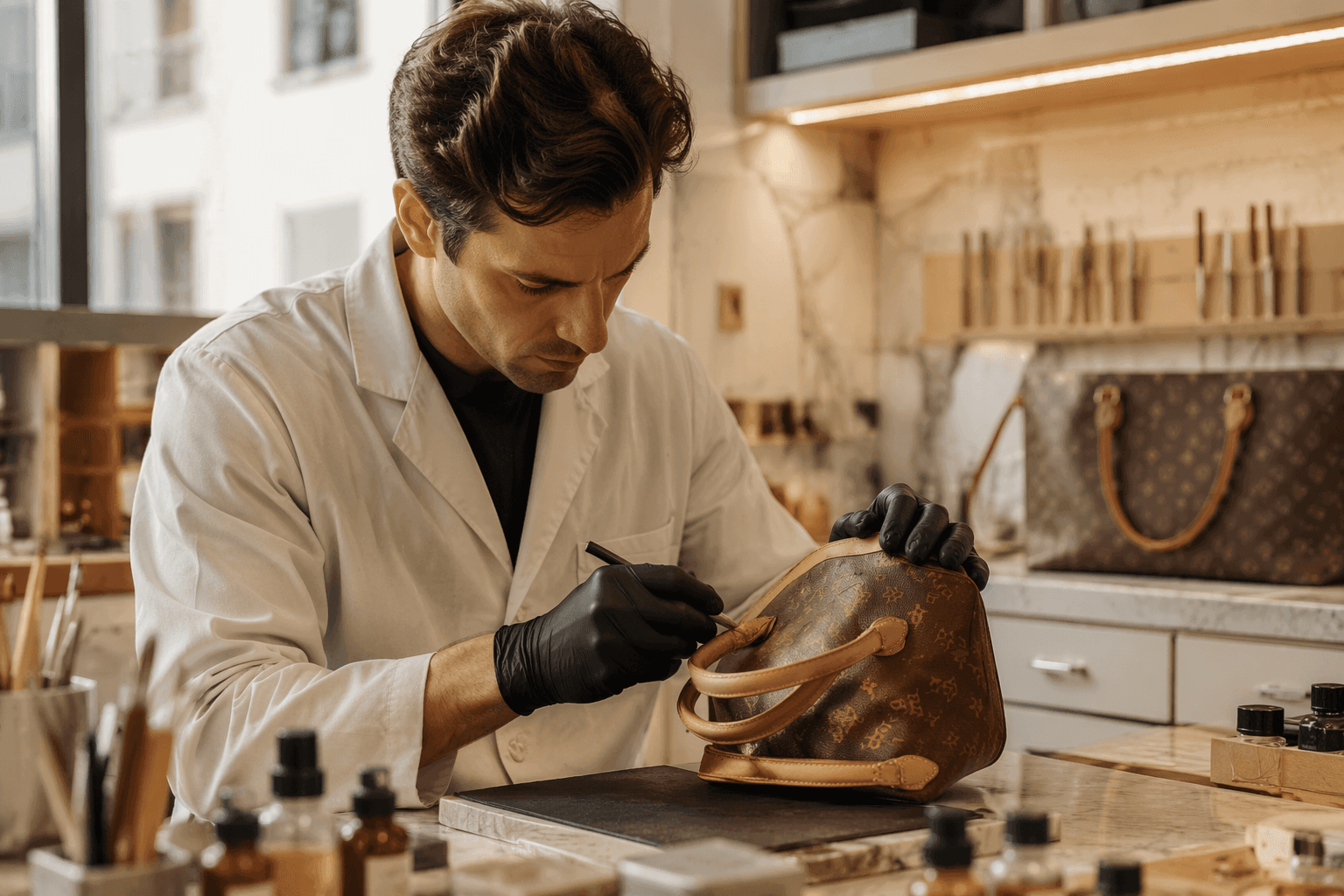
The question is not whether luxury clients will pay for this. They already do, and LVMH’s scale gives the answer its force. Louis Vuitton repairs 600,000 products a year. Berluti says 79 percent of its leather products are repairable. RIMOWA backs its luggage and bags with a lifetime guarantee, while Le Bon Marché extends the life of goods through alterations, watch repair and shoe repair. These are not abstract sustainability gestures. They are service businesses built on workshops, trained technicians, spare parts, logistics and the kind of brand trust that makes a client willing to send a treasured bag or case back into the house instead of replacing it.
That infrastructure matters because margin does, too. A repair or refill service can look elegant on a slide, but it only becomes durable if the brand can standardize quality across maisons, control turnaround time and recover value from materials already paid for once. LVMH’s circularity system is designed to do exactly that, and the group has already said that more than 10 million products were repaired, refilled or taken back across the business in 2024. With fashion and leather goods generating €41 billion in revenue that year, circular services are now sitting inside the core of a business that produced €80.8 billion in revenue in 2025 across 75 maisons.
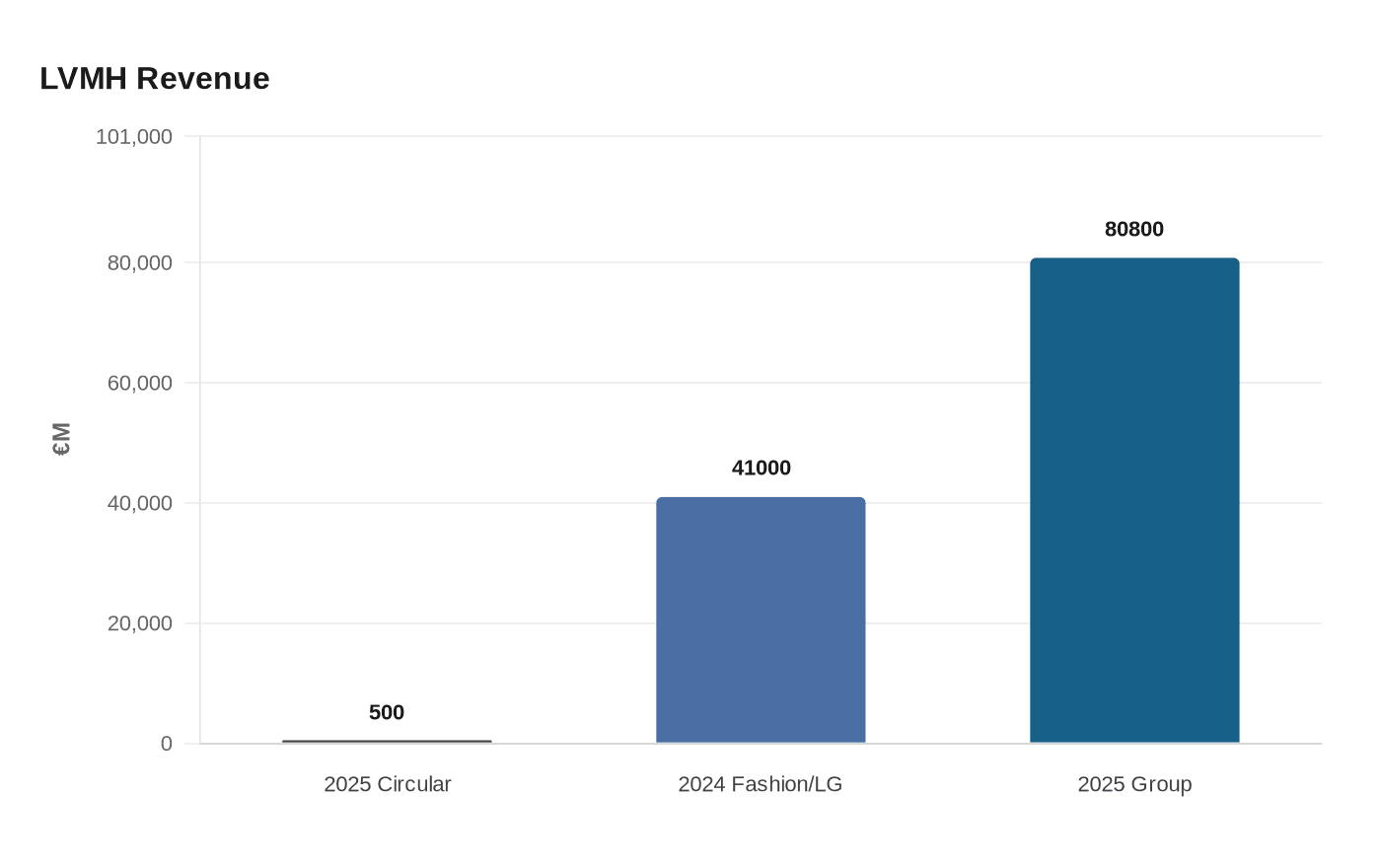
That is why the €500 million figure matters beyond its headline value. LVMH, founded in 1987, appears to be proving that circular luxury can be monetized at scale when a group has enough maisons, enough product volume and enough control over its own aftercare. For smaller brands, the model may be harder to copy than it looks, because the real advantage is not the repair itself but the industrial machinery behind it.
This article was produced by Prism’s automated news system from verified source data, official records, and press releases, then run through automated quality and moderation checks before publishing. The system is built and supervised by the people who set the standards it runs under. Read our full AI policy.
Did this article answer your question?


