Manomama’s viral FCKAFD jeans spotlight local, inclusive denim production
A protest slogan went viral, but the real story is Manomama’s German-made denim system, where local production and inclusion are tied to measurable output.
The protest jean with a production plan
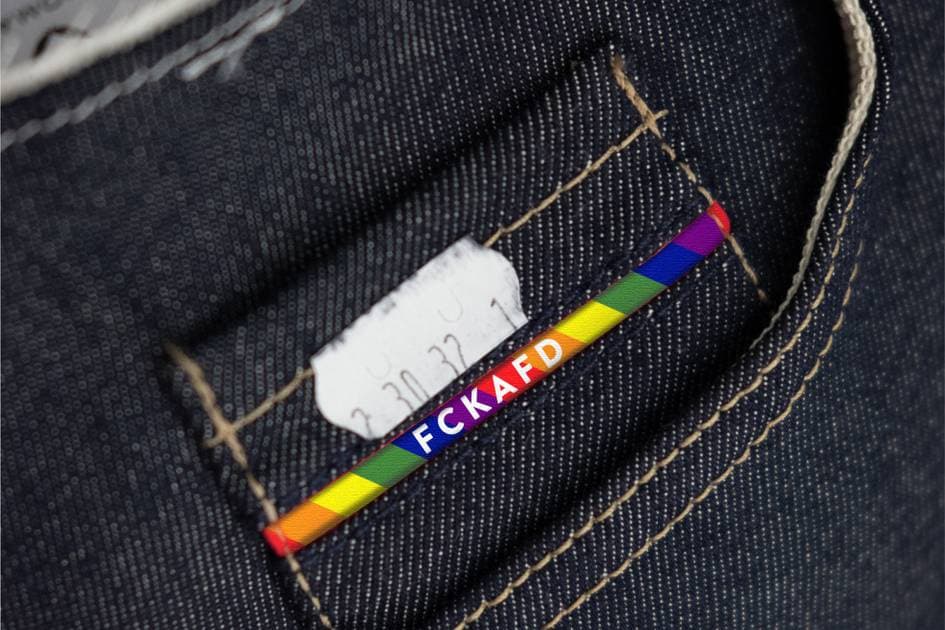
Sina Trinkwalder built Manomama around a stubborn, unfashionable idea: textile production in Germany can still make economic sense if the supply chain stays close, the labor model stays inclusive, and the product is made only when it is wanted. The viral FCKAFD jeans turn that philosophy into a blunt political object, then ask a sharper question about fashion itself: can values be stitched into a garment in a way that actually changes how it is made?
Magnus Trinkwalder posted the jeans as a LinkedIn mock-up, not a finished retail flourish, to signal opposition to right-wing extremism and to make a point about social responsibility and corporate accountability. That matters, because the item did not go viral simply as a graphic slogan. It spread because it arrived with an operational idea behind it. FashionUnited reported that Manomama took preorders through the end of May 2026 and would start production once 200 jeans had been ordered. Within 24 hours, 170 orders had already come in.
Why Manomama’s denim looks different from the rest of the market
Manomama says it was founded in 2010 by Sina Trinkwalder, who later received Germany’s Order of Merit in 2015. The company launched its jeans line in 2013 and now makes only a few hundred pairs a year, produced on demand rather than stocked in bulk. That detail is the heart of the brand’s sustainability argument. When denim is made to order, dead stock shrinks, production becomes more accountable, and each pair feels closer to a considered object than to a rack filler.
The current Augsburg denim line is priced at €139, which places it in a revealing middle ground. It is far from fast-fashion denim, where a low price often hides environmental and labor costs, but it is not luxury denim either, where heritage branding can inflate the bill long after the seams are sewn. Here, the price has to justify a German manufacturing model, slower turnaround, and a supply chain designed around proximity rather than volume.
A supply chain that makes its politics visible
Manomama says the jeans’ entire supply chain, from denim to sewing thread, is based in Germany, with production in Augsburg. The company also says its cotton comes from an organic cooperative in Tanzania, while other components are supplied by German manufacturers. That combination tells you a lot about the practical limits of hyperlocal fashion. This is not purity politics or fantasy self-sufficiency. It is a working system that keeps assembly, coordination, and most components close to home while still relying on raw material sources outside Germany.
The company describes its production chain as running within roughly 500 kilometers and presents itself as the last textile manufactory still producing in Augsburg. In an industry where transparency is often reduced to polished storytelling, that kind of geography is unusually concrete. Proximity is not just a feel-good slogan here; it is what makes the project fast enough to respond to demand, disciplined enough to avoid overproduction, and legible enough for customers to understand what they are paying for.
The social-employment model is part of the sustainability claim
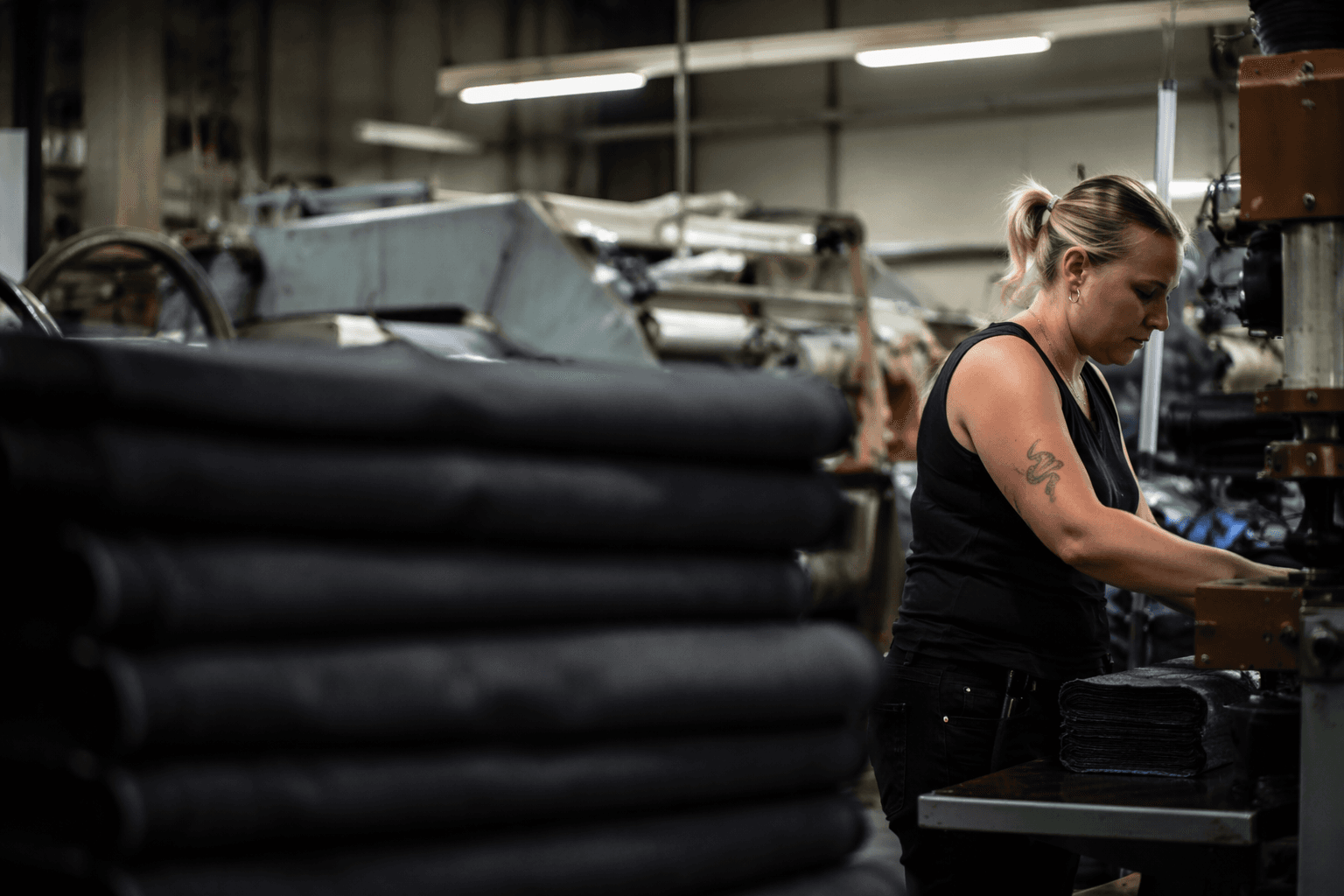
Manomama’s sustainability story is not limited to fabric choices or shorter transport routes. The company says it was founded with the vision of giving people a chance regardless of origin, age, or educational background, and it presents its team as deliberately diverse. That framing gives the brand’s environmental claims a human dimension. A local supply chain only becomes truly meaningful when the work inside it reflects the same values of access and fairness.
That is where Manomama separates itself from a lot of ethical fashion messaging, which can sound eloquent while remaining vague about labor. Here, the company’s social mission is built into its identity as a business. Fair pay, transparency, and local production in Augsburg are not side notes; they are the operating principles that make the denim line credible. The result is a brand that treats inclusion as infrastructure, not charity.
Manomama’s made-to-order rhythm reinforces that point. The company says standard merchandise can be ready in four to six weeks, while fully custom pieces take eight to twelve weeks. Those timelines are not the language of speed or convenience. They are the visible cost of producing with restraint, one of the few ways fashion can honestly claim to be less wasteful without outsourcing the burden to workers or the environment.
Blueprint or niche success story?
The viral jeans are clever, but the deeper appeal is structural. A political garment can get attention in a single feed cycle; a durable sustainability model has to survive ordering thresholds, production schedules, wages, and materials. On that score, Manomama offers something more interesting than a one-off stunt. The preorder system, the German-based production, the Augsburg manufacturing base, and the social-employment mandate all point to a company trying to make values measurable.
Still, replication would not be simple. Manomama’s model depends on a tightly controlled scale, a founder with a clear mission, and a supply chain narrow enough to stay coherent. That makes it less a universal template than a proof of concept. But in a fashion landscape crowded with symbolic gestures, the strongest argument is often the one that can be counted: 200 jeans to trigger production, 170 orders in 24 hours, a price tag of €139, and a pair of jeans that turns civic conviction into something that can actually be cut, sewn, and shipped from Augsburg.
This article was produced by Prism’s automated news system from verified source data, official records, and press releases, then run through automated quality and moderation checks before publishing. The system is built and supervised by the people who set the standards it runs under. Read our full AI policy.
Did this article answer your question?