New wool process cuts chlorine, speeds dyeing and lowers temperatures
A new wool finish strips the fibre’s hydrophobic lipid layer without chlorination, opening the door to faster dyeing, lower temperatures and leaner chemical use.
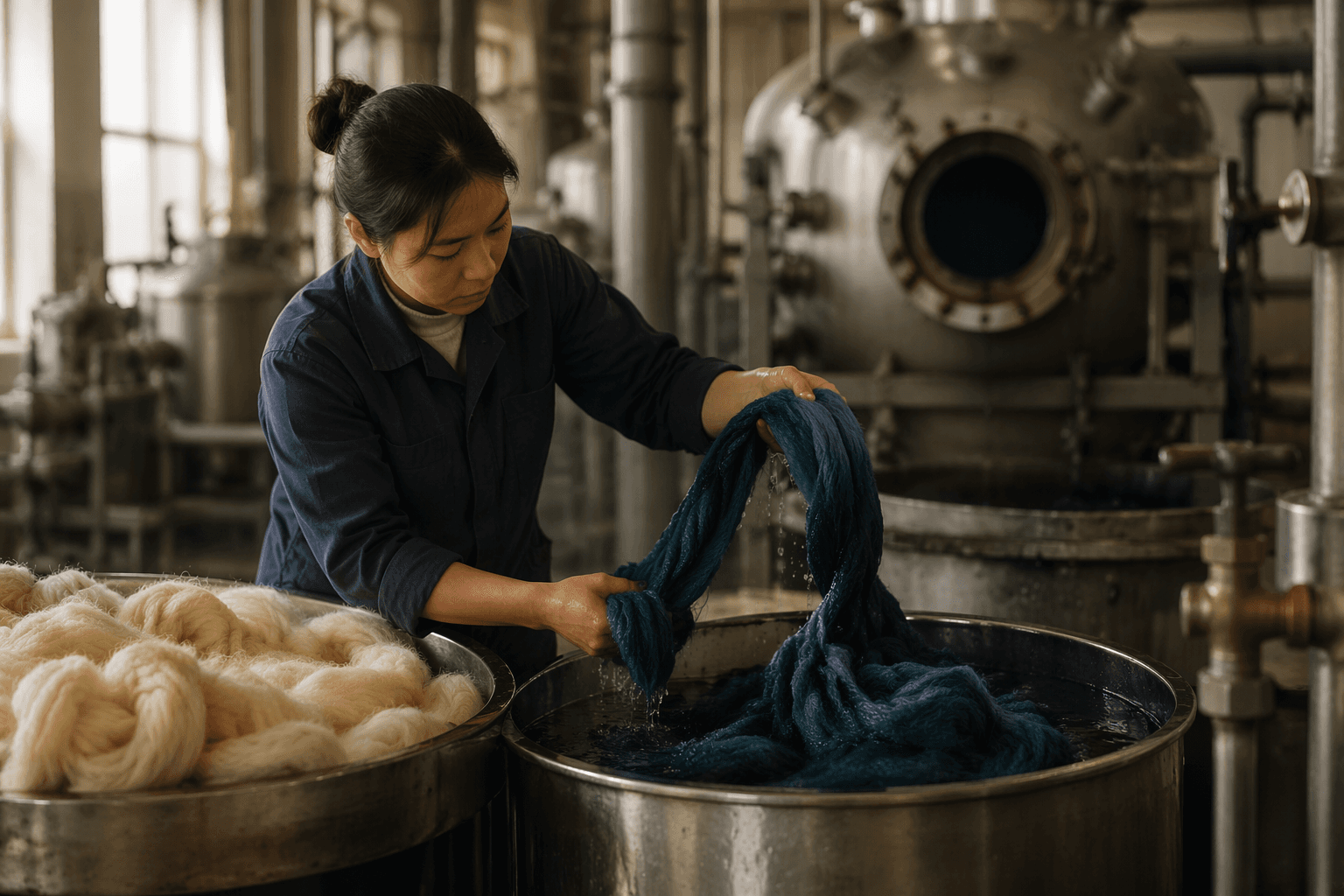
Wool has always had a glossy little problem hidden in plain sight. Its surface lipid barrier makes the fibre water-resistant, but it also makes wet processing stubborn, dye uptake slower and shrink-resist finishing harder to clean up.
That is why the chlorination-Hercosett route has stayed such a hard habit to break. A 2019 review called it the most effective and cheapest shrink-resist treatment, and estimated that about 70% of wool had traditionally gone through that chlorine-based system. A 2024 paper went further, saying chlorination-Hercosett still dominates machine-washable wool production and that the absorbable organic halogens it creates are highly detrimental to human health and the environment. The industry knows the contradiction well: machine-washable wool sells convenience, but the finish has carried a chemical cost for decades.
Ecotextile News says the new method takes aim at that exact weak spot. Instead of relying on chlorination, it rapidly removes wool’s hydrophobic lipid layer, making the fibre more hydrophilic and easier to process. The promise is obvious to any mill that has wrestled with wool in the dyehouse: faster dyeing, lower processing temperatures and less chemical use, all without leaning on the old chlorine playbook.
That matters because the alternatives have been circling for years without fully displacing the incumbent. Recent studies have explored ozone, enzymes and biomaterial-based treatments as chlorine-free anti-felting options. The International Wool Textile Organisation says much wool processing is mechanical rather than chemical, and that chemicals of concern have been phased out in line with European REACH rules. That is useful context, but it does not change the basic truth on the floor: the chlorine-Hercosett system still owns a big share of commercial wool finishing because it works, it is familiar and it is cheap.
The new process, described in Springer as an environmentally friendly anti-felting and low-temperature dyeing method that can be applied commercially, sounds more practical than many lab-born sustainability fixes. But the real test is brutal and familiar: cost, retrofit needs, throughput and whether mills can integrate it without slowing lines or sacrificing the hand, wash performance and color payoff brands expect. If it clears those hurdles, wool could lose one of its dirtiest chemical steps without losing the crisp, polished finish that keeps machine-washable knitwear in rotation.
This article was produced by Prism’s automated news system from verified source data, official records, and press releases, then run through automated quality and moderation checks before publishing. The system is built and supervised by the people who set the standards it runs under. Read our full AI policy.
Did this article answer your question?


