Oeko-Tex flags dye failures and rising scrutiny of fluorinated chemicals
Oeko-Tex is tightening the screws on dyehouses and mills: disperse, vat and sulphur dyes are still failing, while fluorine traces face tougher PFAS scrutiny.
The next sourcing headache is already in the test lab. Oeko-Tex’s latest ECO PASSPORT findings show that mills, dyehouses and brands can no longer treat chemical approval as a back-office formality, because the products most likely to trip compliance are the very dye families that keep modern color pipelines moving: disperse dyes, and vat and sulphur dyes.
ECO PASSPORT marked its 10th anniversary on May 20, 2026 with more than 65,000 certified products, 2,125 certificates and 1,400 customers in more than 50 countries, a scale that makes its rulebook hard to ignore. The system now reaches deep into the places where textile chemistry is decided first, not last: where color is built, where finishes are chosen and where one substitution can ripple through an entire supply chain.
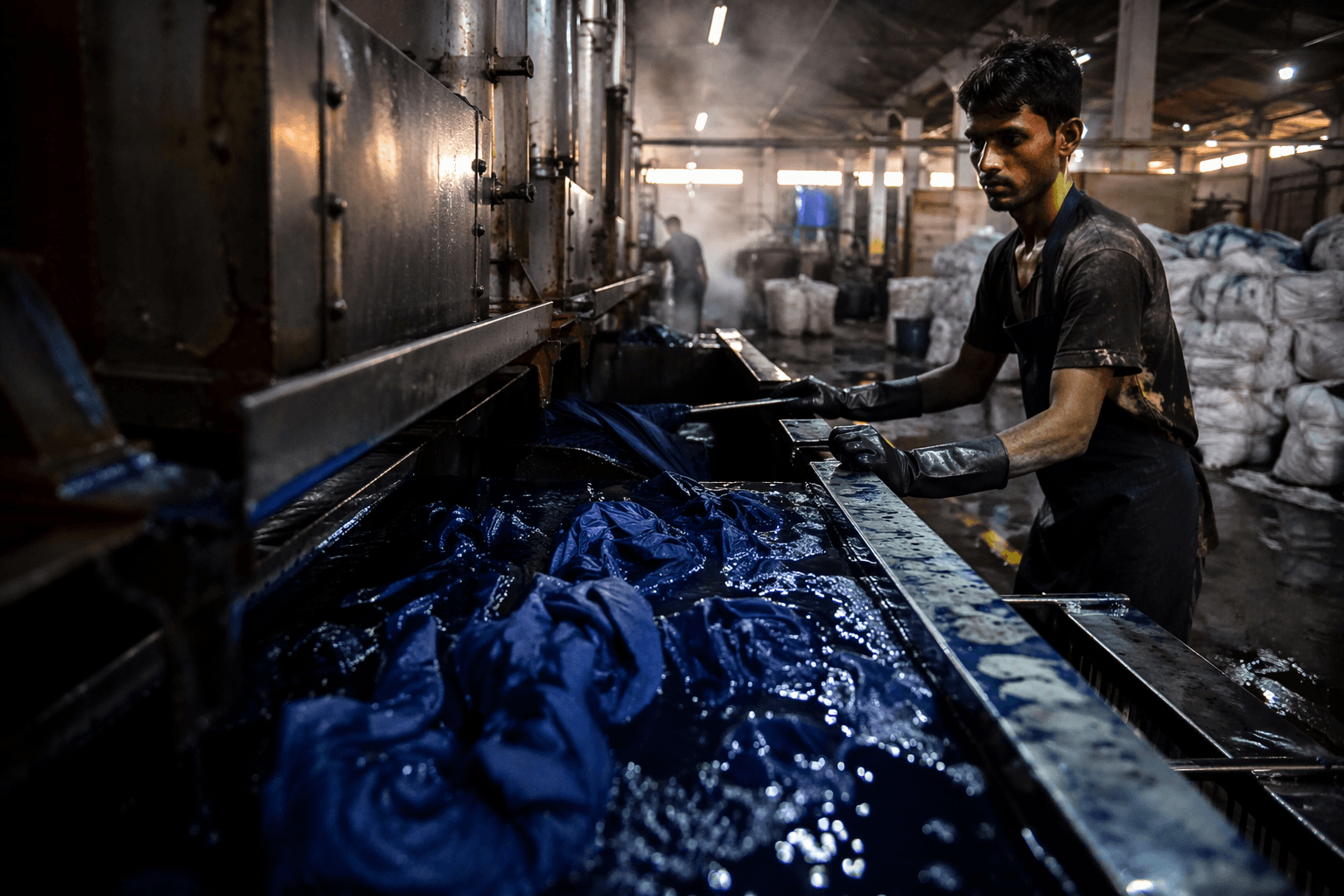
The pressure is not abstract. Oeko-Tex said its 2025 laboratory review found persistent failed tests in certain dye types, especially disperse dyes and vat and sulphur dyes, across parameters including quinoline, aniline and dimethyl fumarate, or DMFU. Those are the kinds of failures that force mills back to formulation, pushing dyehouses to swap chemistries, retest batches and renegotiate approvals before fabric ever reaches a brand’s QC desk. Oeko-Tex has stressed that such failures are not unusual for the sector, but the pattern shows why analytical testing has become a commercial gatekeeper rather than a paperwork exercise.
Fluorinated chemistry is now moving into the same spotlight. Oeko-Tex said PFAS findings remain low, but laboratories are recording more total fluorine, and the organization has developed a method to distinguish fluorine that comes from PFAS from fluorine that does not. That distinction matters because total fluorine can trigger alarm even when a targeted PFAS analysis comes back clear, and Oeko-Tex’s limit structure allows certificate holders to request an additional verification test if the fluorine threshold is exceeded without PFAS being detected.
The broader policy backdrop is getting stricter too. Oeko-Tex already bans the intentional use of PFAS across all its certificates, integrated French PFAS requirements into STANDARD 100 in October 2025, and put a new PFAS testing method for ECO PASSPORT into effect in January 2026. Its 2026 update also added biodegradability requirements for certain chemical products, including some surfactants, water softeners and complexing agents, widening the compliance lens beyond fluorinated compounds alone.
That matters most in the markets that anchor global production. China and India together account for about two-thirds of ECO PASSPORT certificates, underscoring how much of the industry’s chemical decision-making now sits inside the reach of this system. For brands chasing clean paperwork and cleaner chemistry at once, the message is blunt: what passes the lab now determines what can move at scale.
This article was produced by Prism’s automated news system from verified source data, official records, and press releases, then run through automated quality and moderation checks before publishing. The system is built and supervised by the people who set the standards it runs under. Read our full AI policy.
Did this article answer your question?