OLYMP puts sustainability labels front and center on garments and online
OLYMP is putting GREEN CHOICE labels on garments and product pages, and it filed its 2025 Sustainability Report on May 6, 2026. The big test is whether shoppers get more than a green badge.
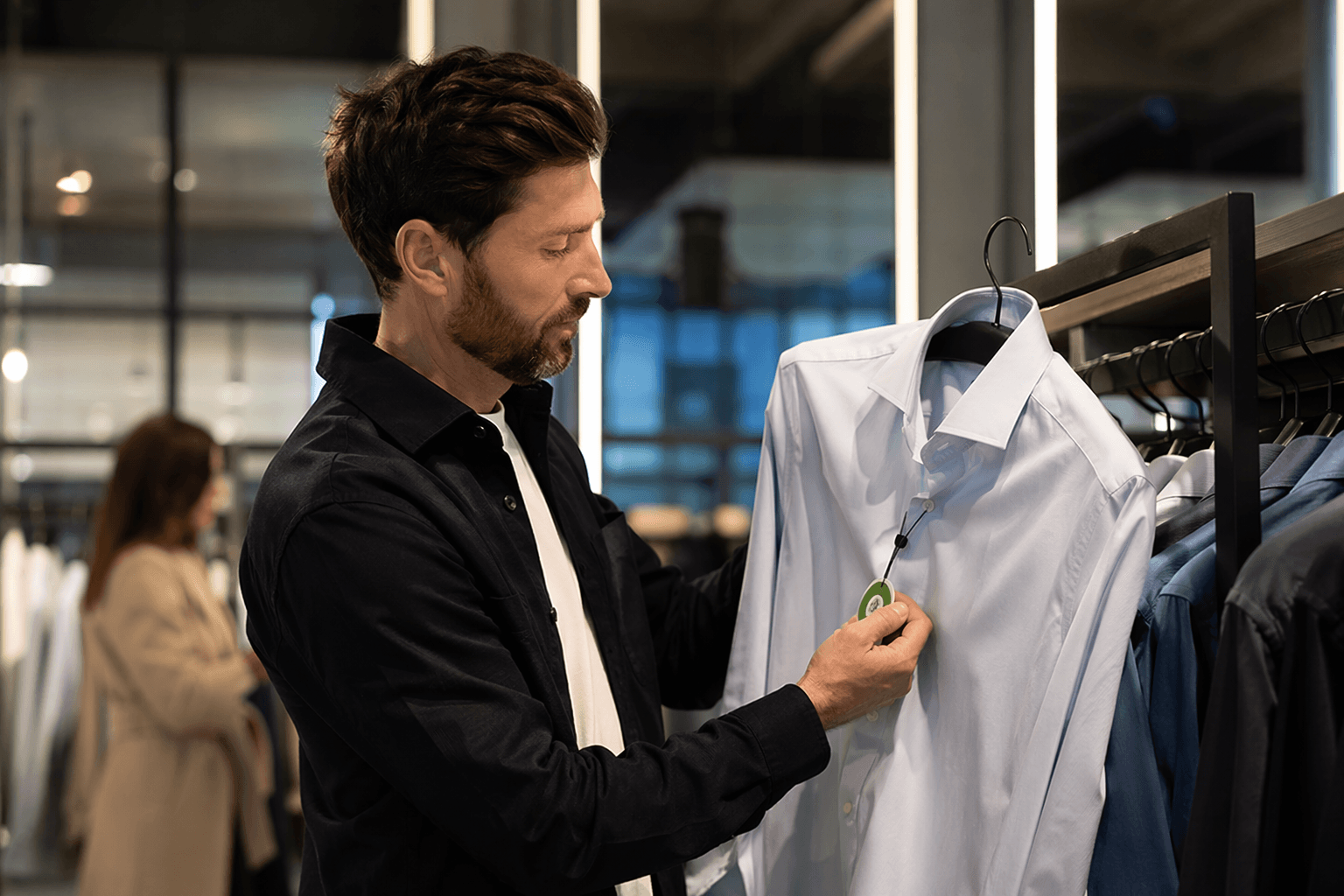
OLYMP is pulling sustainability out of the footnotes and stitching it onto the clothes themselves. The brand is adding responsibility markers to hang tags and care labels, while giving online product pages a stronger information layer, so shoppers can see sustainability details at the point of purchase instead of digging through a corporate report after the fact. That matters, because this is where transparency either becomes useful or collapses into branding.
The clearest visible change is the GREEN CHOICE label. OLYMP says it uses that mark to make sustainable values visible for people and the environment, and that each product will now carry its individual sustainability features directly on the garment and on the web page. The brand also says its materials and production processes are independently tested and certified by trusted partners, which gives the label more weight than a generic eco badge. OLYMP says it takes responsibility for people, the environment and society across the entire value chain, a broad claim that now has to carry the load in public view.
Mark Bezner, the owner and CEO of OLYMP Bezner KG, put the point bluntly: "Responsibility is only a value when it is lived up to." That line lands because the company is not just decorating shirting with a cleaner conscience. It is trying to make responsibility readable on the rack, on the label and online, in a family-owned menswear business based in Bietigheim-Bissingen, Baden-Württemberg, Germany. OLYMP also says its voluntary sustainability reporting, which it says began ten years ago, lets it compare itself with companies that have mandatory disclosure obligations.
The timing is not accidental. OLYMP published its 2025 Sustainability Report on May 6, 2026, and the company’s own materials point to a familiar but still meaningful playbook: increasing the share of sustainably produced raw materials, reducing critical chemicals and establishing environmentally friendly production processes. A Sphera case study says OLYMP was targeting GREEN CHOICE criteria by 2025, while packaging is being redesigned around "reduce, recyclable, recycle." That is the sort of operational language sustainability reporting too often buries. Here, it is being pushed closer to the garment.
OLYMP also leans hard on care as part of the sustainability story. Its downloads and guidelines say sustainable care can protect the environment in the long term and extend the life of clothing, which is the kind of boring, practical truth fashion usually underplays. The new labels will not solve transparency on their own, but they do shift the conversation from a slogan on a corporate page to a decision made in front of the mirror, where accountability actually starts to cost something.
This article was produced by Prism’s automated news system from verified source data, official records, and press releases, then run through automated quality and moderation checks before publishing. The system is built and supervised by the people who set the standards it runs under. Read our full AI policy.
Did this article answer your question?