Parsons runway spotlights identity, sustainability and inclusive design
Parsons turned its 2026 runway into a test kitchen for inclusive, sustainable design, where 31 student collections felt more like a blueprint than a school show.
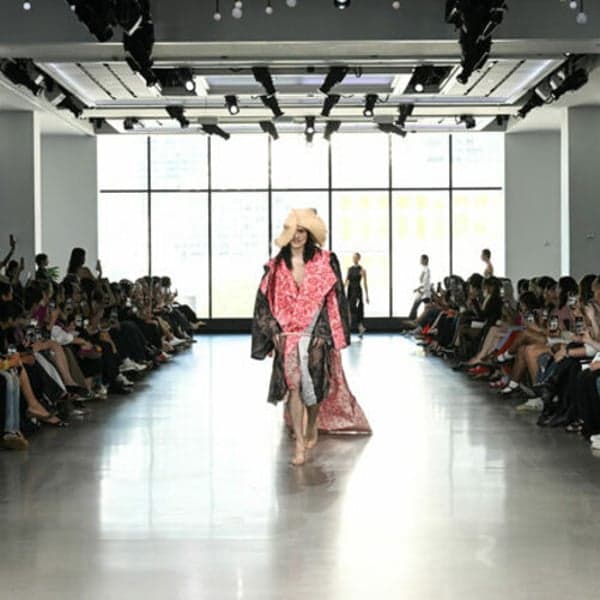
Why ENSEMBLE mattered
Parsons made a clear case for what fashion school can be when it acts less like a recital and more like a laboratory. Its BFA Fashion Design Class of 2026 runway, titled ENSEMBLE, gathered 31 designers whose work pushed identity, craftsmanship, sustainability and interdisciplinary thinking to the front of the room, not the margins.
The result was not a standard student showcase. It looked closer to a snapshot of where the next generation wants fashion to go: toward repair, material restraint, local making and storytelling that means something beyond the photo op. That matters now because commercial brands keep talking about circularity and inclusion, but schools are where those ideas can still be tested with urgency, risk and imagination.
A runway built around range, not sameness
The show took place at The Glasshouse in Manhattan, New York, on Sunday, May 18, 2026, and it brought together designers representing 12 nationalities across four continents. The collections moved across womenswear, menswear, gender-neutral design, size-inclusive fashion and adaptive fashion, which gave the runway a broader social frame than most fashion-week spectacles ever attempt.
That breadth was the point. Parsons School of Design, part of The New School, has long positioned its Fashion Design BFA as a program that has trained six generations of designers. The school says students study form, silhouette, material and process, with “social and environmental imperatives” built into the work. In practice, that means the runway did not just show finished garments. It showed how students are learning to think about bodies, materials and systems at the same time.
Names attached to the class and its broader ecosystem underline how personal and specific this moment was: Anna Lerner-Zwick, Deshon Varnado, Charlie Morris, Taylor Uchytil, Fiorella Michael, Melissa Tello, Mai Mor, Leland Parker, Ryan LeMere, Sarah Kozlowski, Aaron Potts, Alexander Flores and Olivia Colley were among the designers and creatives connected to the presentation. That kind of roster is part of the appeal here. It makes the runway feel like an actual graduating cohort, not an anonymous trend reel.
Sustainability was treated as a design language, not a label
The strongest takeaway from ENSEMBLE is that sustainability did not arrive as a slogan stitched onto the end of the process. It was embedded in how the collections were imagined. Parsons’ Fashion Design BFA organizes its curriculum around four pathways, Collection, Fashion Product, Materiality, and Systems & Society, and that structure helps explain why the work felt systems-aware rather than purely decorative.
That matters because the fashion industry still too often treats sustainability as a material swap, as if a better fiber alone solves the problem. Parsons’ students were working from a broader definition. The collections pointed to the value of choosing fewer, smarter materials, thinking about process as part of the design language, and building garments that can carry meaning without excess.
Parsons’ School of Fashion says its goal is to lead the industry toward “access, inclusion, equity and sustainability” as standards. That is not small talk for a school brochure. It is a direct challenge to brands that still separate ethics from aesthetics, as if care and beauty cannot live in the same garment.
Inclusive design was the real headline
The most commercially relevant part of the show may have been its insistence that inclusion is not a niche category. The runway featured dedicated work in size-inclusive and adaptive fashion, alongside womenswear, menswear and gender-neutral design. That mix turns access into a design issue, not a marketing afterthought.
Backstage, students made the same argument in more emotional terms. Fashionista reported that they wanted fashion to feel more inclusive, playful and material-driven, with talk of fun, fantasy, spectacle, color, print and sparkle. That is the useful tension inside ENSEMBLE: these students are not rejecting joy in the name of responsibility. They are proving that inclusivity does not have to look clinical or worthy. It can be vivid, sensual and highly styled.
For readers, that means the next wave of sustainable fashion may not look stripped-back and neutral, the way the industry often imagines it. It may be richer in texture, bolder in color and smarter about who gets to wear the clothes in the first place.
A smaller runway, a sharper filter
One of the most revealing details about the 2026 presentation was how selective it became. WWD reported that Parsons reduced the runway from 263 participating students in 2025 to 31 in 2026. That is a dramatic tightening, and it changed the tenor of the event from broad showcase to curated statement.
The selection process also sounded more rigorous. WWD reported that faculty nominations were reviewed by BFA leadership and an industry panel that included alumni designers Narciso Rodriguez, Peter Som and Tracy Reese. That kind of filtration matters. It suggests the school is not only celebrating volume, but also asking which student ideas are ready to travel beyond campus and into the real market.
That is where the show became especially interesting as an editorial proposition. A smaller group, a sharper edit and a more ambitious thesis made the runway feel like a test of what fashion education can incubate that brands have been too cautious to try. The answer appears to be a more complete version of sustainability, one that includes body diversity, process literacy and emotional charge.
What the production itself signaled
Even the production context reinforced that message. Parsons’ runway livestream page listed Theory as a partner for 2026 end-of-year programming and We Speak Model Management for models and casting services. Those names matter because they show the show was not isolated from the industry. It was in conversation with it.
The class was also presented in an open-studio exhibition on Wednesday, May 13, 2026, at University Center, 63 Fifth Avenue in New York. The schedule was precise: press and industry viewing hours ran from 2:00 PM to 4:00 PM, the awards ceremony from 4:00 PM to 4:30 PM, and celebration hours from 4:00 PM to 7:00 PM. That exhibition format mattered because it gave the work room to breathe outside the runway’s rush, letting viewers see the thinking behind the clothes as well as the clothes themselves.
Taken together, the runway and exhibition showed a fashion school training designers to think across garment, system and audience at once. That is the real news here. Parsons is not just producing new names; it is helping define a more flexible, more inclusive and more materially intelligent version of luxury’s future.
This article was produced by Prism’s automated news system from verified source data, official records, and press releases, then run through automated quality and moderation checks before publishing. The system is built and supervised by the people who set the standards it runs under. Read our full AI policy.
Did this article answer your question?


