Reet Aus turns factory textile waste into new garments at scale
Reet Aus is proving factory leftovers can become new garments before waste ever leaves the floor, but scale depends on redesigning production, pricing, and planning.

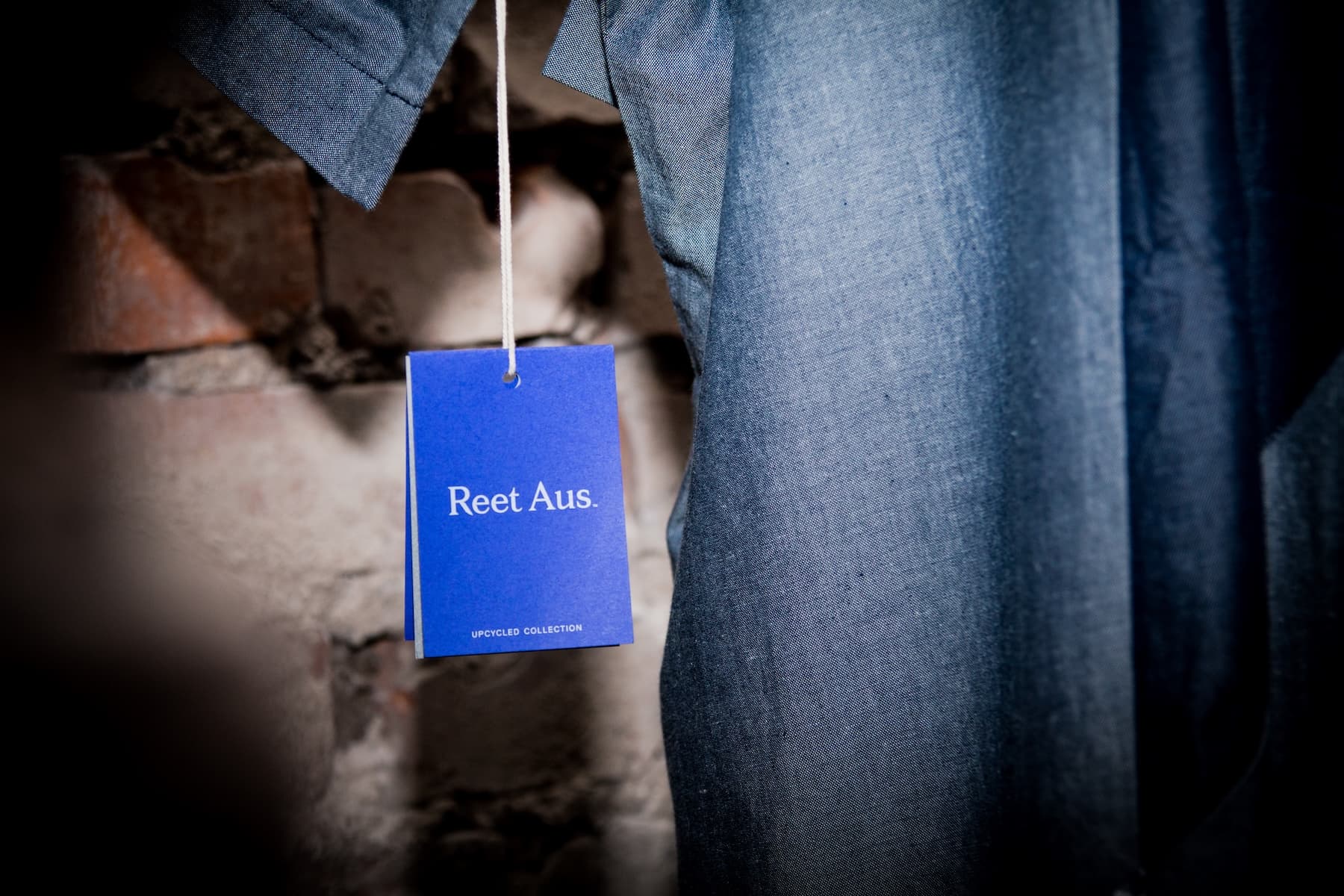
Reet Aus is working where fashion waste is born, not where it is discarded. Her UPMADE system treats roll-ends, cutting leftovers, defects, and surplus fabric as feedstock for new garments, turning the factory floor into the first line of circular design instead of the last stop before the landfill.
The real waste problem starts in production
The scale is bigger than most shoppers realize. WWD reported that 25% to 42% of fabric used in garment manufacturing can become production leftovers, while Aus says traditional clothing manufacturing creates an average of 18% textile leftovers. That is the unglamorous middle of fashion’s waste problem: fabric cut, stacked, trimmed, and abandoned before a garment ever reaches a sales floor.
Aus has long argued that the industry’s blind spot is pre-consumer waste, not just the clothes people throw away after wearing them. She puts the European Union’s textile manufacturing waste at around 16 million tonnes a year, a number that makes the case for intervention at the source. If the waste appears during production, the solution has to live there too.
How UPMADE changes the factory workflow
UPMADE is built as a scientific core methodology, developed by Aus in collaboration with the Stockholm Environment Institute’s Tallinn center. It is not just a design idea or a clever patchwork aesthetic. It comes with practical tools and a certification scheme for brands and factories, which matters because industrial upcycling only scales when it can be measured, audited, and repeated.
The system works by circulating post-production leftovers back into production within the same factory. That means roll-ends and cutting leftovers do not leave the site as scrap. They are sorted, valued, and redirected into new garments while the production line is still running. In fashion terms, it is a cleaner silhouette for manufacturing itself: less spill, less dead stock, more use from every bolt.

That shift changes the rhythm of the floor. Instead of treating leftover fabric as a disposal problem at the end of the process, factories need to build collection, sorting, and reuse into daily operations. It also changes what counts as inventory, because leftover cloth becomes a resource with a second life, not a cost to be written off.
Why this is already more than a niche experiment
Aus’s model is already being used in factories in Bangladesh and India, which is the crucial test for any circular system claiming industrial relevance. Those are not showcase studios; they are the places where scale, labor, and margin all collide. If UPMADE can work there, it has a legitimate case for becoming part of standard manufacturing practice.
The company also says the approach is a business model other brands and manufacturers can adopt, and that it has been exported globally as a circular production method. That matters because fashion does not change through ideals alone. It changes when the workflow, the sourcing, and the costing all line up enough that a factory can repeat the system without reinventing it every season.
What brands would have to change to make this standard
Industrial upcycling only moves from smart exception to normal practice if brands stop designing as though raw material is unlimited and leftovers are someone else’s problem. That means factory planning has to become less rigid, and brands need to ask their suppliers to treat surplus fabric as a production input.
To make that happen, three pieces have to move together:
- Supplier incentives: factories need a reason to collect and sort leftovers rather than discard them. That can mean new service fees, shared savings, or contracts that reward recovered material.
- Costing: leftover capture has to be built into the price of production. If brands want same-factory reuse, they have to pay for the extra sorting, tracking, and handling that make it possible.
- Design calendars: brands need earlier decisions on color, quantity, and product architecture so leftover material can be planned into the next run instead of being treated as an afterthought.
That is the real scaling question. UPMADE is not only about fabric; it is about timing. The closer design decisions sit to factory reality, the easier it becomes to turn waste into stock before the cloth loses value.
Digital tools are widening the model
The Stockholm Environment Institute says it has worked with Aus for more than 10 years, and the partnership is now being expanded with digital solutions to support textile circularity in other manufacturing regions. In Kenya, SEI says factories are being helped to analyze waste streams and repurpose leftovers on-site, which suggests the model is being translated into a more portable industrial toolkit.
That digital layer is important because circular fashion usually fails when it depends on one heroic designer or one unusually committed factory. A repeatable system needs data, waste mapping, and decision-making tools that can be used by people who are not sustainability specialists. The promise here is not just better design. It is better process control.
The proof points are already there
Reet Aus’s UPMADE collection won the German Ecodesign Award 2023 in the Product category, a useful piece of third-party validation in a field crowded with vague eco-language. Her project also has unusual narrative depth: the documentary Out of Fashion followed her from Tallinn to Europe, South American cotton plantations, and Bangladesh, was filmed from 2009 to 2014, and premiered in 2015. This is not a trend she discovered last season. It is a system she has been refining for more than a decade.
What makes Aus’s work compelling now is that it answers the industry's least glamorous question: what if the future of sustainable fashion is not a new material or a prettier recycling story, but a better factory floor? If brands can redesign production around leftover fabric, circularity stops being symbolic and starts becoming operational.
This article was produced by Prism’s automated news system from verified source data, official records, and press releases, then run through automated quality and moderation checks before publishing. The system is built and supervised by the people who set the standards it runs under. Read our full AI policy.
Did this article answer your question?


